
NFT Tax in the UK: What You Actually Owe
NFT tax in the UK is not a separate regime invented for digital art. HMRC treats NFTs as cryptoassets, which means the same Capital Gains Tax and Income Tax rules that apply to Bitcoin and Ether apply to your NFT activity too. That sounds simple enough, but the detail is where people go wrong. Buying, selling, minting, gifting, and swapping NFTs can each create a different tax event, and some of those events trigger income tax rather than capital gains. Miss the distinction and you could under-report your liability or, just as easily, overpay it. This guide walks through every common NFT scenario a UK taxpayer faces, explains what HMRC expects you to report, and connects NFT activity to related areas including crypto trading tax, DeFi tax, crypto staking tax, and crypto airdrop tax so you have the full picture in one place.
How HMRC Classifies NFTs
HMRC confirmed in its cryptoassets manual that NFTs are a distinct type of cryptoasset but are still subject to the existing Capital Gains Tax and Income Tax framework. An NFT is not treated as currency, and it is not treated as a traditional investment asset with special rules. It sits firmly within the cryptoasset category.
NFTs Are Tracked Individually
Because each NFT is unique, HMRC does not allow you to pool NFTs together the way you pool fungible tokens like ETH under the Section 104 pooling rules. Every NFT is tracked individually. You calculate the gain or loss on each one separately, using the cost you paid to acquire it against the proceeds you received when you disposed of it. Disposal covers selling, swapping, gifting, and using an NFT to pay for something. Each of those is a taxable event in HMRC's view.
The table below summarises the two main tax categories that apply to NFT activity in the UK.
| Tax Category | When It Applies to NFTs | Rate (2024/25) |
|---|---|---|
| Capital Gains Tax | Selling, swapping, gifting, or otherwise disposing of an NFT you hold as a personal investment | 18% (basic rate) or 24% (higher rate) on gains above the annual exempt amount |
| Income Tax and National Insurance | NFTs received as employment income, as payment for services, from mining-equivalent activity, or from certain airdrops | Your marginal income tax rate plus Class 4 NIC if self-employed |
NFT Tax on Sales and Swaps
The most common NFT tax question people ask is straightforward: if I sell an NFT for more than I paid, do I owe tax? Yes. The gain is subject to Capital Gains Tax. Your gain is the sale proceeds minus your allowable cost. Allowable costs include the price you paid to acquire the NFT, any gas fees or transaction fees you paid at the point of acquisition, and any fees paid at the point of disposal. These reduce your taxable gain and should always be included in your calculation.
Swaps and Gifts Are Taxable
Swapping one NFT for another also counts as a disposal. HMRC treats the swap as if you sold the first NFT at its market value on the day of the swap and used the proceeds to buy the second. This catches a lot of people out because no cash changes hands, but a taxable gain or loss is still crystallised. You need to know the sterling value of whatever you received at the time of the swap to calculate that gain correctly.
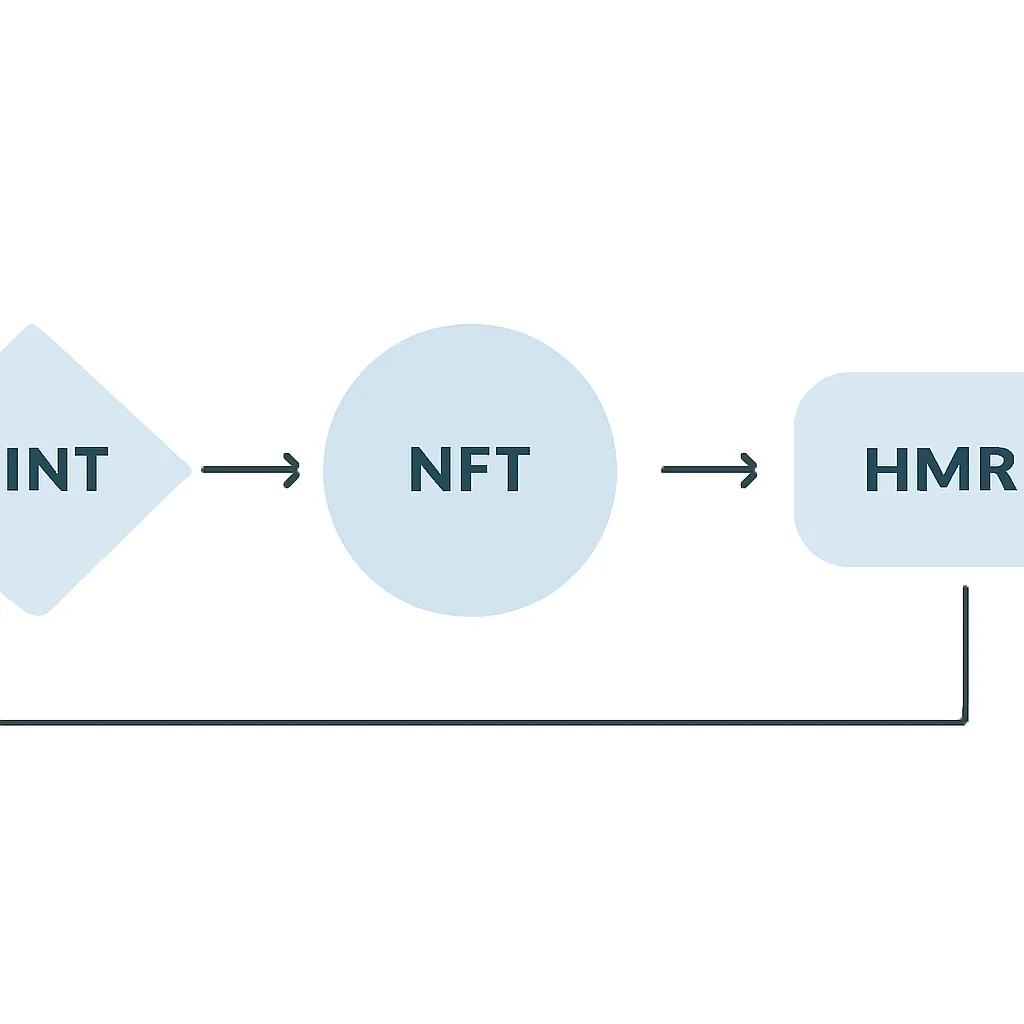
Gifting an NFT to someone other than your spouse or civil partner is also a disposal at market value. There is no gift relief available for cryptoassets as there is for qualifying business assets. Transfers between spouses and civil partners are exempt and happen at a no-gain, no-loss value, which means the receiving spouse inherits the original cost basis.
Minting NFTs and Creator Income
If you are an artist, developer, or creator who mints NFTs and sells them as part of a trade, the income is not treated as capital gains at all. It is trading income. HMRC will expect you to declare it under Self Assessment as self-employment income, subject to Income Tax at your marginal rate plus Class 4 National Insurance contributions. The threshold between hobby activity and a trade is a question of fact, but if you are regularly creating and selling NFTs with a view to profit, HMRC is likely to regard that as a trade.
Royalties Are Taxable Income
Royalties earned each time your NFT is resold on secondary markets are also taxable income. These are typically small percentage payments baked into smart contracts, but they add up over time and must be reported as income in the tax year you receive them. The sterling value at the date of receipt is the figure that goes on your return.
NFT Tax and DeFi Activity
NFTs increasingly appear inside DeFi protocols. You might lock an NFT as collateral to borrow stablecoins, or receive an NFT representing a liquidity position. Understanding DeFi tax in this context matters because HMRC has not published exhaustive guidance on every DeFi use case, and the wrong assumption can lead to a significant under-declaration.
DeFi Rewards Are Income
When it comes to how DeFi rewards are taxed, HMRC's general position is that tokens received as a return from DeFi lending or liquidity provision are income at the point of receipt, valued in sterling on the day you receive them. Whether you later sell those reward tokens is a separate CGT event. The two calculations happen independently. If you receive an NFT as a DeFi reward rather than a fungible token, the same logic applies: you recognise income at market value on receipt, and you crystallise a gain or loss when you eventually dispose of it.
The table below sets out how different DeFi and NFT receipt scenarios are generally treated.
| Activity | Tax Treatment at Receipt | Tax Treatment on Disposal |
|---|---|---|
| NFT purchased with ETH | Disposal of ETH triggers CGT | Later NFT sale triggers CGT |
| NFT received as DeFi reward | Income Tax on sterling value at receipt | CGT on gain above that income value |
| NFT received as airdrop (no service performed) | Likely nil income; cost basis is nil | Full proceeds treated as gain on disposal |
| NFT received as airdrop (in return for service) | Income Tax on sterling value at receipt | CGT on gain above that income value |
| Staking reward paid as NFT | Income Tax on sterling value at receipt | CGT on gain above that income value |
Crypto Staking Tax and NFTs
Crypto staking tax is relevant to NFT holders more often than they expect. Some NFT collections grant staking rights, allowing holders to lock their NFT in a protocol and earn token rewards over time. HMRC treats staking rewards as miscellaneous income or trading income depending on the scale and nature of the activity. The question of whether staking is taxable at the point of receipt or only on disposal has been debated, but HMRC's published position treats rewards as taxable income when they are received, at their sterling value on that date.
Track Rewards With Date-Stamped Logs
If you receive fungible tokens as staking rewards from holding an NFT, those tokens have a cost basis equal to the income value you declared. When you sell them, only the gain above that basis is subject to CGT. Keeping a date-stamped log of every reward receipt, with the sterling value at that moment, is essential. Without it, you cannot accurately calculate either your income figure or your future capital gain.
Crypto Airdrop Tax and NFT Collections
Crypto airdrop tax catches many NFT holders off guard. Holding an NFT from a particular collection sometimes entitles you to receive tokens airdropped by the same project. HMRC distinguishes between airdrops received simply for holding an asset, which are generally treated as having nil income value at receipt but a nil cost basis on disposal, and airdrops received in exchange for providing some service or promotional activity, which are treated as income.
Airdrop Disposal Triggers Tax
The practical implication is significant. If you receive an airdrop with a nil income value and later sell those tokens for a large gain, the entire proceeds are potentially taxable as a capital gain with no cost to offset against them. Many people assume that because they paid nothing for an airdrop, there is no tax consequence. The disposal is where the liability arises, and if you have discarded the tokens, transferred them, or used them in a protocol without recording the sterling value at the time, reconstructing that figure later is genuinely difficult.
Illustrative Scenario
This scenario is illustrative. It does not describe a real person or client, and the figures are examples only.
To illustrate how this applies in practice, consider the following scenario:
Priya is a graphic designer based in London. In the 2023/24 tax year she sold three NFTs from a collection she had purchased eighteen months earlier, receiving a total of 3.2 ETH across the three transactions. She also received a token airdrop from the same project simply for holding the NFTs, which she later swapped for ETH. On top of that, she had been earning small token rewards from an NFT staking feature within the collection's platform.
Priya assumed the airdrop was tax-free because she had done nothing to earn it. She also had not recorded the sterling value of her staking rewards at the dates she received them. When she came to use CryptaTax to file her Self Assessment return, the software pulled in her wallet transaction history and flagged each staking reward receipt with a sterling value at the time of receipt, and calculated the airdrop disposal as a capital gain with a nil cost basis. The result was a higher income and CGT figure than she had anticipated, but one she could now file accurately with a clear audit trail rather than guessing. She was also able to identify two of the three NFT sales as losses, which she could offset against gains elsewhere in her portfolio.
Frequently Asked Questions
Do I have to pay NFT tax in the UK if I made a loss?
You do not owe tax on NFT losses, but you should still report them to HMRC through Self Assessment if your total proceeds across all cryptoasset disposals in the year exceed four times the annual exempt amount. Losses that are reported can be carried forward and offset against future capital gains, so recording them is worth doing even when there is no immediate tax to pay.
Is buying an NFT with ETH a taxable event?
Yes. HMRC treats ETH as a cryptoasset, so spending it to buy an NFT is a disposal of ETH. You calculate any capital gain or loss on the ETH at that point using the sterling value of the NFT you received as the proceeds. This applies regardless of whether you think of the transaction as a purchase rather than a sale.
How is crypto trading tax different from NFT tax?
Crypto trading tax and NFT tax follow the same underlying framework in the UK. Both use Capital Gains Tax for investment disposals and Income Tax for trading activity. The key difference with NFTs is that they cannot be pooled; each one is tracked individually. With fungible tokens, HMRC's Section 104 pool allows you to average the cost across identical assets, which is not possible when every token is unique.
Is staking taxable when you stake an NFT to earn rewards?
Yes, crypto staking tax applies to rewards earned by staking NFTs in the same way it applies to staking fungible tokens. HMRC treats the rewards as income at the point of receipt, valued in sterling on the date you receive them. The NFT itself is not a disposal event when you lock it into a staking contract, provided you retain beneficial ownership, but you should document the arrangement carefully.
How are DeFi rewards taxed if they come through an NFT protocol?
How DeFi rewards are taxed depends on whether HMRC classifies the activity as income-generating. Rewards received from DeFi protocols as a return for providing liquidity or lending, including rewards earned through NFT-based positions, are generally treated as miscellaneous income at the point of receipt. You then have a cost basis equal to that income value for CGT purposes when you eventually sell the reward tokens.
Do I owe tax on an NFT airdrop?
Crypto airdrop tax treatment depends on what you did to receive it. An airdrop received purely for holding an NFT, with no action required on your part, is generally treated by HMRC as having a nil income value at receipt. However, the cost basis is also nil, so the full disposal proceeds are subject to CGT when you sell or swap the airdropped tokens. If you performed a service to qualify for the airdrop, the receipt value is taxable as income.
What records do I need to keep for NFT tax purposes?
HMRC expects you to keep records of every acquisition and disposal, including the date, sterling value at the time of the transaction, transaction fees paid, and the wallet addresses involved. For NFTs specifically, you also need records of any staking reward receipts and airdrop receipts with their sterling values at the dates received. HMRC can request records going back several years, so keeping them from the outset is far easier than reconstructing them later.
What happens if I gifted an NFT to a friend?
Gifting an NFT to anyone other than your spouse or civil partner is treated as a disposal at market value on the date of the gift. You owe Capital Gains Tax on any gain above your original cost, even though you received no cash. The recipient's cost basis for future CGT purposes is the market value at the time you gifted it to them. Transfers to spouses or civil partners are exempt and carry over your original cost basis instead.
Source: CryptaTax