
DeFi Tax in the UAE: Trading, Staking, Airdrops and NFTs Explained
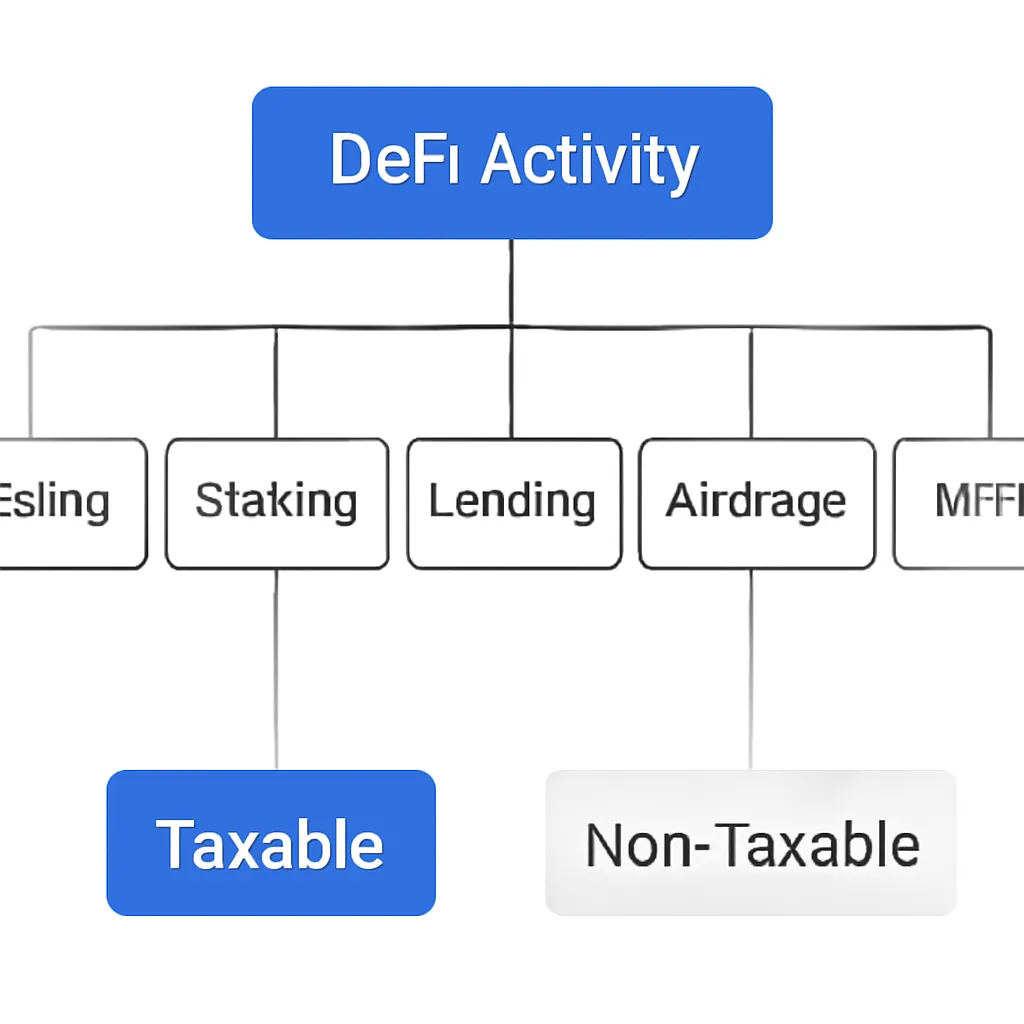
The UAE has built a reputation as one of the most crypto-friendly jurisdictions in the world. For individual users, the key question is not whether the country welcomes crypto activity, but exactly which activities carry a tax obligation and which do not. DeFi tax in the UAE is not a single, uniform rule. It depends on who you are, what you are doing, and whether you are operating as an individual or through a business entity. This guide breaks down the current position across trading, staking, lending, airdrops, and NFTs so you can understand your exposure before a filing deadline arrives or an audit question lands.

The UAE Tax Landscape for Crypto Users
The UAE does not impose personal income tax on individuals. That single fact sets it apart from almost every other major financial centre and it is the reason so many crypto-native individuals and traders have relocated there. For private individuals with no registered business, gains from holding and selling cryptocurrency, including DeFi tokens, are not subject to income tax or capital gains tax at the personal level. That position has remained consistent.
Corporate Tax Exposure for Businesses
The picture changes once a business is involved. The UAE introduced a federal corporate tax framework with a standard rate applying to business profits above a specific threshold. If you run a crypto trading operation, a DeFi protocol, or any commercial activity through a UAE entity, that entity's profits may fall within the corporate tax net. The personal tax exemption does not automatically shield business income simply because the underlying asset is a cryptocurrency. Understanding which side of that line your activity falls on is the foundation of any DeFi tax analysis in the UAE.
The UAE also maintains free zone regimes, including those popular with crypto and Web3 businesses. Some free zone entities can qualify for a zero percent corporate tax rate on qualifying income, but the conditions are specific and require careful structuring. Getting that wrong can result in the standard corporate rate applying unexpectedly.
How DeFi Tax Applies to Crypto Trading Activity
For private individuals, crypto trading tax in the UAE is generally a non-event at the personal level. Buying and selling tokens, swapping one DeFi asset for another on a decentralised exchange, or closing a leveraged position does not trigger a personal income tax or capital gains tax liability under current UAE rules. That applies whether you are trading spot markets, using automated market maker protocols, or rotating between liquidity pools.
When Trading Becomes Business Activity
The complication arises when trading crosses into a business activity. Tax authorities in various jurisdictions use factors such as frequency of transactions, professional intent, use of sophisticated tools, and the proportion of income derived from trading to determine whether activity is personal or commercial. The UAE does not publish a bright-line test, but if your crypto trading generates the primary or significant source of income for a registered entity, the corporate tax rules are relevant.
For individuals who are tax residents elsewhere and also hold assets in the UAE, the picture is more layered. The UAE's status as a low-tax jurisdiction does not override tax obligations in a home country that taxes on worldwide income. A UK resident who trades DeFi tokens via a UAE wallet still owes UK tax on gains. Residency determines where tax is owed, not where the wallet sits.
Residency and Cross-Border Tax Obligations
The table below summarises how crypto trading tax generally applies across different trader profiles in the UAE.
| Trader Profile | Personal Income Tax | Corporate Tax Exposure | Key Consideration |
|---|---|---|---|
| UAE resident individual, casual trading | None | None | Must be personal, not business activity |
| UAE resident individual, high-frequency trading | None at personal level | Possible if structured as business | Activity may be reclassified as commercial |
| UAE company trading crypto | Not applicable | Standard corporate rate on profits above threshold | Free zone status may offer relief if conditions met |
| Foreign national, UAE assets, non-resident | None in UAE | None in UAE | Home country tax rules apply |
Crypto Staking Tax and Is Staking Taxable in the UAE
Staking has become one of the most common ways DeFi participants earn yield, and the question of whether staking is taxable is one that comes up constantly. In the UAE, for a private individual, staking rewards received are not subject to personal income tax. There is no mechanism to tax income received by a natural person in the way that salary or investment income would be taxed in a country like the UK or Germany.
Selling Staking Rewards and Cross-Border Issues
That does not mean staking is entirely without consideration. If you later sell the tokens you received as staking rewards, any gain on disposal is still not taxed at the personal level in the UAE. For residents of countries that tax on a worldwide basis, however, staking rewards may be treated as income at the point of receipt in their home jurisdiction, regardless of where the wallet or protocol sits.
For UAE corporate entities, crypto staking tax is a live issue. Rewards earned by a company through staking protocols form part of that entity's income and would generally be included in the taxable profit calculation. The timing of recognition, whether at the point of receipt or when the token is sold, is an area where accounting treatment and tax treatment may need to align carefully.
Staking Tax Scenarios Summary
The table below outlines how staking tax applies across different scenarios.
| Staking Scenario | UAE Individual | UAE Corporate Entity |
|---|---|---|
| Receiving staking rewards | Not taxable | Likely taxable as income |
| Selling staked tokens at a gain | Not taxable | Gain included in taxable profit |
| Liquid staking (e.g. receiving a derivative token) | Not taxable personally | Accounting treatment determines timing of recognition |
How Are DeFi Rewards Taxed: Lending, Yield Farming and Liquidity Pools
Beyond staking, DeFi participants often earn yield through lending protocols, yield farming strategies, and providing liquidity to decentralised exchanges. The question of how are DeFi rewards taxed in the UAE follows the same structural logic as staking: no personal income tax for individuals, but corporate tax considerations for entities.
Record-Keeping and AML Compliance
Lending out tokens on protocols and receiving interest-like returns, farming governance tokens as incentives, and earning trading fees as a liquidity provider are all forms of income generation. For a UAE-resident individual operating outside a corporate structure, none of these trigger a personal tax charge. The challenge is record-keeping. Even where no tax is owed domestically, building a clean transaction history is essential for any future audit, for demonstrating to a bank that funds are legitimate, or for satisfying the requirements of a future jurisdiction if you relocate.
DeFi activity is also increasingly scrutinised under anti-money laundering frameworks. UAE financial institutions and virtual asset service providers are subject to robust AML obligations. Unexplained DeFi income flowing into a UAE bank account without documentation can create compliance friction even if the underlying tax position is clean. Maintaining records of every protocol interaction, the value of tokens received, and the source of funds is good practice regardless of the tax outcome.
Crypto Airdrop Tax and How Airdrops Are Treated
Airdrops are a common feature of DeFi ecosystems. Projects distribute tokens to wallet holders, often to reward early users or to incentivise protocol adoption. Crypto airdrop tax treatment varies significantly between jurisdictions. In the UAE, for a private individual, there is no income tax triggered by receiving an airdrop. The tokens arrive in your wallet and you face no immediate charge.
Valuation and Record-Keeping for Airdrops
The practical issue for UAE residents receiving airdrops is still valuation and record-keeping. Knowing the market value of the tokens at the time they arrived matters if you later sell them, particularly if you hold dual tax residency or plan to relocate. A token received at a low value and sold later at a high value creates a gain that could be taxable in another country depending on your residency history.
Corporate Treatment of Airdrops
For corporate entities in the UAE, an airdrop received into a company wallet is likely treated as income at the point of receipt. The value at that point forms part of taxable profit, and any subsequent disposal gain or loss would be calculated against that base cost. Getting the accounting entry right at the point of receipt, rather than trying to reconstruct it months later, avoids the kind of discrepancy that creates problems during a corporate tax review.
NFT Tax in the UAE
NFT tax is a growing area of interest as more individuals and businesses participate in NFT markets. For UAE-resident individuals, buying, selling, and trading NFTs does not attract personal income tax or capital gains tax. An artist minting and selling NFTs, a collector flipping digital assets, or a gamer trading in-game items represented as NFTs all operate in a personal tax-free environment at the individual level.
NFT Business Activity and Corporate Tax
The business entity question arises here too. A studio that mints and sells NFTs as its core commercial activity is generating business revenue. That revenue would fall within the corporate tax framework once it exceeds the relevant threshold. Similarly, a platform that facilitates NFT sales and earns fees is running a business, not engaging in passive personal investment.
Royalty Income from NFTs
Royalty income from NFTs, where a creator receives a percentage every time their NFT is resold on secondary markets, is another layer to consider. For individuals, this is passive income with no UAE personal tax exposure. For a company receiving ongoing royalty streams from NFT contracts, those amounts feed into taxable corporate income. The recurring nature of royalties makes them more visible in financial statements and more likely to attract scrutiny than a one-off sale.
Illustrative Scenario
This scenario is illustrative. It does not describe a real person or client, and the figures are examples only.
To illustrate how this applies in practice, consider the following scenario:
Ahmed is a freelance software developer based in Dubai who has been active in DeFi for several years. He provides liquidity on a decentralised exchange, stakes a proof-of-stake token, and received an airdrop of a governance token last year. He also sold two NFTs he minted from his digital artwork portfolio. Ahmed operates as a private individual and does not hold a commercial trading licence for crypto activity.
Under the current UAE framework, none of Ahmed's DeFi rewards, staking income, airdrop tokens, or NFT sale proceeds are subject to personal income tax. His exposure at the UAE level is essentially zero. However, Ahmed moved from the UK three years ago and still holds some UK assets. Before assuming his DeFi income is entirely tax-free, he needs to confirm his UK tax residency status has been cleanly broken. His home country obligations do not vanish simply because his wallet is connected to a Dubai IP address.
Ahmed uses CryptaTax to compile a full transaction history across all his wallets and protocols. Even though he owes no UAE tax, the report gives him a clean audit trail, supports his bank's due diligence questions, and provides the data he needs if a UK tax residency question ever resurfaces. Preparation costs far less than reconstruction after the fact.

Frequently Asked Questions
Is DeFi taxable in the UAE for individuals?
For private individuals resident in the UAE, DeFi activity is not subject to personal income tax or capital gains tax. The UAE does not levy these taxes on natural persons. If you operate through a corporate entity, different rules apply and business profits above a certain threshold are subject to corporate tax.
How are DeFi rewards taxed for UAE residents?
DeFi rewards received by a UAE-resident individual, whether from staking, yield farming, liquidity pools, or lending protocols, are not taxed at the personal level. For corporate entities, rewards received as income are generally included in taxable profit. Record-keeping is still important even where no personal tax is owed.
Is staking taxable in the UAE?
Staking is not taxable for individual UAE residents under current rules. There is no personal income tax on staking rewards and no capital gains tax on the later sale of staked tokens. For UAE-registered companies, staking rewards are treated as income and included in the corporate tax calculation.
What is the crypto trading tax position in the UAE?
Individual UAE residents pay no personal income tax or capital gains tax on crypto trading profits. The risk of a tax charge arises if trading is structured through or reclassified as a business activity, in which case corporate tax may apply. Residents who also hold tax residency elsewhere should check their obligations in that jurisdiction.
How is crypto airdrop tax handled in the UAE?
Airdrops received by UAE-resident individuals are not subject to personal income tax. There is no charge at the point of receipt. For corporate entities, airdrops received into a company wallet are likely treated as income at their market value on the date received. Keeping a record of that value is important for accurate accounting.
What is the NFT tax position for someone based in the UAE?
Individuals resident in the UAE do not pay personal income tax or capital gains tax on NFT sales, including secondary market trades and royalty income. NFT activity conducted through a business entity, such as a minting studio or trading platform, would be subject to corporate tax on profits above the relevant threshold.
Does the UAE's zero personal tax rate apply if I also hold residency elsewhere?
The UAE's zero personal tax rate applies to income and gains arising for UAE tax residents. If you hold tax residency in another country that taxes on worldwide income, that country's rules still apply regardless of where your crypto wallet is held. Residency status, not wallet location, determines where tax is owed.
Do I still need to keep records if I owe no tax in the UAE?
Yes. Even where no UAE personal tax is owed, maintaining detailed transaction records is essential for banking due diligence, AML compliance, and any future jurisdiction change. Corporate entities must keep records to support their corporate tax filings. CryptaTax can generate a complete transaction history across wallets and protocols to support all of these needs.
Are DeFi activities subject to VAT in the UAE?
The UAE applies VAT at a standard rate to most goods and services, but the treatment of crypto and DeFi transactions under VAT rules is an area requiring specific advice depending on the nature of the activity. Providing financial services and trading in financial instruments can attract different VAT treatments. Always take professional advice on your specific situation.
How does a free zone structure affect DeFi tax for a UAE business?
Certain UAE free zones offer a zero percent corporate tax rate on qualifying income for entities that meet specific conditions. Crypto and Web3 businesses based in qualifying free zones may benefit from this rate, but the qualifying income rules are detailed and structural errors can result in the standard corporate tax rate applying. Professional advice is essential before relying on free zone tax treatment.
Source: CryptaTax