
Crypto Airdrop Tax: When Free Tokens Become a Tax Bill
Receiving tokens you never asked for sounds like a windfall with no strings attached. The reality is that crypto airdrop tax obligations can arise the moment those tokens land in your wallet, and ignoring them is one of the most common mistakes individual holders make. Tax authorities in most major jurisdictions treat airdropped tokens, mining rewards, staking income, and DeFi yields as taxable events, not lucky gifts. The timing of the tax charge, how the income is calculated, and what happens when you later sell the tokens all vary depending on where you live and how the tokens were earned. This guide walks through the core principles, covers the treatment in Japan in detail, and explains how the same logic applies to staking, mining, and DeFi rewards so you can approach your next tax return with confidence.
What Is Crypto Airdrop Tax and Why Does It Apply?
An airdrop is a distribution of tokens to wallet addresses, sometimes as a marketing exercise, sometimes as a reward for holding another asset, and sometimes as part of a protocol governance launch. From a tax perspective, the mechanism of delivery matters far less than the economic reality: you have received something of value, and most tax codes treat that as income.
Taxable Amount at Receipt
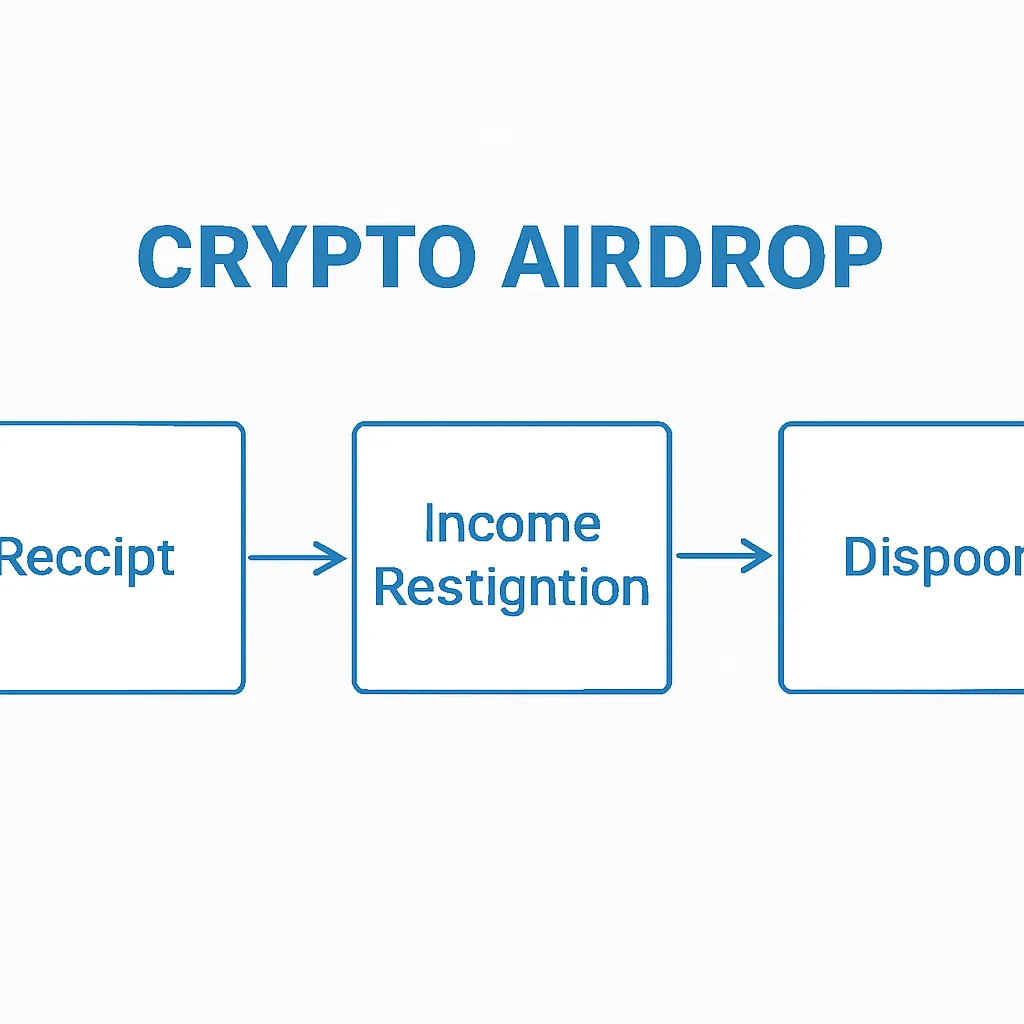
The taxable amount is generally the fair market value of the tokens at the moment you receive them. If a token is airdropped to your wallet and is immediately tradeable on an exchange at a published price, that price anchors your income calculation. If the token has no established market value at the time of receipt, the position becomes more complex and requires careful documentation. Some jurisdictions allow you to record a nil value in that situation, but you must be prepared to justify that position if your tax authority asks.
The second tax event occurs when you sell or swap the tokens. At that point, crypto trading tax rules apply. You calculate a gain or loss based on the difference between the disposal proceeds and the cost basis, which is typically the value you already recognised as income on receipt. Getting this right matters: if you forget to establish a cost basis at the point of receipt, you may end up paying tax twice on the same economic gain.
How Japan Taxes Airdropped Tokens and Mining Income
Japan has one of the more clearly documented frameworks for crypto taxation among developed economies. The National Tax Agency classifies most cryptocurrency income, including airdrops and mining rewards, as miscellaneous income. This is the same category used for freelance side income, and it sits outside the separate self-assessment schedules used for employment or business income.
Airdrop and Mining Income Treatment
For airdrops, the taxable event occurs at the point of receipt. The income figure is the fair market value of the tokens on the date they are credited to your wallet, converted to Japanese yen at the prevailing rate. Mining income works on the same principle: the yen value of newly mined tokens at the time they are confirmed and received is treated as miscellaneous income in that tax year.
Miscellaneous income in Japan is aggregated with other miscellaneous income sources and taxed at progressive rates alongside your other income. There is no flat rate or preferential treatment for crypto gains in this category, which means high earners can face a combined national and local tax rate that is significantly higher than capital gains rates in some other countries. Losses from miscellaneous income cannot be offset against other income categories such as employment income, and they cannot be carried forward to future years, which makes accurate record-keeping especially important.
The following table summarises the key income types and their treatment under Japan's framework.
Summary Table of Income Types
| Income Type | Tax Category (Japan) | Taxable Trigger | Valuation Basis |
|---|---|---|---|
| Airdrop tokens | Miscellaneous income | Date of receipt | Fair market value in JPY at receipt |
| Mining rewards | Miscellaneous income | Date coins are received | Fair market value in JPY at receipt |
| Disposal of airdropped tokens | Miscellaneous income (gain/loss) | Date of sale or swap | Proceeds minus cost basis at receipt |
| Crypto trading tax on other holdings | Miscellaneous income | Date of disposal | Moving average or total average cost |
Crypto Staking Tax: Is Staking Taxable?
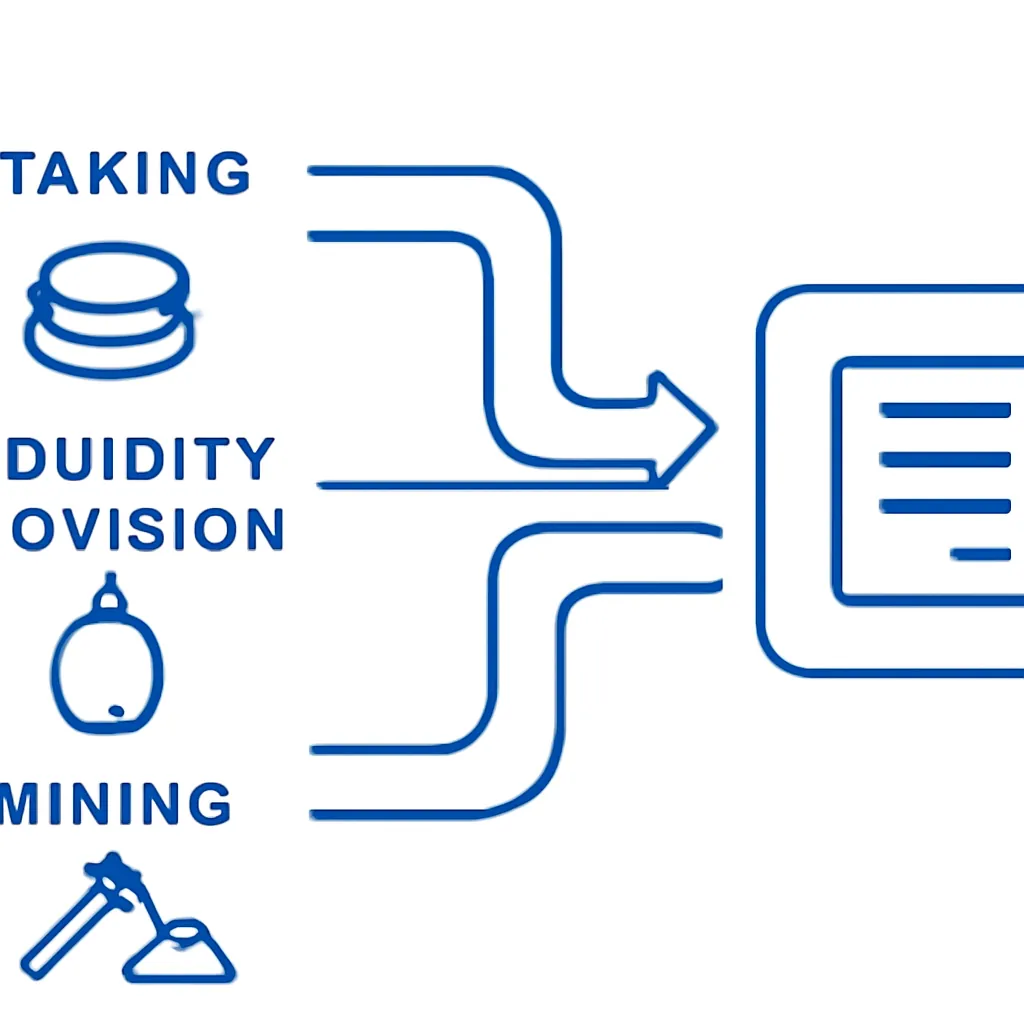
Staking rewards are among the most frequently misunderstood income types in personal crypto tax. The question of whether staking is taxable has been answered clearly in most major jurisdictions: yes, staking rewards are generally taxable as income when they are received, not when they are sold.
Staking Rewards as Income
The logic mirrors the treatment of airdropped tokens. You are receiving new tokens that have a market value, and that value is ordinary income in the year of receipt. Japan follows this approach, treating staking rewards as miscellaneous income. The United Kingdom's HMRC takes a similar position for most staking arrangements, treating rewards as income unless the activity is so passive that it resembles a capital transaction, which is a narrow exception. The United States IRS has also indicated that staking rewards are taxable upon receipt, a position reinforced by guidance and court cases in recent years.
Complexities in Staking Tax
Where staking tax becomes complicated is in the detail. Liquid staking protocols, where you receive a receipt token rather than the underlying reward directly, can create ambiguity about exactly when the taxable event occurs. Restaking arrangements add another layer. The safest approach is to record the value of any new token you receive, at the point you receive it, and treat that as income. Waiting to see what happens to the price before deciding whether to report is not a defensible strategy.
How Are DeFi Rewards Taxed?
Understanding how DeFi rewards are taxed requires thinking about what you are actually receiving and why. DeFi covers a wide range of activities: lending, borrowing, liquidity provision, yield farming, and governance participation. Each can produce income in a different form, and the tax treatment follows the economic substance of the transaction rather than the label a protocol applies to it.
Liquidity and Yield Farming Income
Liquidity provider fees and yield farming returns are generally treated as income in the period they are earned, in the same way as staking rewards or interest. The challenge is that DeFi protocols often compound rewards automatically, meaning tokens accumulate in smart contracts without a direct transfer to your wallet. Tax authorities tend to take the position that income arises when you have control over the tokens, which in practice usually means when they become claimable or are credited to a wallet you control.
NFT tax also intersects with DeFi in some situations, particularly where NFTs are staked within protocols to generate yield. Royalties received from NFT sales are generally income. Gains on the disposal of NFTs are typically subject to capital gains tax or their equivalent, depending on jurisdiction. Japan taxes NFT disposals as miscellaneous income where the NFTs are held as personal assets, using the same framework applied to other crypto assets.
Summary Table of DeFi Tax Treatment
| DeFi Activity | Likely Tax Treatment | Key Trigger |
|---|---|---|
| Liquidity provision fees | Income on receipt | When fees become claimable |
| Yield farming rewards | Income on receipt | When tokens enter your control |
| NFT staking rewards | Income on receipt | When reward tokens are credited |
| NFT disposal gain | Capital gain or miscellaneous income | Date of sale |
| Lending interest received | Income on receipt | When interest is credited |
Record-Keeping: The Foundation of Every Crypto Tax Return
Poor records are the single biggest risk factor for individual crypto holders facing a tax enquiry. Every airdrop, every staking reward, every DeFi yield payment needs a date, a quantity, and a value in your local fiat currency at the time of receipt. That sounds straightforward until you realise that a single DeFi wallet can accumulate hundreds of micro-transactions in a year, each of which is technically a taxable event.
Japan's Record-Keeping Requirements
For Japan specifically, the National Tax Agency requires taxpayers to be able to demonstrate their calculations on request. The total average cost method is the standard approach for calculating cost basis on crypto disposals, and you need consistent records to apply it accurately. Switching between cost basis methods mid-year is not permitted.
Handling Airdropped Tokens Without Market Price
Airdropped tokens with no clear market price at receipt require particular care. You should document the date, the protocol, the number of tokens, and any available price data, even if that data is limited. If the token later appreciates significantly and you sell it, a poorly documented cost basis will create problems.
Connecting your wallets and exchange accounts to a tax tool that can pull transaction history automatically is far more reliable than attempting to reconstruct records manually at the end of a tax year. CryptaTax imports transaction data across wallets and exchanges, calculates income at the point of receipt using historical prices, and generates a report you can review before filing.
Cross-Border Considerations for Global Crypto Holders
Crypto does not respect borders, but tax systems do. If you are a Japanese tax resident holding assets on a global exchange, your worldwide income is subject to Japanese tax, including any airdrops, staking rewards, or DeFi yields earned from protocols that have no presence in Japan. Many holders assume that income from foreign protocols is invisible to their domestic tax authority. That assumption is increasingly incorrect.
International Reporting Frameworks
Japan participates in international information exchange frameworks, and crypto exchanges serving Japanese residents are subject to registration and reporting requirements under the Payment Services Act. The global trend toward the Crypto Asset Reporting Framework, which requires exchanges to report user data to tax authorities across participating countries, means that the window for undetected non-compliance is closing quickly.
For holders who have been inconsistent with reporting in prior years, voluntary disclosure is almost always a better outcome than waiting to be found. Tax authorities in most jurisdictions treat proactive disclosure more favourably than cases uncovered through audit or data matching.
Illustrative Scenario
This scenario is illustrative. It does not describe a real person or client, and the figures are examples only.
To illustrate how this applies in practice, consider the following scenario:
Kenji is a software developer based in Tokyo who has been active in DeFi for two years. During the tax year, he received a governance token airdrop from a protocol he had used, earned staking rewards from a proof-of-stake network, and collected liquidity provision fees from a decentralised exchange. He also sold two NFTs that had appreciated since he minted them.
Kenji assumed the airdrop was tax-free because he had not done anything to earn it. He was not aware that his staking rewards were taxable as miscellaneous income in the year they were received, and he had not kept records of the JPY value at each reward distribution. At year end, he tried to reconstruct prices from memory and estimated figures, which created inconsistencies in his cost basis calculations.
After connecting his wallets to CryptaTax, Kenji was able to import his full transaction history, see each airdrop and reward valued at the correct historical price in yen, and generate a miscellaneous income summary for his tax return. The NFT disposals were calculated against their minting cost, and the resulting report gave him a clear, defensible number to declare. The process took an afternoon rather than the weeks of manual work he had been dreading.
Frequently Asked Questions
Is crypto airdrop tax always due at the point of receipt?
In most jurisdictions, including Japan, the taxable event for an airdrop occurs when the tokens are credited to your wallet and you have the ability to use or sell them. If a token has no verifiable market value at that point, you may be able to record a nil value, but you must document your reasoning carefully. A second tax event arises when you eventually sell or swap the tokens.
Is staking taxable if I have not sold the rewards?
Yes, in most major jurisdictions staking rewards are treated as taxable income when you receive them, not when you sell them. The taxable amount is the market value of the tokens at the time they enter your wallet or become claimable. Holding the rewards after receipt does not defer the income tax charge, though it may affect any future capital gains calculation.
How are DeFi rewards taxed differently from staking rewards?
The distinction is often smaller than people expect. Both are generally treated as income at the point of receipt, valued at the prevailing market price. The complexity with DeFi rewards is often around timing: auto-compounding protocols may not transfer tokens directly to your wallet, so you need to identify the exact moment you gain control. The underlying tax principle is the same as for staking.
What is the NFT tax treatment in Japan?
NFT disposals are generally taxed as miscellaneous income in Japan, using the same framework as other crypto asset sales. The gain is calculated as the sale proceeds minus the cost basis, which for a minted NFT is typically the gas fees and minting costs paid. Royalties received from secondary sales are also treated as income in the year they are received.
Does crypto trading tax apply to swapping one token for another?
Yes. In Japan and most other major jurisdictions, swapping one cryptocurrency for another is treated as a disposal of the first asset and a purchase of the second. You must calculate any gain or loss on the asset you gave up, using its cost basis at the time of the swap. This applies to DeFi swaps as well as exchange-based trades.
Can I offset losses from airdrops or DeFi against other income?
In Japan, losses from miscellaneous income cannot be offset against employment income or other income categories, and they cannot be carried forward to the following tax year. This makes it especially important to track losses accurately within the same category, as they can reduce your overall miscellaneous income figure within the year they arise.
What records do I need to keep for crypto airdrop tax purposes?
You need the date of receipt, the number of tokens received, the name or contract address of the token, and the market value in your local fiat currency at the time of receipt. For DeFi rewards, you also need the protocol name and the wallet address involved. Exchange statements, blockchain explorer records, and tax software exports are all acceptable forms of documentation.
How does the Crypto Asset Reporting Framework affect Japanese crypto holders?
The Crypto Asset Reporting Framework is a global standard requiring crypto exchanges to report account holder data to tax authorities in participating countries. As Japan moves toward alignment with this framework, information held by foreign exchanges about Japanese residents is increasingly likely to be shared with Japanese tax authorities. Accurate self-reporting now is far less costly than corrections prompted by a data-matching notice later.
Source: CryptaTax