
Crypto Staking Tax and Every Other Taxable Event You Need to Know
Crypto staking tax is one of the most searched questions among retail holders, and for good reason. Most people understand that selling crypto for fiat is a taxable event. Far fewer realise that swapping one token for another, receiving staking rewards, claiming an airdrop, or collecting DeFi yields can all trigger a tax liability too. The rules vary by country, but the underlying principle is consistent across most major jurisdictions: when you receive crypto as income or dispose of a crypto asset, the tax authority wants to know about it. Missing these events is not simply an oversight. It is an underreporting risk that can attract penalties and interest. This guide covers every major taxable event in plain English so you know exactly where you stand before your next filing deadline.
Why Crypto-to-Crypto Trades Create a Tax Liability
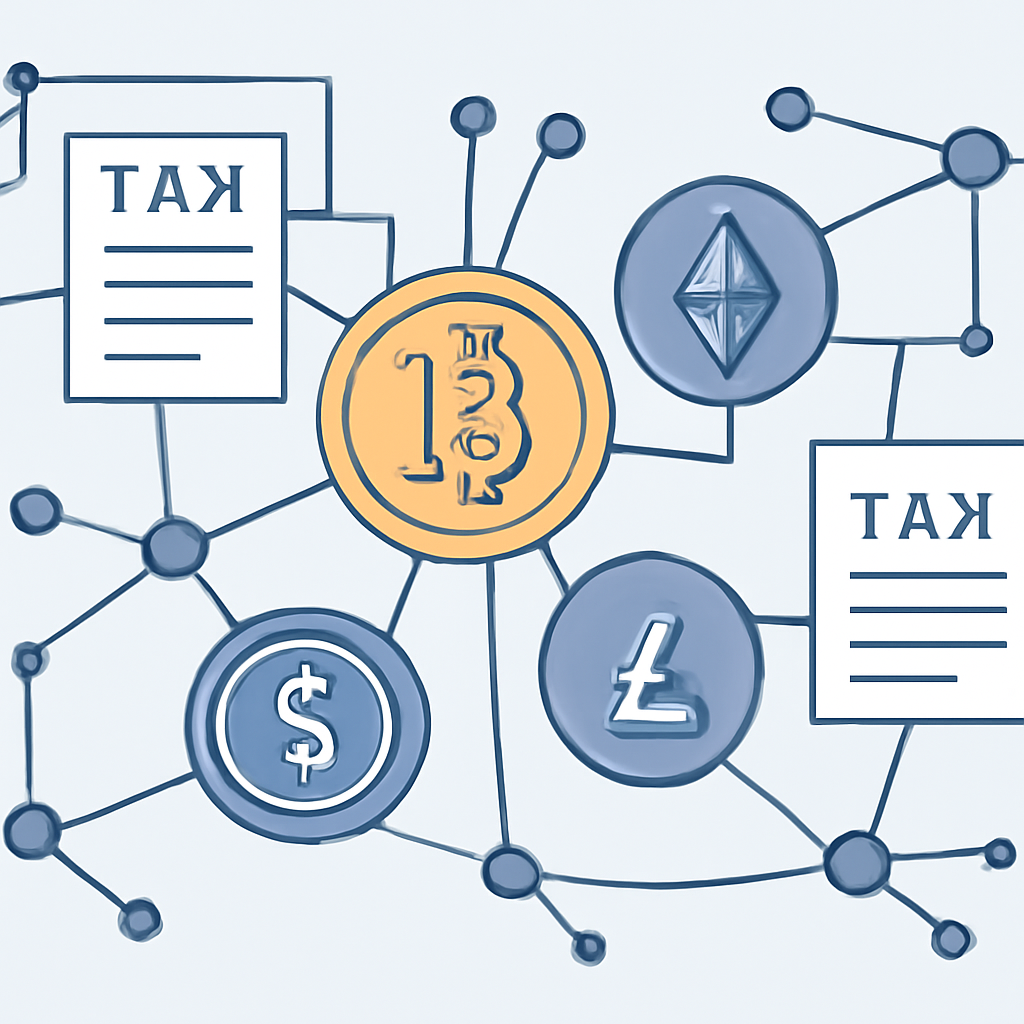
The most common misconception in crypto tax is that you only owe tax when you cash out into fiat. This is wrong in most jurisdictions. When you swap one cryptocurrency for another, you are treated as having disposed of the first asset at its current market value. That disposal creates a capital gain or loss, calculated as the difference between what you originally paid for the asset and its value at the moment you swap it. It does not matter whether you see any cash. The exchange is the taxable event.
The Disposal Event Explained
Think about swapping ETH for a stablecoin. You acquired your ETH at a certain cost. On the day you swap, ETH has a higher market value. That difference is a taxable gain, regardless of the fact that you never touched a bank account. The same logic applies when you bridge assets across chains, migrate from one token version to another, or use a decentralised exchange. Tax authorities in the US, UK, Australia, and across the EU broadly treat these events as disposals. Keeping accurate cost basis records for every asset you hold is therefore not optional. It is the foundation of a correct crypto trading tax calculation.
| Transaction Type | Taxable Event? | Tax Category (typical) |
|---|---|---|
| Crypto to fiat sale | Yes | Capital gain or loss |
| Crypto-to-crypto swap | Yes | Capital gain or loss |
| Staking rewards received | Yes (in most jurisdictions) | Ordinary income at receipt |
| Airdrop received | Yes (in most jurisdictions) | Ordinary income at receipt |
| DeFi yield or interest | Yes | Ordinary income at receipt |
| NFT sale | Yes | Capital gain or loss |
| Transferring between own wallets | No | Not a disposal |
Crypto Staking Tax: What Counts as Income and When
Crypto staking tax is the area where most passive holders get caught out. When you stake a cryptocurrency and receive rewards, the majority of tax authorities treat those rewards as income at the point you receive them. The taxable amount is the fair market value of the tokens on the day they arrive in your wallet. You cannot defer the income event to when you eventually sell the tokens. You owe income tax on the reward now, and then if you later sell those tokens at a higher price, you owe capital gains tax on the further increase in value.
When Staking Rewards Are Taxed
The question of whether staking is taxable has been tested in a number of jurisdictions. In the United States, the IRS has confirmed that staking rewards are taxable as ordinary income. HMRC in the United Kingdom takes the same position for most staking arrangements, distinguishing between commercial staking activity and more passive participation, though the outcome in both cases is typically an income charge. Australian taxpayers face a similar treatment under ATO guidance. The precise rate you pay depends on your total income and the rules in your country. What is consistent is that ignoring staking rewards entirely is an approach that will not hold up under scrutiny.
Liquid staking adds a layer of complexity. When you stake ETH through a liquid staking protocol and receive a liquid staking token in return, some tax authorities may treat that receipt as an additional disposal or acquisition event. The position is still evolving in some jurisdictions, which makes record-keeping even more critical.
Is Staking Taxable Differently from DeFi Rewards?
The short answer is: in practice, not very differently, but the legal framing can differ. Staking involves locking up a proof-of-stake token to help validate a blockchain. DeFi rewards come from providing liquidity, lending assets, or participating in yield farming protocols. Both activities generate tokens as a return, and in most jurisdictions both are treated as taxable income at the moment of receipt.
How DeFi Rewards Are Taxed
How DeFi rewards are taxed depends partly on the nature of the activity. If you lend crypto through a protocol and receive interest, that interest is treated as income. If you provide liquidity and receive fee rewards or governance tokens, those too are generally income at fair market value on receipt. The complexity in DeFi is that rewards can accumulate continuously, sometimes multiple times per day, making it extremely difficult to track the exact value at each receipt point without dedicated software.
There is also the question of liquidity provider tokens. When you deposit assets into a liquidity pool and receive an LP token representing your share, some jurisdictions view this as a disposal of the deposited assets. When you withdraw and receive your assets back, that too may be treated as a new acquisition at a new cost basis. Tracking every step of this cycle is what separates a defensible DeFi tax calculation from an unintentional underreporting situation.
| DeFi Activity | Likely Tax Treatment | Key Record to Keep |
|---|---|---|
| Lending crypto for interest | Interest taxed as ordinary income | Value of interest at each receipt date |
| Liquidity provision (deposit) | Possible disposal of deposited assets | Market value at time of deposit |
| LP fee rewards | Ordinary income at fair market value | Value of rewards at each accrual date |
| Yield farming token rewards | Ordinary income at fair market value | Token value on each distribution date |
| Liquidity provision (withdrawal) | New acquisition at market value | Value on withdrawal date for future CGT |
NFT Tax: Sales, Royalties, and Minting
NFT tax is a rapidly maturing area. When you sell an NFT for more than you paid to create or purchase it, the profit is generally subject to capital gains tax. The cost basis is what you paid in crypto (converted to your local fiat currency at the time of purchase) plus any gas fees or minting costs that can be attributed to the acquisition. When you later sell the NFT, your gain is the sale proceeds minus that cost basis. If you sell for less, you have a capital loss, which may be usable to offset other gains depending on your jurisdiction.
Royalty Income vs Capital Gains
Royalty income is a separate matter. If you are the original creator of an NFT and you receive ongoing royalties each time it resells on a secondary market, those royalties are typically treated as trading income or self-employment income rather than capital gains. This means they may be subject to a higher rate of tax and may also trigger social contribution obligations in some countries.
Minting itself can also be a taxable event in certain circumstances. If you mint an NFT by spending crypto to cover minting costs, and the crypto you spent had appreciated in value since you acquired it, that spending is a disposal. The same logic that applies to crypto-to-crypto swaps applies here. Any time you part with an appreciated crypto asset, even to pay fees, you may crystallise a capital gain.
Crypto Airdrop Tax: Free Tokens Are Not Tax-Free
Receiving an airdrop feels like free money, and in one sense it is. But crypto airdrop tax rules in most major jurisdictions treat the receipt of airdropped tokens as taxable income at the moment they arrive in your wallet. The taxable value is the fair market value of the tokens on the date you receive them. If the tokens have no established market value on that date, which can happen with very new or illiquid tokens, the income is often treated as nil at receipt, with any subsequent sale being fully subject to capital gains tax.
Airdrops as Taxable Income
The reasoning behind this treatment is straightforward. Tax authorities view an airdrop as a form of payment or reward, even if you did not actively request it. Holding a qualifying token, participating in a protocol, or simply having a wallet address at a snapshot date can all trigger an airdrop. The fact that you did not work for the tokens in a conventional sense does not remove the income characterisation. If you later sell airdropped tokens at a profit over and above the value you declared as income at receipt, you will also owe capital gains tax on that further appreciation.
Illustrative Scenario
This scenario is illustrative. It does not describe a real person or client, and the figures are examples only.
To illustrate how this applies in practice, consider the following scenario:
Jennifer is a freelance designer based in the United States who started investing in crypto two years ago. She holds ETH, participates in a liquid staking protocol, has provided liquidity on a DeFi platform, and received a small airdrop of a governance token last year. She also sold two NFTs she purchased speculatively.
When Jennifer sits down to file her federal tax return, she realises she has no record of the fair market value of her staking rewards on the dates they were credited, no documentation of the value of the airdrop at receipt, and no clear cost basis for the NFTs because she purchased them with ETH rather than dollars. She also completed several ETH-to-USDC swaps during a volatile period and assumed these were not taxable because she never moved money to her bank account.
Every single one of these events is a taxable item. Using CryptaTax, Jennifer connects her wallets and exchange accounts, and the software automatically reconstructs her cost basis, logs staking reward values at receipt, calculates gains on her NFT sales, and flags the airdrop income. What looked like an impossible bookkeeping task resolves into a single exportable tax report she can hand to her CPA. Jennifer files on time and avoids the penalties that would have come from an incomplete return.
Frequently Asked Questions
Is crypto staking taxable in every country?
In most major jurisdictions, including the US, UK, and Australia, staking rewards are treated as taxable income at the point you receive them. The taxable amount is the fair market value of the tokens on the receipt date. A small number of jurisdictions take a different approach, but the global trend is firmly toward taxing staking rewards as ordinary income.
Do I owe tax if I swap one cryptocurrency for another without touching fiat?
Yes, in most countries. A crypto-to-crypto swap is treated as a disposal of the asset you give up. Any gain between your original cost basis and the market value at the time of the swap is a taxable capital gain. You do not need to receive fiat currency for the disposal to be taxable.
How are DeFi rewards taxed when I receive them constantly throughout the day?
How DeFi rewards are taxed follows the same principle as staking: the rewards are income at fair market value on the date received. When rewards accumulate continuously, tracking each individual receipt manually is impractical. Crypto tax software can pull on-chain data to reconstruct the values automatically, which is the most reliable approach for a defensible filing.
What is the cost basis for an NFT I bought with ETH?
Your cost basis is the fiat equivalent of the ETH you spent at the time of purchase, plus any gas fees directly attributable to the acquisition. When you later sell the NFT, your capital gain is the sale proceeds minus that cost basis. Keeping a clear record of the ETH value on the day of purchase is essential.
Is an airdrop taxable even if I never asked for the tokens?
Yes. Crypto airdrop tax rules in the US, UK, and most other major jurisdictions treat received tokens as income at fair market value on receipt, regardless of whether you applied for them. If the tokens had no established market value when received, the income may be nil at that point, but any later sale proceeds will be fully subject to capital gains tax.
Can I offset crypto losses against gains from staking rewards?
In many jurisdictions you can use capital losses from disposing of crypto assets to offset capital gains from other disposals, including gains on staking tokens you later sell at a profit. However, the income portion of staking rewards at the time of receipt is usually treated as ordinary income and cannot be reduced by capital losses. The specific rules depend on your country's tax code.
Are gas fees tax-deductible?
In many jurisdictions, gas fees paid to acquire or dispose of a crypto asset can be added to your cost basis or deducted from your sale proceeds, effectively reducing your taxable gain. Fees paid simply to transfer assets between your own wallets are less clearly deductible. Keeping records of every fee you pay, including the crypto value at the time, is the safest approach.
Does transferring crypto between my own wallets trigger a taxable event?
No. Moving crypto between wallets you own and control is not a disposal and does not create a taxable event in any major jurisdiction. The key requirement is that both wallets belong to you. You should still record the transfer because it affects cost basis tracking, especially if you use different accounting methods across wallets.
What records do I need to keep for a crypto trading tax calculation?
For a complete crypto trading tax calculation you need the date of every transaction, the type of transaction, the amount and type of crypto involved, the market value in your local fiat currency at the time, and any associated fees. Most tax authorities recommend keeping these records for at least five to seven years.
Source: CryptaTax