
DeFi Tax in the United States: What You Actually Owe
DeFi tax is one of the most searched and least understood corners of US crypto regulation. The IRS has made clear that participating in decentralised finance does not create a tax-free zone. Whether you are swapping tokens on a DEX, earning staking rewards, receiving an airdrop, or buying an NFT, each action can trigger a taxable event with real consequences. Many users assume that because no centralised exchange is involved, nobody is watching. That assumption is increasingly risky. The IRS has been expanding its crypto enforcement capabilities year by year, and the reporting infrastructure around digital assets is tightening. Understanding your obligations now, before you file, is far cheaper than fixing mistakes after the fact. This guide covers the key DeFi activities the IRS cares about, how each one is taxed, and what you need to track.

How the IRS Views DeFi Activity
The IRS treats cryptocurrency as property. That single classification, established in IRS Notice 2014-21, underpins almost every DeFi tax outcome you will encounter. When you dispose of property at a gain, you owe capital gains tax. When you receive property as compensation or income, you owe ordinary income tax. DeFi does not change the underlying logic. It just multiplies the number of times those events occur.
The Challenge of Tracking DeFi Transactions
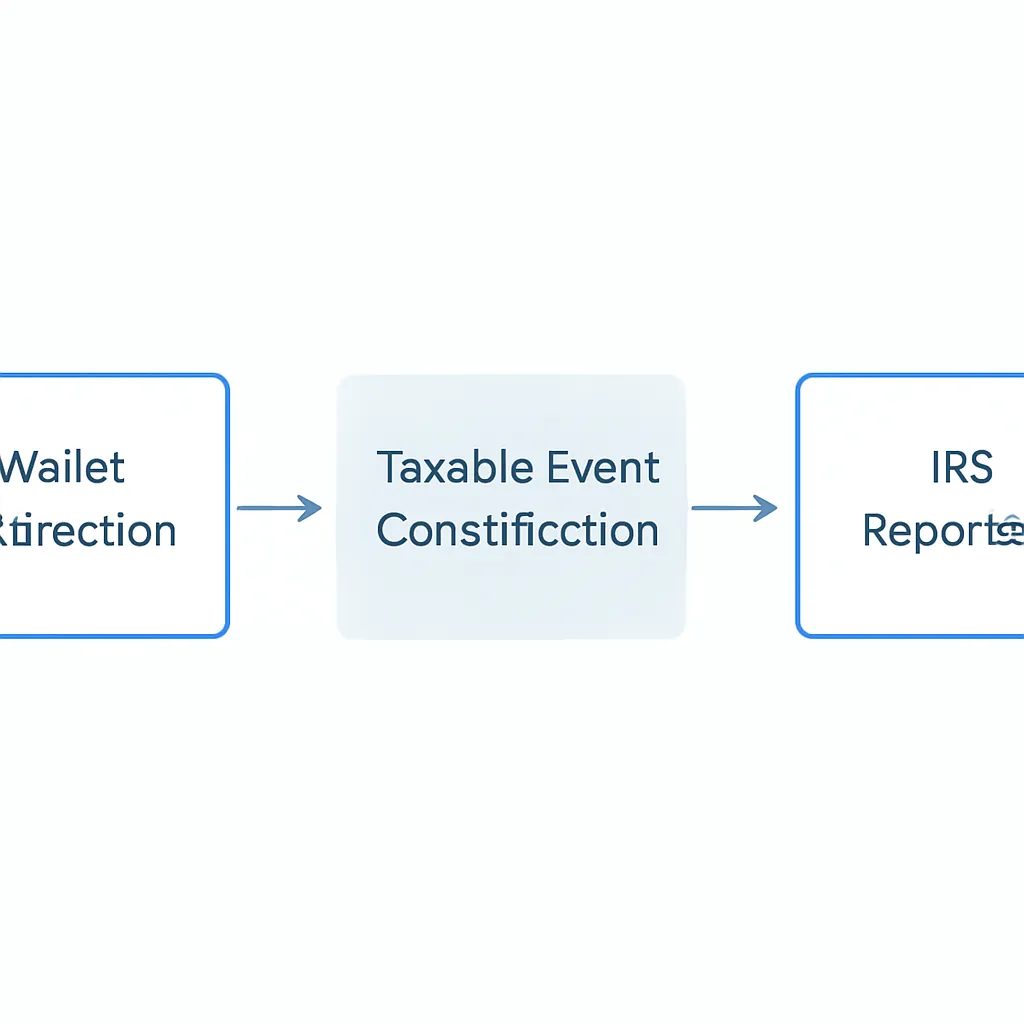
The challenge with DeFi is that transactions happen fast, across multiple protocols, and often without a neatly generated 1099 form landing in your inbox. That does not mean the IRS treats them as unreported income you can ignore. Taxpayers are expected to track every transaction, calculate their own gains and losses, and report accurately. The responsibility sits with you, not with the protocol.
Upcoming IRS Reporting Requirements
In 2023, the IRS released proposed regulations under the Infrastructure Investment and Jobs Act that would require DeFi brokers to issue 1099-DA forms to users. Those rules continued to develop through 2024. Even before mandatory broker reporting arrives at scale, the IRS expects full disclosure. Pleading ignorance of how a liquidity pool works has never been a recognised defence.
Crypto Trading Tax: Swaps, DEX Trades and Disposals
Every time you swap one token for another on a decentralised exchange, you dispose of the token you sent and acquire the one you received. That disposal is a taxable event for crypto trading tax purposes. The gain or loss is the difference between what you originally paid for the token you gave up, your cost basis, and its fair market value at the moment of the swap.
Short-Term vs Long-Term Capital Gains
Short-term capital gains apply if you held the token for one year or less. These gains are taxed at your ordinary income rate, which can reach up to 37% for high earners. Long-term capital gains, for assets held longer than one year, are taxed at 0%, 15%, or 20% depending on your total taxable income. Getting the holding period right matters enormously.
| Holding Period | Tax Rate Type | Typical Rate Range |
|---|---|---|
| 1 year or less | Short-term capital gains | 10% to 37% (ordinary income rates) |
| More than 1 year | Long-term capital gains | 0%, 15%, or 20% |
Accounting for Gas Fees
Gas fees paid to execute a trade can be added to your cost basis or used to reduce your proceeds, depending on which side of the transaction they fall on. Keeping a record of gas costs is not optional if you want an accurate gain calculation.
Crypto Staking Tax and Whether Staking Is Taxable
Is staking taxable? In the United States, the IRS position is yes. Staking rewards are treated as ordinary income at the time you receive them, valued at their fair market price on the date of receipt. This is consistent with the broader principle that newly created property received as compensation constitutes income.
The Jarrett Case and Its Impact
The landmark case Jarrett v. United States drew significant attention when the Jarretts argued that self-created staking rewards should not be taxable until sold, similar to a farmer's crop before harvest. The IRS offered a refund rather than litigate, which meant no binding precedent was set. The IRS has not formally changed its position. Until it does, the safer and more defensible approach is to treat staking rewards as income on receipt.
Tracking Cost Basis of Staking Rewards
For crypto staking tax purposes, you also need to track the cost basis of those rewards from the moment you receive them. When you later sell or swap those staked tokens, you will owe capital gains tax on any appreciation since that receipt date. So staking can create two taxable events: income on receipt, and a capital gain on disposal.
| Event | Tax Treatment | Tax Type |
|---|---|---|
| Receiving staking rewards | Ordinary income at fair market value on receipt date | Income tax |
| Selling staking rewards later | Capital gain or loss from receipt-date cost basis | Capital gains tax |
How Are DeFi Rewards Taxed: Liquidity Pools and Yield Farming
How are DeFi rewards taxed when they come from liquidity pools or yield farming protocols? The general answer is that token rewards paid to liquidity providers are treated as ordinary income in the same way staking rewards are. You receive tokens, those tokens have a fair market value on receipt, and that value is your taxable income for that period.
Tax Implications of Depositing Into Liquidity Pools
Liquidity pools add an extra layer of complexity. When you deposit two tokens into a pool, you typically receive LP tokens representing your share. The IRS has not issued specific guidance on whether depositing tokens into a liquidity pool is itself a taxable disposal. Many tax professionals treat it as a disposal because you are exchanging your tokens for a different asset. Others argue it resembles a deposit with no disposal. The conservative approach is to treat it as a disposal and recognise any gain or loss at that point.
Withdrawing and Impermanent Loss
When you withdraw from the pool, you exchange your LP tokens back for the underlying assets. That is almost certainly a disposal of the LP tokens, triggering a capital gain or loss based on the difference between what you received and your cost basis in the LP tokens. Impermanent loss complicates the maths further, but it is not a recognised tax deduction in its own right under current IRS guidance.
Crypto Airdrop Tax: Free Tokens Are Not Free
Crypto airdrop tax catches many users off guard. Receiving tokens through an airdrop is treated as ordinary income by the IRS. The taxable amount is the fair market value of the tokens at the time you gain control of them. It does not matter that you did not ask for them or pay for them. Receipt of property with value is income.
Revenue Ruling 2023-14 and Airdrops
The IRS addressed airdrops directly in Revenue Ruling 2023-14, which confirmed that staking rewards received on proof-of-stake blockchains are includable in gross income. The underlying principle extends naturally to airdrops. Tokens you can access and dispose of are income at receipt.
Valuing Tokens Without a Liquid Market
Where it gets tricky is with tokens that have no liquid market at the point of the airdrop. Valuing them at zero is tempting but risky if the IRS later determines they had an ascertainable fair market value. Document your valuation methodology carefully and keep records of any market data you used to arrive at your figure.
NFT Tax: Buying, Selling, and Creating
NFT tax follows a similar framework to other crypto assets, with a few additional wrinkles. When you buy an NFT using cryptocurrency, that purchase is a disposal of the crypto you spent, creating a capital gain or loss based on the cost basis of the crypto used. You then hold the NFT with a cost basis equal to its purchase price.
NFTs as Collectibles and Higher Tax Rates
When you sell an NFT, you have a capital gain or loss based on your cost basis versus the sale proceeds. If you held it for more than a year, long-term rates apply. There is, however, a separate question about whether NFTs might be classified as collectibles, which carry a higher maximum capital gains rate of 28% rather than the standard 20%. The IRS has signalled interest in treating certain NFTs as collectibles. Check current guidance before assuming the standard rates apply to your specific NFT.
Self-Employment Income for Creators
If you create and sell NFTs as an artist or developer, your proceeds may constitute self-employment income rather than capital gains. In that case, self-employment tax applies on top of ordinary income tax, making the effective rate higher than it might first appear.
| NFT Activity | Tax Treatment |
|---|---|
| Buying an NFT with crypto | Disposal of crypto used: capital gain or loss |
| Selling an NFT | Capital gain or loss (possibly collectibles rate) |
| Creating and selling NFTs | Likely self-employment income |
| Receiving an NFT as an airdrop | Ordinary income at fair market value on receipt |
Record-Keeping: The Foundation of DeFi Tax Compliance
No amount of understanding the rules helps you at filing time if your records are a mess. Every DeFi transaction needs a timestamp, the tokens involved, the fair market value of each token in USD at the time of the transaction, and the resulting cost basis. Across a year of active DeFi use, that can mean thousands of individual data points pulled from multiple chains and protocols.
On-Chain Data as a Double-Edged Sword
On-chain data is permanent and public, which cuts both ways. The IRS can reconstruct your transaction history from blockchain explorers if it needs to. You should be doing the same, proactively. Wallet addresses, protocol interactions, and smart contract calls all leave a traceable record. Claiming you cannot calculate your gains because DeFi is complicated is not a position the IRS is sympathetic to.
Using Crypto Tax Software
Using dedicated crypto tax software is now close to essential for anyone with meaningful DeFi activity. Manually tracking swaps, rewards, and LP positions across Ethereum, Solana, and other chains by hand is error-prone and time-consuming. Automation reduces mistakes and creates the audit trail you need if the IRS ever asks questions.
Illustrative Scenario
This scenario is illustrative. It does not describe a real person or client, and the figures are examples only.
To illustrate how this applies in practice, consider the following scenario:
Michael is a software engineer based in Austin, Texas. He has been active in DeFi for two years, providing liquidity on a major Ethereum-based DEX, farming yield on a stablecoin protocol, and accumulating staking rewards on a proof-of-stake network. He also purchased two NFTs using ETH he had held for eight months.
When tax season arrives, Michael realises he has no consolidated record of his activity. He knows he owes something, but the combination of LP deposit disposals, yield farming income, staking reward income, and the capital gain from the ETH he used to buy the NFTs makes the calculation feel impossible. His accountant quotes him a significant fee to reconstruct everything manually from blockchain explorers.
Michael signs up for CryptaTax, connects his wallets and the relevant chains, and the platform pulls in his full transaction history. It classifies each event, calculates cost bases using his preferred accounting method, and produces a completed tax report ready for his accountant to review. The process takes a fraction of the time and gives Michael confidence that his numbers are defensible. He files on time, with full documentation, and avoids any underreporting risk.
Frequently Asked Questions
Do I have to report DeFi transactions to the IRS?
Yes. The IRS treats cryptocurrency as property and expects taxpayers to report all taxable events, including DeFi swaps, staking rewards, airdrops, and NFT sales. There is no exemption for decentralised protocols. Failing to report is considered underreporting of income.
Is staking taxable in the United States?
The IRS treats staking rewards as ordinary income at the fair market value of the tokens on the date you receive them. Is staking taxable? Under current IRS guidance, yes. When you later sell those rewards, any further gain is subject to capital gains tax on top of the income already recognised.
How are DeFi rewards taxed if I reinvest them immediately?
How are DeFi rewards taxed does not change based on what you do with them afterward. If you receive tokens as DeFi rewards, you owe ordinary income tax on their value at receipt, even if you immediately reinvest or compound them. The reinvestment creates a new cost basis for those tokens going forward.
What is the tax treatment of liquidity pool deposits and withdrawals?
Most tax professionals treat depositing tokens into a liquidity pool as a disposal of those tokens, triggering capital gains or losses. Withdrawing from a pool is treated as a disposal of the LP tokens received. Impermanent loss is not currently a recognised deduction under IRS guidance.
How does crypto airdrop tax work?
Crypto airdrop tax applies at the point you gain control of the airdropped tokens. Their fair market value at that moment is treated as ordinary income. When you later sell the tokens, any gain above that value is a capital gain. Tokens with no ascertainable market value at receipt require careful documentation of your valuation approach.
Are NFT sales subject to capital gains tax?
Yes. NFT tax follows the same property rules as other crypto assets. Selling an NFT for more than you paid creates a capital gain. There is an unresolved question about whether some NFTs qualify as collectibles, which carry a maximum 28% capital gains rate rather than the standard long-term rate. Check current IRS guidance for your specific asset type.
What is the crypto trading tax rate for short-term gains?
Short-term crypto trading tax applies to assets held for one year or less and is taxed at your ordinary income rate, which ranges from 10% to 37% depending on your total taxable income. Swapping tokens on a DEX counts as a disposal and can trigger short-term gains if the swapped tokens were held for less than a year.
Do I owe tax if I only moved crypto between my own wallets?
Transferring crypto between wallets you own is not a taxable event. No disposal occurs, so no gain or loss arises. You should still keep records of these transfers to reconcile your cost basis accurately across wallets, as poor record-keeping can make it appear that you acquired tokens at a different price than you actually did.
What records do I need to keep for DeFi tax compliance?
You need to record the date of every transaction, the tokens involved, their fair market value in USD at the time of the transaction, any fees paid, and the resulting cost basis. Retain wallet addresses and protocol interaction records. The IRS can reconstruct your on-chain history, so your records should match the blockchain data exactly.
Can I use crypto tax software to calculate my DeFi taxes?
Yes, and for anyone with significant DeFi activity it is close to essential. Manually tracking hundreds or thousands of swaps, rewards, and LP events across multiple chains is error-prone. Dedicated crypto tax software can import on-chain data, classify transactions, and generate IRS-ready reports, significantly reducing the risk of under- or over-reporting.
Source: CryptaTax