
Crypto Staking Tax: What You Actually Owe on Rewards, DeFi, and More
Crypto staking tax is one of the most searched and least understood areas of personal crypto taxation. If you earn rewards by locking up tokens, running a validator node, or participating in a proof-of-stake network, most tax authorities consider that income. You owe tax the moment you receive those rewards, not when you sell them. Get that wrong and you are either overpaying or sitting on a liability that compounds quietly year after year. This guide covers how staking rewards are taxed, how the same logic applies to DeFi yields, NFT disposals, and airdrops, and what practical steps you can take to stay on the right side of your tax authority.
Is Staking Taxable? The Core Principle
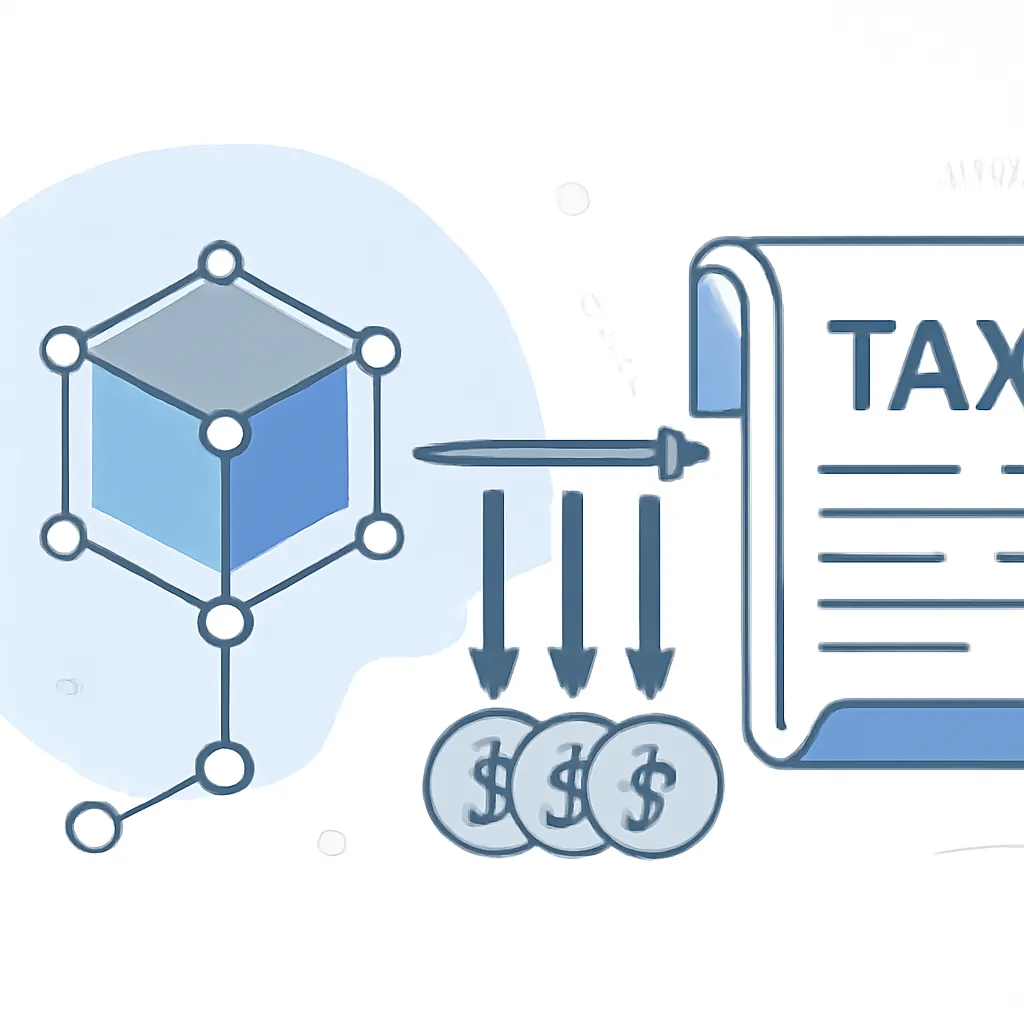
The short answer is yes, in the vast majority of jurisdictions. The key question most tax authorities ask is whether staking rewards represent new income or simply an increase in the value of something you already hold. Most jurisdictions, including the UK, US, Australia, and most of the EU, treat staking rewards as ordinary income at the point of receipt. The value you use to calculate that income is typically the fair market value of the tokens on the day they land in your wallet.
Two-Stage Tax Treatment
That creates two separate taxable events from a single staking position. First, you pay income tax when you receive the reward. Second, if you later sell or swap those reward tokens, you pay capital gains tax on any increase in value between what you received them at and what you disposed of them for. Understanding this two-stage treatment is essential. Many holders only think about the sale and miss the income leg entirely.
There are a handful of jurisdictions that take a softer approach. Germany, for example, has historically allowed some long-term holders to benefit from an extended tax-free holding period if staking was involved, though the details depend on the tax year and individual circumstances. Always check the rules for your specific country before assuming a generous treatment applies to you.
Jurisdiction Comparison Table
| Jurisdiction | Staking Reward Treatment at Receipt | Capital Gains on Disposal |
|---|---|---|
| United Kingdom | Income tax at fair market value | Yes, CGT applies |
| United States | Ordinary income at fair market value | Yes, short or long-term CGT |
| Australia | Ordinary income at fair market value | Yes, CGT applies (50% discount if held 12+ months) |
| Germany | Income tax at fair market value | Yes, though long-hold exemptions may apply in some cases |
| Malta | Treated case by case; MiFID classification matters | Depends on asset classification |
How Are DeFi Rewards Taxed?
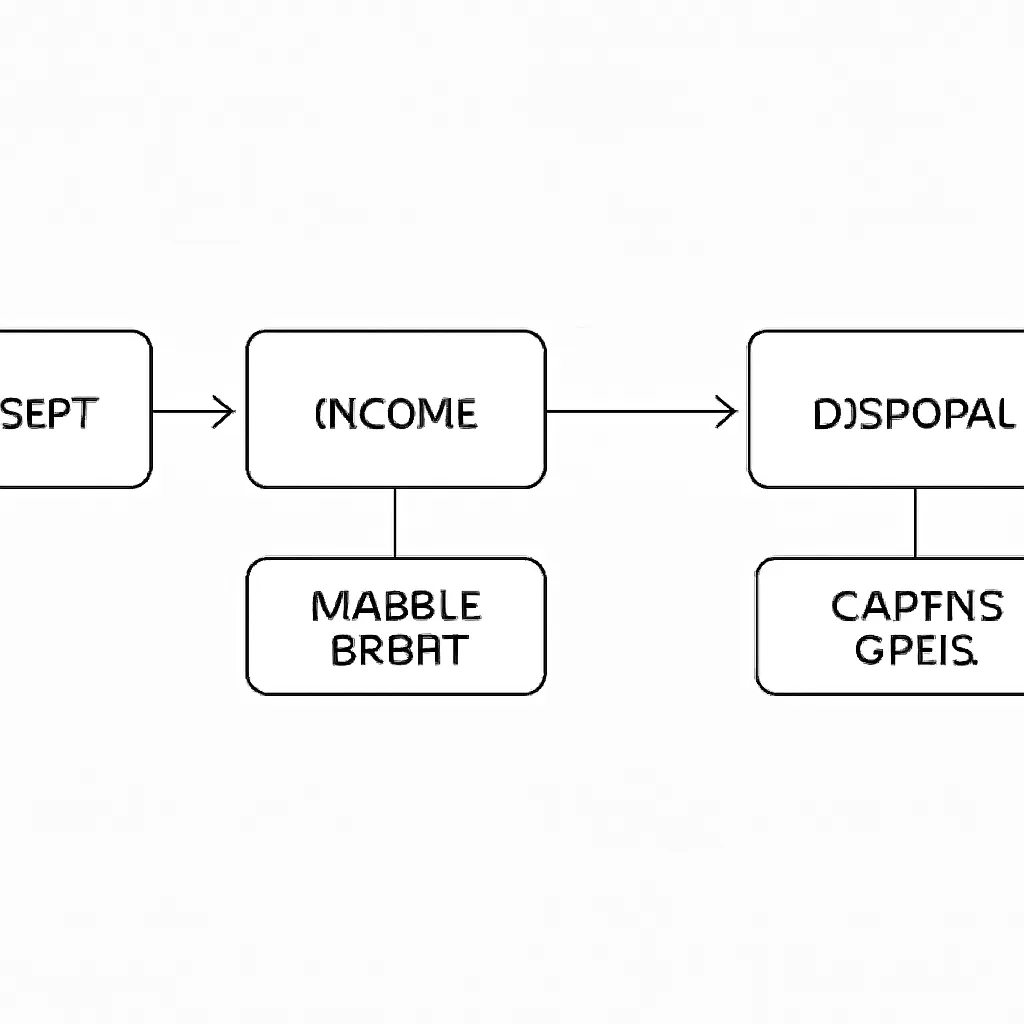
DeFi tax is a rapidly evolving area, and the honest answer is that most tax authorities are still catching up with the products. Liquidity mining, yield farming, lending protocols, and automated market maker fees all generate returns, and the taxable treatment of each can differ. The general principle that tax authorities apply is substance over form: if you receive tokens as a reward for participating in a financial activity, those tokens are likely to be income at the point of receipt.
Practical Treatment of DeFi Rewards
How are DeFi rewards taxed in practice? If you deposit tokens into a liquidity pool and receive LP tokens or yield in return, the yield portion is typically treated as income. The LP tokens themselves may or may not trigger a disposal of the underlying assets at deposit, depending on whether your tax authority views that exchange as a taxable swap. In the UK, HMRC generally treats swapping one crypto asset for another, including depositing into a DeFi pool, as a disposal for CGT purposes. In the US, the IRS has not issued definitive guidance specifically on LP token mechanics, but the broad principle that crypto-to-crypto exchanges are taxable events still applies.
Rebase Tokens and Record-Keeping
Rebase tokens and algorithmic stablecoins that automatically adjust your balance add another layer of complexity. Each rebase that increases your token count could be treated as income. Keeping clean records of every transaction, including the fair market value at the time, is not optional in DeFi. It is the only thing that protects you if your tax authority asks questions.
Crypto Staking Tax vs. Crypto Trading Tax: Key Differences
Crypto trading tax and crypto staking tax follow different logic, and conflating them is one of the most common filing errors individual holders make. Trading involves buying and selling assets, and every disposal creates a capital gains event. Staking creates an income event first, then a capital gains event on disposal. The distinction matters because income tax rates and capital gains tax rates are often different, and the point at which each liability arises is different too.
Different Administrative Burdens
For active traders, the volume of transactions can make record-keeping extremely demanding. Every swap, every trade, every fee paid in crypto is potentially a taxable event. Stakers face a different administrative burden: tracking the value of rewards on the day of receipt, often across dozens of small daily or weekly distributions. Neither is simple. Both require systematic record-keeping from day one, not retrospective reconstruction at filing time.
Activity Comparison Table
| Activity | Tax Type Triggered | When Liability Arises | Key Record Needed |
|---|---|---|---|
| Staking rewards received | Income tax | At point of receipt | Fair market value on receipt date |
| Selling staking rewards | Capital gains tax | At point of disposal | Cost basis (income value) and disposal value |
| Crypto-to-crypto trade | Capital gains tax | At point of swap | Acquisition cost and disposal value |
| Selling crypto for fiat | Capital gains tax | At point of sale | Acquisition cost and sale price |
| DeFi yield received | Income tax (usually) | At point of receipt | Fair market value on receipt date |
NFT Tax and Crypto Airdrop Tax: Often Overlooked
NFT tax catches a lot of holders off guard, especially those who became active during periods of high market activity and assumed that digital art or gaming items sat outside the tax system. They do not. In most jurisdictions, buying an NFT with cryptocurrency is a disposal of that cryptocurrency, triggering a capital gains calculation. Selling or trading an NFT is also a disposal. If you mint NFTs and sell them, that activity may be treated as trading income rather than capital gains, particularly if you do it regularly and at scale.
Airdrop Tax Treatment
Crypto airdrop tax is similarly underappreciated. If you receive tokens for free as part of an airdrop, most tax authorities treat the fair market value of those tokens on receipt as income. The argument that you did nothing to earn them rarely holds. HMRC, for instance, distinguishes between airdrops received in return for a service or promotional activity, which are employment or miscellaneous income, and truly unsolicited airdrops, which may be treated differently. In the US, the IRS has indicated that airdropped tokens are gross income at fair market value when received.
Hard Fork Tax Variations
Hard forks present yet another variation. When a blockchain forks and you receive new tokens, the treatment depends on whether you had any choice or action involved. The IRS has said that tokens received through a hard fork are taxable income. HMRC takes a more nuanced view, sometimes treating them as having a nil cost base rather than immediate income. The differences across jurisdictions are real and consequential.
Record-Keeping: The Foundation of a Clean Filing
No matter which jurisdiction you file in, accurate records are the non-negotiable foundation of a correct crypto tax return. For staking specifically, you need the date each reward was received, the number of tokens, the fair market value in your local currency on that date, and the name of the protocol or network. For DeFi activity, you also need records of every deposit, withdrawal, and fee paid in tokens. For NFTs, you need purchase price in fiat equivalent, sale price, and the dates of both.
Challenges With Exchange Records
Exchanges and wallets do not always make this easy. Some only retain transaction history for a limited period. Others do not calculate fiat-equivalent values automatically. Self-custody wallets record nothing at all beyond on-chain data. The practical implication is that you need to pull records regularly rather than trying to reconstruct a full year of activity in one sitting before a filing deadline. Tools like CryptaTax are designed to automate exactly this process, pulling data from wallets and exchanges and calculating your tax position across all activity types in one place.
Common Mistakes That Lead to Incorrect Returns
The most frequent error is treating staking rewards as having a zero cost base when you sell them. If you received tokens as staking income and paid income tax on them, the cost base for capital gains purposes is the value you declared as income. Selling at the same price means no capital gain, not a full gain on the sale proceeds.
Ignoring Small Transactions
A second common mistake is ignoring small transactions. Many stakers receive micro-rewards daily. Each one is technically a separate taxable event with its own income value. Ignoring them because they are small does not make them disappear from your filing obligation. A third mistake is assuming that activity on a non-custodial wallet or a foreign exchange is invisible to tax authorities. Increasingly, exchanges are required to report user data under frameworks like DAC8 in the EU and CARF globally. The era of unofficial crypto activity is closing fast.
Illustrative Scenario
This scenario is illustrative. It does not describe a real person or client, and the figures are examples only.
To illustrate how this applies in practice, consider the following scenario:
Priya is a freelance UX designer based in London who has been staking Ethereum for two years. She receives small daily rewards that she has never reported, assuming they were too minor to matter. When she decides to sell her accumulated rewards, she expects to pay capital gains tax on the full sale value because she assumed her cost base was zero. A friend points her to CryptaTax, where she imports her wallet transaction history. The platform identifies every reward receipt, assigns a sterling value to each using historical price data, and calculates the total income she should have declared across both tax years. It also correctly sets her cost base, which significantly reduces the capital gains figure on disposal.
Priya now has a clear picture of what she owes, including the back-years income she missed. She is able to make a voluntary disclosure to HMRC before any enquiry begins, which substantially reduces the potential penalty. The exercise also shows her that her DeFi yield from a lending protocol she used briefly needs to be treated the same way. Having everything in one report makes her next self-assessment filing straightforward rather than a source of anxiety.

Frequently Asked Questions
Is staking taxable in every country?
In the majority of countries, yes. Most tax authorities treat staking rewards as ordinary income at the point of receipt, based on the fair market value of the tokens on that date. A small number of jurisdictions take a more relaxed approach, but you should verify the rules for your specific country rather than assuming a favourable treatment applies.
Do I pay tax on staking rewards when I receive them or when I sell them?
In most jurisdictions, you pay income tax when you receive staking rewards and capital gains tax when you later sell or dispose of them. These are two separate taxable events. Many holders only account for the sale and miss the income leg, which creates an error in their return.
How are DeFi rewards taxed differently from staking?
DeFi rewards are generally taxed on the same income-at-receipt principle as staking, but the mechanics are more complex. Depositing tokens into a liquidity pool may itself be a taxable disposal depending on your jurisdiction. Yield earned within a protocol is typically income. The lack of specific DeFi guidance in many countries means the general crypto tax rules apply by default.
What is the NFT tax treatment when I sell an NFT?
Selling an NFT is a disposal for capital gains purposes in most jurisdictions. Your gain is the difference between what you paid for it, including any gas fees, and what you sold it for. If you create and sell NFTs regularly as part of a business activity, the income may be treated as trading income rather than a capital gain, which is taxed differently.
Is crypto airdrop tax calculated on the value when I receive the tokens?
Yes, in most countries, airdropped tokens are treated as income at their fair market value on the date of receipt. That value also becomes your cost base for any future capital gains calculation. Some jurisdictions make distinctions based on whether you performed an action to receive the airdrop, so the exact treatment can vary.
Does crypto trading tax apply to every swap, even crypto-to-crypto?
Yes. In most jurisdictions, swapping one cryptocurrency for another is treated as a disposal of the first asset, triggering a capital gains calculation. The gain or loss is the difference between the original acquisition cost and the market value of the asset at the time of the swap. This applies whether you trade on a centralised exchange or a decentralised protocol.
What records do I need to keep for my staking rewards?
You need the date of each reward, the number of tokens received, the fair market value in your local currency on that date, and the name of the staking protocol or network. These records support both the income tax calculation at receipt and the cost basis calculation when you eventually dispose of the rewards.
Can tax authorities see my staking and DeFi activity if I use a private wallet?
On-chain data is publicly visible on most blockchains, and tax authorities in several jurisdictions are actively developing blockchain analytics capabilities. Reporting frameworks like CARF and DAC8 are also expanding the obligation on exchanges and service providers to share user data. Using a private wallet does not make crypto activity invisible to a determined tax authority.
What happens if I forgot to report staking income in previous tax years?
In most jurisdictions, you can make a voluntary disclosure to correct past returns. Doing so before a tax authority opens an investigation typically results in lower penalties than if errors are discovered independently. The sooner you act, the better the outcome is likely to be. A qualified tax adviser can help you calculate what is owed and structure the disclosure correctly.
Is there software that can calculate my crypto staking tax automatically?
Yes. Tools like CryptaTax connect to your wallets and exchanges, pull transaction history, assign historical fiat values to each event, and calculate your total tax position across staking, DeFi, NFT, and trading activity. This removes the need to reconstruct records manually and reduces the risk of errors in your return.
Source: CryptaTax