
Fake IRS Letters Target Crypto Holders: What to Do Now
IRS Criminal Investigation (IRS-CI) issued a fraud alert on 30 July 2026 warning that scammers are sending convincing fake IRS letters to cryptocurrency holders across the United States. The letters demand that recipients register for a so-called "Digital Asset Compliance Portal" by a stated deadline. That portal does not exist. The IRS does not operate it, and the letters did not come from the IRS. If you hold crypto and you've received something that looks like this, do not scan the QR code and do not hand over any information.
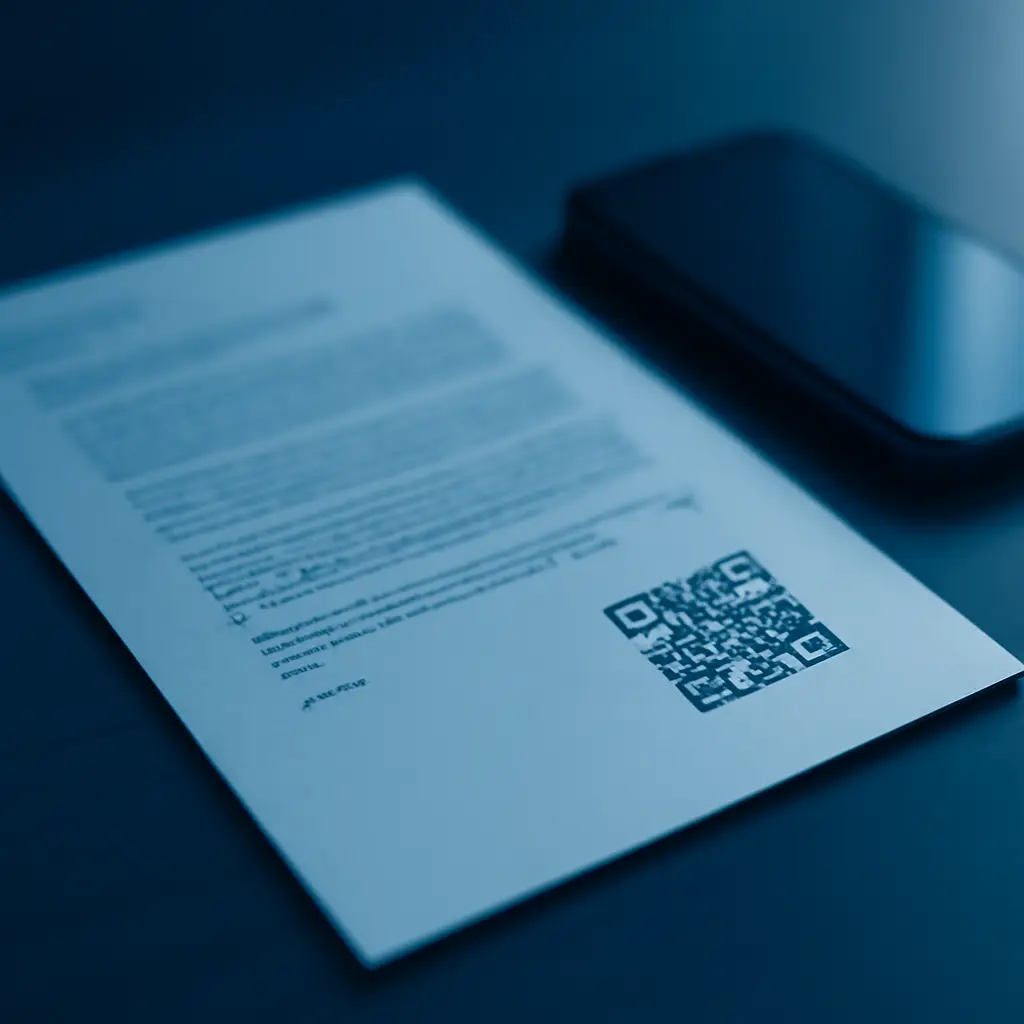
What the Scam Actually Looks Like
The fraudulent letter is designed to look official. It carries language and formatting that mimics genuine IRS correspondence, and it creates a sense of urgency by attaching a deadline to the supposed registration requirement.
The QR code trap
Embedded in the letter is a QR code. Scanning it takes the recipient to a website built to resemble IRS.gov. Once there, the site prompts users to enter personal details, cryptocurrency wallet information, exchange account credentials, or both. Any data entered goes straight to the fraudsters, who can use it to drain wallets, access exchange accounts, or steal identities.
Why crypto holders are being targeted
IRS enforcement attention on digital assets has grown substantially over the past few years, and that public awareness is exactly what scammers are exploiting. Crypto holders are primed to expect correspondence about reporting obligations. A letter referencing a "Digital Asset Compliance Portal" sounds plausible to someone who knows the IRS has been tightening crypto tax oversight. That familiarity is the hook.
IRS-CI chief Jarod Koopman addressed this directly: "Criminals continue to exploit public trust in government agencies by creating convincing fake websites and official-looking correspondence. Before responding to unexpected requests for personal information, stop, verify the source, and report potential fraud schemes to law enforcement."
How This Fits the Broader Scam Playbook
IRS-CI flagged three tactics that appear consistently across this and similar schemes: realistic-looking websites that mirror official government pages, correspondence that passes a casual visual inspection, and artificial deadlines designed to short-circuit rational decision-making. Urgency is a deliberate design feature of the scam, not a coincidence. The faster a target acts, the less likely they are to pause and verify.
Why wallet credentials are especially dangerous
Unlike a compromised bank account, which has regulatory protections and potential recovery routes, a stolen crypto wallet recovery phrase or private key gives an attacker immediate, irreversible access to the funds it controls. There is no equivalent of a bank's fraud department to call. Once assets leave a self-custody wallet, they are almost certainly gone. That asymmetry is why scammers are specifically after wallet credentials rather than just name and address data.
What IRS-CI Says to Do
The agency's guidance is clear and practical. Here's a consolidated version of the protective steps IRS-CI has set out.
If you receive a suspicious letter
- Do not scan any QR code from an unsolicited letter, email, or text message, particularly one claiming to be from a government agency.
- Do not enter any personal, financial, or cryptocurrency information on a site you reached through a QR code or an unsolicited link.
- Verify the source independently. Go directly to IRS.gov by typing the address into your browser. If you cannot find any reference to the portal or requirement described in the letter, the letter is fake.
- Slow down. Scammers engineer urgency. A genuine IRS notice will not require you to act within hours via a QR code.
- Talk to someone you trust, whether that's a tax professional, a financial adviser, or a family member, before taking any action involving money or credentials.
If you've already responded
- Stop all communication with the fraudster immediately.
- Change the passwords on any financial accounts, email accounts, or exchange accounts you may have exposed.
- Contact your cryptocurrency exchange right away if you shared any login credentials. Most major exchanges have dedicated security or fraud lines.
- Preserve every piece of evidence: screenshots, the original letter, any emails or texts associated with it.
- Report the incident to IRS-CI through the official reporting channel on IRS.gov.
The Crypto Tax Angle: Why Accurate Records Matter More Than Ever
Scams like this one thrive in part because many crypto holders feel uncertain about their actual tax obligations. That uncertainty makes a letter about a "compliance portal" feel credible. One of the best defenses against this kind of fraud is knowing exactly what the IRS actually requires of you so that anything outside that framework immediately raises a red flag.
What the IRS genuinely requires
The IRS treats cryptocurrency as property for federal tax purposes. That means every disposal, whether a sale, a swap, or using crypto to pay for goods, is a taxable event. You report capital gains and losses on Schedule D and Form 8949. The IRS does not require you to register for any portal to comply with these rules. Your obligations are fulfilled through your annual Form 1040 and the associated schedules. Any letter telling you otherwise is not from the IRS.
If you're trying to calculate crypto taxes accurately before your next filing, getting your transaction history in order now is the right move. A clean, timestamped record of every trade, receipt, and disposal is what a genuine IRS audit would require, and it's also what lets you spot quickly that a demand for portal registration has no basis in real tax law. You can use a crypto tax calculator to pull that data together well before any filing deadline, giving you clarity on your actual position.
For a broader picture of how the IRS has been expanding its compliance focus, see what the IRS audit expansion means for your crypto taxes and the IRS 2026 filing season: key crypto tax takeaways.
A Note on Reporting and Recovery
If you or someone you know has been targeted, even if no information was handed over, reporting to IRS-CI matters. Fraud alerts like this one are built from victim and near-victim reports. The more data IRS-CI receives, the faster it can refine its public warnings and pursue the networks behind these schemes. You can file a report through the official IRS.gov website; do not use any contact details supplied in the suspicious letter itself.
For victims who did share exchange credentials, acting within the first few hours is critical. Many exchanges can freeze withdrawals or flag accounts if contacted quickly enough. Have the exchange's official support contact ready before you need it; find it now on the exchange's own website, not through a search result that could itself be compromised.
Key Takeaway for Crypto Holders
There is no IRS "Digital Asset Compliance Portal." Any letter, email, or message directing you to register for one is a scam. The IRS communicates primarily through postal mail to your address on file, it does not embed QR codes leading to registration portals, and it does not ask for wallet credentials or private keys under any circumstances. When in doubt, go directly to IRS.gov or call the IRS directly using the number listed there. Legitimate tax compliance is handled through your annual return, not through surprise portals with urgent deadlines.

Frequently Asked Questions
Is there a real IRS Digital Asset Compliance Portal?
No. IRS-CI confirmed on 30 July 2026 that no such portal exists. Any letter or website referencing it is fraudulent.
How does the IRS actually contact taxpayers about crypto?
The IRS contacts taxpayers primarily by postal mail sent to the address on your most recent return. It does not send QR codes, demand portal registrations, or request wallet credentials or private keys.
What should I do if I already scanned the QR code but didn't enter any information?
Simply visiting the fraudulent site carries some risk, since some sites attempt to fingerprint devices or install tracking code. Change passwords on your crypto exchange accounts and primary email as a precaution, run a security scan on your device, and report the letter to IRS-CI via IRS.gov.
Can scammers drain my crypto wallet if I only gave them my exchange login?
Potentially yes. If two-factor authentication is not enabled, or if the scammers can intercept authentication codes, they may be able to access and withdraw funds. Contact your exchange immediately, enable 2FA if it isn't already active, and request a withdrawal freeze while you secure the account.
Does receiving this fake letter mean the IRS is actually investigating me for crypto tax issues?
No. Scammers send these letters broadly to crypto holders, not in response to any real IRS inquiry. Receiving one says nothing about your actual tax compliance status. If you're concerned about your crypto tax position, the right step is to review your transaction history and consult a qualified tax professional, not to respond to the letter.
Source: Accounting Today