
DeFi Tax in Malta: Staking, Trading, Airdrops and NFTs Explained
DeFi tax in Malta is not as simple as many people hope. Malta has long positioned itself as a crypto-friendly jurisdiction, and the Malta Financial Services Authority has provided more regulatory clarity than most EU member states. But regulatory clarity for businesses is not the same as tax clarity for individuals. If you are earning yield from liquidity pools, collecting staking rewards, flipping NFTs, or receiving airdrops, you need to understand exactly how the Maltese tax framework treats each of those activities. Getting it wrong is not just a paperwork problem. Under-reporting crypto gains can result in penalties, interest charges, and in serious cases, investigation by the Commissioner for Revenue. This guide walks through the key DeFi activities one by one, explains the current Maltese tax treatment, and shows you what a realistic filing situation looks like.

How Malta Taxes Crypto Generally
Before getting into DeFi specifically, it helps to understand the baseline. Malta does not have a single dedicated crypto tax statute. Instead, the Commissioner for Revenue applies existing income tax and capital gains principles to crypto assets, guided by guidance issued over recent years. The tax treatment depends heavily on how you are classified: as an investor holding assets for the long term, or as a trader whose activity resembles a business.
Investor vs. Trader Classification
For individuals who are classified as investors, gains on the disposal of crypto assets may be treated as capital gains. Malta does not tax capital gains on the transfer of securities for individuals in most circumstances, but crypto assets are not always classified as securities. Where crypto is treated as a speculative asset or where trading is frequent and systematic, the Commissioner for Revenue may treat the activity as trading income, which is subject to income tax at progressive rates up to 35%.
The distinction between investor and trader is fact-specific. Relevant factors include the frequency of transactions, the holding period, the use of leverage, and whether the activity resembles a trade carried on for profit in a commercial sense. There is no bright-line rule. If you are making dozens of trades a week across multiple protocols, you are unlikely to be treated as a passive investor.
Tax Treatment Summary Table
| Classification | Typical Profile | Likely Tax Treatment |
|---|---|---|
| Investor | Long-term holder, infrequent disposals | Possible capital gains treatment; position uncertain for non-securities |
| Trader | Frequent trading, systematic activity | Income tax at progressive rates up to 35% |
| DeFi participant | Staking, yield farming, liquidity provision | Generally income tax on rewards received |
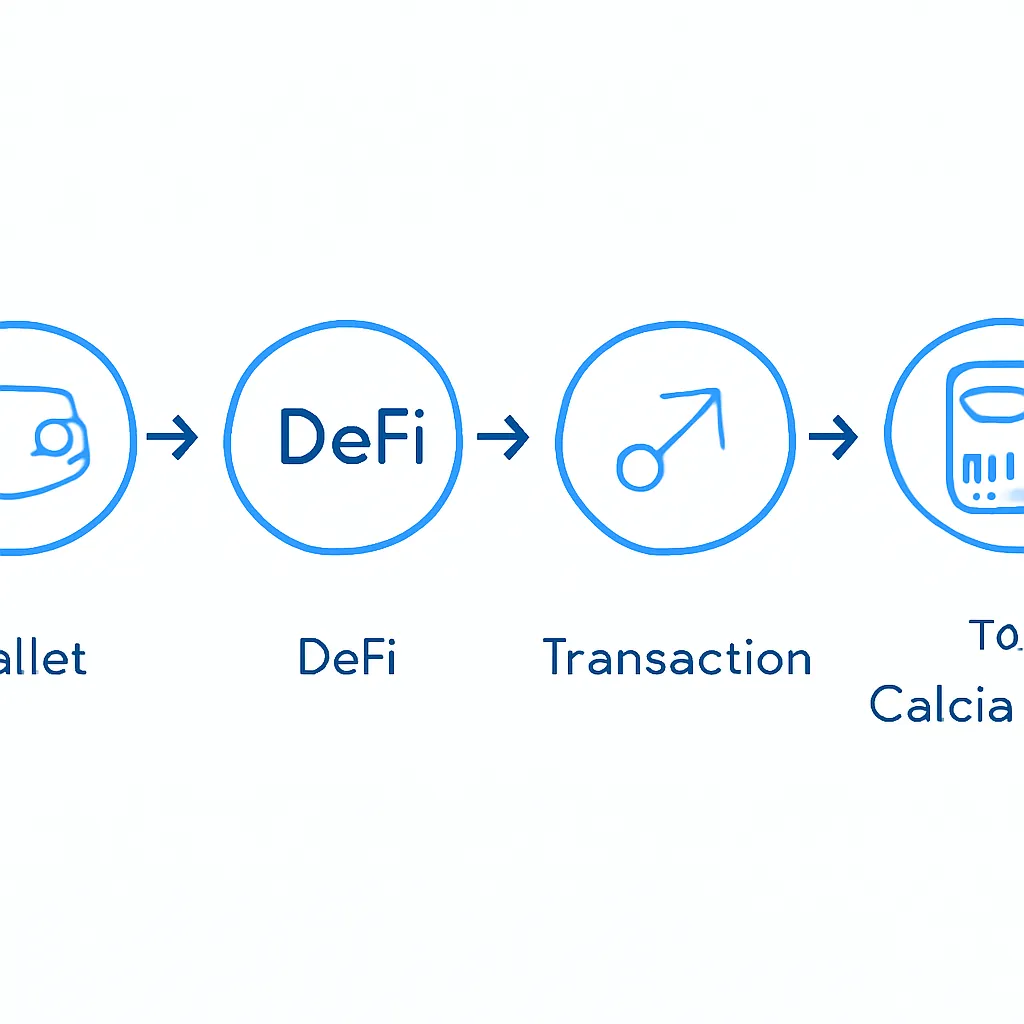
DeFi Tax: How Are DeFi Rewards Taxed in Malta?
This is the question most DeFi users want answered first. How are DeFi rewards taxed when you earn yield from a liquidity pool, receive protocol incentives, or accumulate governance tokens? The general position under Maltese tax principles is that rewards received in the course of an economic activity are treated as income at the point they are received. The value used is the fair market value of the tokens at the time they arrive in your wallet.
Liquidity Pool and Yield Rewards
Liquidity pool rewards, yield farming income, and lending interest are all likely to fall into this category. You earn them as a return on your crypto capital deployed in a protocol. That makes them analogous to interest or investment income under existing frameworks, taxable when received. Keeping a record of the token price at the exact moment each reward was credited is therefore essential. If you are earning rewards daily or even multiple times a day, this creates a significant record-keeping burden.
The secondary tax event comes when you eventually dispose of those reward tokens. If you sell, swap, or use them to purchase something else, a second calculation is needed. You compare the disposal proceeds against the original cost basis, which is the fair market value at the time you received the reward. Any gain on disposal may then be subject to further tax, depending on how your overall activity is classified.
Two-Stage Taxation Explained
This two-stage taxation is one of the most misunderstood aspects of DeFi tax for Maltese residents. Many users assume they only owe tax when they cash out to euros. That assumption is incorrect.
Crypto Staking Tax: Is Staking Taxable in Malta?
Is staking taxable in Malta? Yes, in most circumstances it is. Staking rewards are treated as income when received, valued at market price on the date of receipt. Whether you are staking ETH directly, delegating to a validator, or using a liquid staking protocol, the economic substance is the same: you are earning a return on assets you have locked or committed to a network, and that return is taxable income.
General Income Treatment
Crypto staking tax in Malta follows the same logic as other DeFi rewards. The Commissioner for Revenue has not issued specific staking guidance that overrides general income tax principles. As a result, practitioners apply the standard rule: income is recognised when it is received and valued at fair market value at that point.
Liquid Staking Token Nuance
One nuance worth understanding is the treatment of liquid staking tokens. When you stake ETH through a protocol and receive a liquid staking token in return, that receipt may itself be a taxable event if the token has a different value from the ETH you deposited. This is an area where the technical mechanics of the protocol matter. Wrapped or synthetic tokens that represent a 1:1 claim on underlying assets may be treated differently from tokens that accumulate yield and therefore trade at a premium over time.
| Staking Type | Tax Event on Receipt | Tax Event on Disposal |
|---|---|---|
| Direct staking rewards | Yes, income at fair market value | Yes, gain/loss vs. cost basis at receipt |
| Liquid staking token receipt | Potentially, depending on structure | Yes, on subsequent swap or sale |
| Validator delegation rewards | Yes, income at fair market value | Yes, on disposal of reward tokens |
Crypto Airdrop Tax and How Malta Treats Free Tokens
Crypto airdrop tax is another area where many Maltese residents make assumptions that do not hold up under scrutiny. Receiving free tokens sounds like it should be tax-free. In practice, it usually is not.
Conditional Airdrops as Income
Where an airdrop is received in exchange for performing a task, completing a wallet interaction, or as a reward for past protocol usage, the Commissioner for Revenue is likely to treat the tokens as income at the point of receipt. The value is the fair market value on the date the tokens land in your wallet. If you received 500 governance tokens in an airdrop and they were worth two euros each at the time, you have 1,000 euros of income to report, regardless of whether you sell them or not.
Unconditional Airdrops Grey Area
Truly unconditional airdrops, where tokens are distributed to all wallets meeting a snapshot criterion with no action required, sit in a greyer area. Some practitioners argue these could be treated as a windfall with no immediate tax liability, with tax deferred until disposal. However, this position is not formally confirmed by the Commissioner for Revenue, and relying on it carries risk.
When you eventually sell or swap airdropped tokens, the gain is calculated from the cost basis established at receipt. If you reported income of 1,000 euros on receipt and later sell for 800 euros, you have a capital loss on disposal relative to that basis.
Crypto Trading Tax and NFT Tax in Malta
Crypto trading tax in Malta applies when you dispose of one crypto asset in exchange for another, not just when you convert to euros. Every swap, trade, or exchange is a disposal. Each disposal requires you to calculate the gain or loss based on the difference between what you received and your cost basis in the asset you gave up.
Every Swap Is a Taxable Event
For active traders, this means hundreds or thousands of taxable events per year. The record-keeping obligation is significant. You need the acquisition date, acquisition price, disposal date, and disposal price for every transaction. Without software, this is practically unmanageable at scale.
NFT tax in Malta follows similar principles. Buying an NFT with ETH is a disposal of the ETH, triggering a taxable gain or loss on the ETH side of the transaction. Selling an NFT for ETH is a disposal of the NFT, triggering a gain or loss on the NFT side. If you are also creating and selling NFTs as part of a commercial activity, those sales may be treated as trading income rather than capital gains, which means a different tax rate and reporting route.
NFT Dual Disposal Complexity
The combination of high transaction volumes in NFT markets and the dual disposal logic makes NFT tax one of the most complex areas for individual filers. Many users discover their liability only when they try to compile records retroactively, by which point prices may be difficult to verify.
Record-Keeping Requirements and Filing Obligations
Malta's tax year runs from January to December, and individual income tax returns must be filed by the deadline set by the Commissioner for Revenue each year. Crypto income, DeFi rewards, staking income, airdrop income, and gains from trading or NFT disposals must all be declared in your annual return. Failure to declare is not a viable strategy. The Commissioner for Revenue has access to information exchange frameworks under EU directives, and DAC8, the EU directive on crypto asset reporting, means that exchange data will increasingly flow to tax authorities automatically.
Record-Keeping Burden
You are required to keep records sufficient to support your return. For crypto, that means transaction history from every exchange, wallet, and protocol you have used, showing dates, amounts, counterparties where available, and values in euros at the time of each transaction. The burden of proof sits with you, not with the tax authority.
Using Dedicated Software
Using a dedicated platform like CryptaTax can reduce this burden substantially. By connecting your wallets and exchanges, you can generate a complete transaction history, calculate gains and income automatically, and produce a report that maps directly onto your filing obligations. This is particularly valuable for DeFi users who have hundreds of small reward claims spread across multiple protocols.
Illustrative Scenario
This scenario is illustrative. It does not describe a real person or client, and the figures are examples only.
To illustrate how this applies in practice, consider the following scenario:
Maria is a Malta-based freelance designer who started participating in DeFi during the previous tax year. She deposited stablecoins into a lending protocol and earned daily interest rewards in the protocol's native token. She also received an airdrop of governance tokens from a protocol she had used earlier in the year, and she staked ETH through a liquid staking service, receiving a liquid staking token in return. By the end of the year, she had hundreds of individual reward claims, an airdrop receipt, and a pending question about whether her liquid staking token receipt was itself a taxable event.
Maria had not been tracking any of this in real time. When she attempted to compile her records manually ahead of her tax return, she found that token prices at the time of each reward claim were not easily available through her protocol's interface. She connected her wallets to CryptaTax, which pulled in her full transaction history, matched each reward claim to a price at the time of receipt, calculated her income figure for the year, and flagged the liquid staking token receipt for review. Her accountant was able to file her return with confidence, and Maria understood for the first time exactly what her DeFi activity had cost her in tax terms.

Frequently Asked Questions
What is DeFi tax and does it apply to me in Malta?
DeFi tax refers to the tax obligations that arise from participating in decentralised finance activities such as staking, liquidity provision, yield farming, and token swaps. If you are a Malta tax resident and you have earned rewards, received airdrops, or traded crypto assets through DeFi protocols, you likely have taxable income or gains to report to the Commissioner for Revenue.
How are DeFi rewards taxed in Malta?
DeFi rewards are generally treated as income at the point they are received. The taxable amount is the fair market value of the tokens in euros at the time they arrive in your wallet. A second tax event may arise when you later dispose of those tokens, based on any gain above your original cost basis.
Is staking taxable in Malta?
Yes. Crypto staking tax in Malta applies to rewards received through staking, whether you are running a validator, delegating to one, or using a liquid staking protocol. Rewards are treated as income when received, valued at market price on the date of receipt. The same tokens may also trigger a gain or loss calculation when you later sell or swap them.
How does crypto airdrop tax work in Malta?
Where an airdrop is received in connection with a task or past protocol activity, it is likely treated as income at receipt, valued at the market price on that date. Unconditional airdrops sit in a less certain position, but relying on a tax-free treatment without professional advice carries risk. When airdropped tokens are later sold, any gain is calculated from the cost basis established at receipt.
Does crypto trading tax apply to token swaps, not just cash-outs?
Yes. Every swap or exchange of one crypto asset for another is a disposal for Maltese tax purposes, not just conversions to euros. Each disposal requires a gain or loss calculation based on the cost basis of the asset given up and the value of the asset received. Active traders can accumulate hundreds of taxable events within a single year.
What is the NFT tax treatment in Malta?
NFT tax in Malta involves two disposal events in a typical trade. Buying an NFT with ETH is a disposal of the ETH, and selling an NFT for ETH is a disposal of the NFT. Gains on each side need to be calculated separately. If you are creating and selling NFTs commercially, your sales income may be treated as trading income rather than a capital gain.
Do I need to report DeFi income even if I never converted to euros?
Yes. Receiving tokens as rewards, staking income, or airdrops creates a taxable event in Malta regardless of whether you convert to euros. The taxable amount is determined by the fair market value at the time of receipt. The obligation to report arises at that point, not at the point of conversion to fiat currency.
How do I calculate my cost basis for DeFi tokens in Malta?
Your cost basis is the fair market value in euros at the time you received or purchased the token. For reward tokens, this is the price at the moment the reward was credited to your wallet. For purchased tokens, it is the price you paid plus any associated fees. Accurate records at the time of each transaction are essential, and crypto tax software can automate this process.
What records do I need to keep for DeFi tax in Malta?
You need a full transaction history from every wallet, exchange, and protocol you have used, showing dates, amounts, and the euro value at the time of each transaction. The Commissioner for Revenue may request these records to support your return. Keeping records in real time is far more reliable than reconstructing them later from incomplete data.
Will the Maltese tax authority know about my crypto activity?
Increasingly, yes. Malta operates within the EU's DAC8 framework, which requires crypto asset service providers to report user transaction data to tax authorities. Information exchange between EU member states means that activity on major exchanges is likely visible to the Commissioner for Revenue, even if the exchange is not based in Malta.
Source: CryptaTax