
DeFi Tax in Italy: Staking, Trading, Airdrops and NFTs Explained
DeFi tax in Italy is no longer a grey area you can quietly ignore. The Italian tax authority, the Agenzia delle Entrate, has made clear that crypto assets are taxable, and decentralised finance activity sits firmly within that scope. Whether you are swapping tokens on a DEX, earning staking rewards, receiving an airdrop, or selling an NFT, each of these actions can create a tax obligation. Many individual investors still do not know which events trigger a liability and which do not. That uncertainty is expensive: miscalculating or failing to report at all can lead to back taxes, interest, and penalties. This guide walks through each major DeFi activity in straightforward terms, explains how Italy currently treats it for tax purposes, and tells you what you need to record and report.

How Italy Taxes Crypto Assets: The Starting Framework
Italy treats crypto assets as a distinct category of financial asset for tax purposes. Capital gains arising from the disposal of crypto holdings are subject to a substitute tax. A disposal includes selling crypto for euros, swapping one token for another, and using crypto to pay for goods or services. The gain is calculated as the difference between the sale proceeds and the cost basis of the asset sold.
Tax Threshold and Disposal Events
The tax framework draws an important threshold. Capital gains are taxable in a given year only when the total value of crypto held across all wallets and exchanges exceeds a set threshold at any point during that year. Gains realised below that threshold level are not subject to the substitute tax. Above it, the gains are taxed at the applicable flat rate. Because DeFi activity often involves many small transactions across multiple protocols, keeping accurate records of every acquisition cost is essential. Without clear cost basis data, you cannot calculate a gain correctly, and the tax authority will not take your word for it.
| Crypto Event | Italian Tax Treatment | Key Consideration |
|---|---|---|
| Selling crypto for euros | Capital gain, substitute tax applies above threshold | Cost basis must be documented |
| Swapping one token for another | Disposal event, taxable gain or loss calculated | Each swap resets the cost basis of the new token |
| Paying for goods or services in crypto | Disposal event, taxable | Market value at time of payment is used |
| Transferring between your own wallets | Not a disposal, no tax event | Must be able to prove both wallets belong to you |
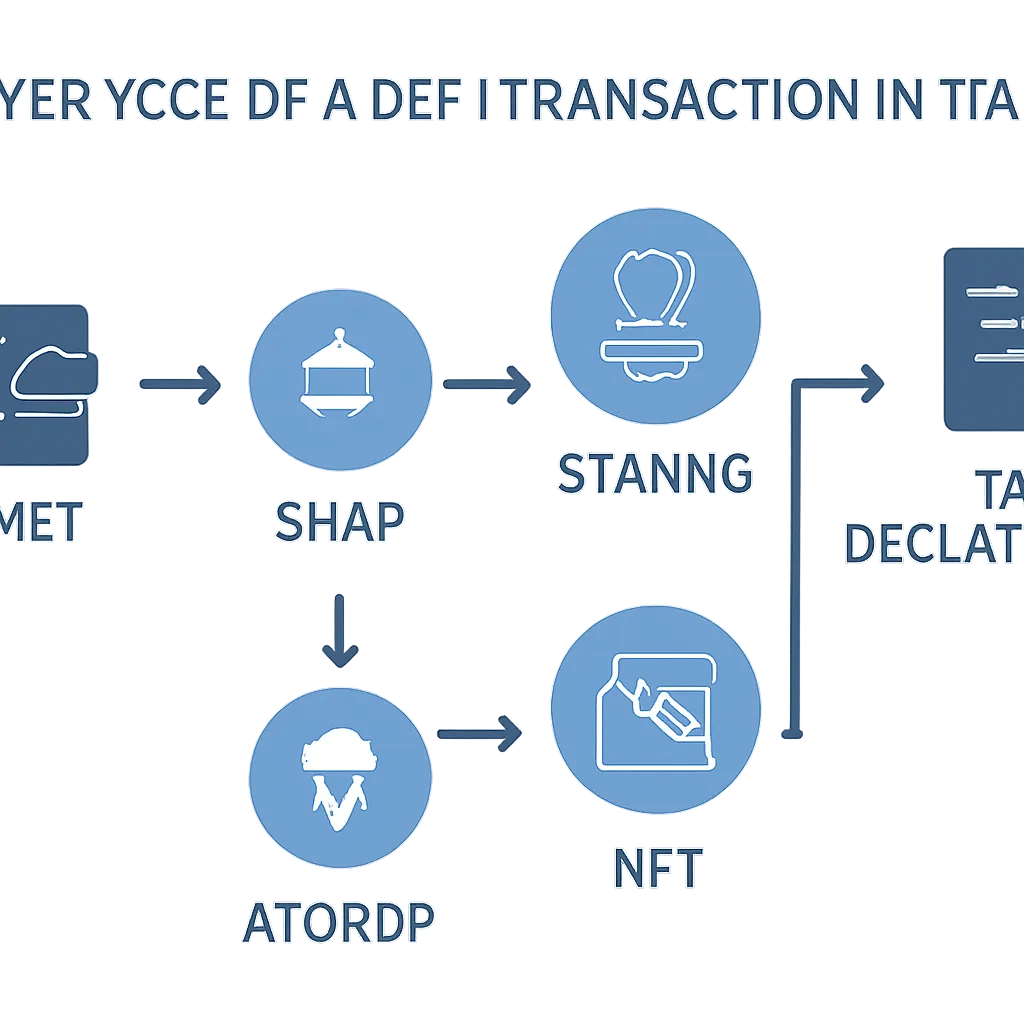
DeFi Tax on Swaps and Liquidity Pools
This is where DeFi tax gets complicated for most users. A token swap on a decentralised exchange is treated as a disposal of the asset you give up and an acquisition of the asset you receive. That means every swap is a potential taxable event. If you bought ETH at a low price and then swapped it for a stablecoin or another token at a higher market value, the gain on your ETH is realised at the moment of the swap, not when you eventually sell the new token.
Liquidity Pool Deposit and Withdrawal
Liquidity pool participation adds another layer. When you deposit two tokens into a liquidity pool, you receive LP tokens in return. Italian tax guidance has not issued a definitive ruling on every aspect of LP mechanics, but the prevailing interpretation treats the deposit as a disposal of the underlying tokens and an acquisition of the LP tokens. When you withdraw from the pool, the reverse applies. Any impermanent loss does not automatically translate into a tax deduction. You need to calculate the actual proceeds received against your original cost basis at each step.
Yield farming rewards earned from liquidity pools are treated as income at the point they are received. The market value of the tokens at the moment they arrive in your wallet forms both the income amount and your new cost basis for those tokens. If you later sell those reward tokens at a higher price, the additional gain becomes a capital gain on top of the income already declared.
How Are DeFi Rewards Taxed and Is Staking Taxable in Italy
Two of the most common questions from Italian crypto users are how are DeFi rewards taxed and is staking taxable. The answer to both is yes. Staking rewards and DeFi yield rewards are treated as miscellaneous income under Italian rules. The taxable amount is the fair market value of the tokens received, measured in euros at the time of receipt.
Staking Rewards as Miscellaneous Income
Crypto staking tax applies whether you are staking directly on a proof-of-stake network, delegating through a validator, or using a liquid staking protocol. The mechanics of how the reward is generated do not change the tax treatment. What matters is that you received tokens with a measurable value. That value is income.
One practical consequence of this treatment is that you end up with two layers of tax exposure on staking rewards. First, income tax at the point of receipt. Second, a potential capital gain if those reward tokens increase in value before you sell them. Tracking the exact acquisition date and the euro value at the time each reward arrives is therefore not optional. It is the foundation of an accurate tax return.
Layered Tax Exposure on Staking
| DeFi Activity | Income Tax Event | Capital Gains Event |
|---|---|---|
| Staking rewards received | Yes, at fair market value on receipt | Yes, if tokens later sold above receipt value |
| Yield farming rewards | Yes, at fair market value on receipt | Yes, on subsequent disposal above cost basis |
| LP deposit and withdrawal | No direct income event | Yes, disposal at each step |
| DEX swap | No direct income event | Yes, gain or loss on the token given up |
Crypto Airdrop Tax in Italy
Crypto airdrop tax is often misunderstood because airdrops feel passive. Tokens arrive in your wallet without you doing anything obvious, which leads many people to assume there is no tax event. Italy does not share that view. Airdrops are generally treated as miscellaneous income, with the taxable amount being the fair market value of the tokens at the time they land in your wallet.
Airdrop Valuation Challenges
There is nuance depending on the nature of the airdrop. Tokens received as part of a marketing campaign or a protocol reward distribution are most clearly treated as income. Tokens received as a result of a hard fork, where existing holders receive new tokens proportional to their holdings, may be treated differently, but the default position is that value received equals income unless a specific exemption applies.
The practical problem with airdrops is that many projects distribute tokens with very low initial liquidity. The market price at receipt may be difficult to establish reliably. You should still record the date of receipt and the best available market price at that time, even if liquidity was thin. Document your methodology. If the airdrop later becomes worthless, that loss may be offset against other capital gains in the same tax year, though you will need to record the disposal.
NFT Tax in Italy
NFT tax in Italy follows the same capital gains logic as other crypto assets. When you sell an NFT for more than you paid for it, the gain is taxable above the relevant threshold. The cost basis includes not just the purchase price but also any gas fees paid to acquire the NFT, since these are a direct cost of acquisition. Fees paid when selling can reduce the proceeds for the purposes of calculating your gain.
NFT Business Activity vs. Casual Sales
Creating and selling NFTs as a business activity is treated differently. If you are a professional NFT artist or regularly trade NFTs as part of a commercial activity, the income may be treated as business income rather than capital gains, which brings different rates and reporting obligations. The line between occasional sales and a regular trading activity is not always obvious, and Italian tax authorities look at the frequency, organisation, and commercial intent behind your activity.
Royalty income from NFTs, where you receive ongoing payments each time your NFT is resold on a secondary market, is treated as ordinary income at the point of receipt. Each royalty payment is a separate income event and needs to be recorded individually.
Crypto Trading Tax: Cost Basis Methods in Italy
When you sell or swap crypto assets, your taxable gain depends on which specific coins you are treated as having sold. Italy applies specific rules on how cost basis is determined. Understanding the applicable method matters enormously if you have purchased the same token at multiple different prices over time.
LIFO Method and Record-Keeping
The LIFO method, which stands for last in, first out, is the approach traditionally applied in Italy. Under LIFO, the most recently acquired tokens are treated as the ones sold first. This can produce a lower gain than other methods in a rising market, since you are selling tokens with a higher cost basis acquired more recently. However, the rules in this area have been subject to legislative updates, and you should verify the current applicable method for the tax year you are filing.
Regardless of the method, the record-keeping requirement is the same. You need the date of every purchase, the amount paid in euros, any associated fees, and the same data for every disposal. DeFi users who interact with dozens of protocols generate hundreds or thousands of transactions per year. Doing this manually is not realistic. Software that connects to your wallets and exchanges, classifies each transaction, and calculates gains automatically is the practical answer for anyone active in DeFi.
Illustrative Scenario
This scenario is illustrative. It does not describe a real person or client, and the figures are examples only.
To illustrate how this applies in practice, consider the following scenario:
Marco is a 34-year-old software developer based in Milan. He has been active in DeFi for two years, using a mixture of staking on Ethereum, yield farming on a lending protocol, and occasional NFT purchases. During the tax year, he received staking rewards on three separate occasions, swapped ETH for a stablecoin twice, and sold one NFT at a profit. He also received a token airdrop from a protocol he had used the previous year.
When Marco sat down to prepare his annual tax return, he realised he had no record of the euro value of his staking rewards at the time each one arrived. He also had not recorded the cost basis of the ETH he swapped, and he could not remember what he originally paid for the NFT he sold. Using CryptaTax, Marco connected his wallets and the platform automatically imported every on-chain transaction, matched each staking reward to its historical euro price, calculated the gain on each ETH swap using his purchase history, and produced a complete summary of his taxable income and capital gains for the year. He filed his return accurately, declared the airdrop as income, and avoided the risk of underpayment penalties.
Frequently Asked Questions
What is DeFi tax and does it apply in Italy?
DeFi tax refers to the tax obligations that arise from decentralised finance activity, including swaps, staking, yield farming, and liquidity pool participation. Italy taxes these activities under its broader crypto asset framework. Each event that results in a gain or income receipt can create a tax liability, and Italian residents are required to declare these on their annual tax return.
How are DeFi rewards taxed in Italy?
DeFi rewards are treated as miscellaneous income in Italy. The taxable amount is the fair market value of the tokens at the moment you receive them, converted into euros. You report this as income in the year of receipt. If you later sell those reward tokens at a higher price, any additional gain is subject to capital gains tax on top of the income already declared.
Is staking taxable in Italy?
Yes, staking is taxable in Italy. Staking rewards are treated as income at the point of receipt, with the taxable amount being the fair market value of the tokens received in euros. Crypto staking tax applies whether you stake directly on a network, delegate to a validator, or use a liquid staking protocol. The method by which the reward is generated does not change the tax treatment.
How does crypto trading tax work in Italy?
Crypto trading tax in Italy is charged on capital gains, which arise when you sell or swap crypto assets above your cost basis. Italy has traditionally applied the LIFO method to determine which tokens are treated as sold first. Gains are subject to a flat substitute tax above a specific threshold value of holdings. Every disposal, including token swaps, must be recorded with the relevant euro values at the time of the transaction.
What is the crypto airdrop tax treatment in Italy?
Crypto airdrop tax in Italy treats tokens received through an airdrop as miscellaneous income at the point of receipt. The taxable value is the fair market value of the tokens in euros when they arrive in your wallet. If the market price is difficult to establish due to low liquidity, you should record the best available price at the time and document your methodology. A later disposal of those tokens creates a separate capital gains calculation.
Does NFT tax apply in Italy?
Yes, NFT tax applies in Italy. Selling an NFT for more than you paid for it generates a capital gain that is taxable above the relevant threshold. Your cost basis includes the purchase price plus any gas fees paid to acquire the NFT. If you create and sell NFTs regularly as a commercial activity, the income may be treated as business income rather than a capital gain, with different rates applying.
Do I pay tax on transferring crypto between my own wallets?
No. Transferring crypto between wallets that you own is not a disposal and does not create a tax event in Italy. However, you must be able to demonstrate that both wallets belong to you if the tax authority asks. Keep records of your wallet addresses and any evidence linking them to your identity.
What records do I need to keep for DeFi tax in Italy?
You need to record the date, amount, and euro value at the time of every acquisition, disposal, reward receipt, and airdrop. For each DeFi transaction, this includes the tokens involved, the transaction hash, and any fees paid. Given the volume of transactions in active DeFi use, manual record-keeping is not practical. Using software that connects to your wallets and reconstructs your transaction history automatically is the most reliable approach for accurate filing.
Can DeFi losses offset gains in Italy?
Capital losses from crypto disposals can generally offset capital gains in the same tax year in Italy, reducing your overall taxable gain. You must have actually disposed of the asset for a loss to be recognised, which means simply holding a token that has fallen in value does not create a deductible loss. Keep records of every disposal that results in a loss, as these need to be reported alongside your gains.
When is the deadline for reporting crypto and DeFi tax in Italy?
Italian residents report crypto gains and income through the annual tax return, typically via the Redditi PF form. The standard filing deadline for the online submission falls in late November of the year following the tax year in question, though you should verify the current year's deadline with the Agenzia delle Entrate or a qualified tax adviser, as deadlines can shift. Late filing attracts penalties, so acting well in advance of the deadline is strongly advisable.
Source: CryptaTax