
Crypto Tax France: Complete Guide for Individuals
Understanding crypto tax in France is no longer optional for individual investors. The French tax authority, the Direction Générale des Finances Publiques, has made digital asset reporting a mandatory part of the annual income tax return, and enforcement has been steadily tightening. Whether you bought a few hundred euros of Bitcoin as a side investment or you actively trade DeFi tokens, the rules apply to you. The core principle is straightforward: gains realised from selling or exchanging crypto assets are taxable. Getting the calculation right, knowing which form to use, and filing before the deadline are the details that trip most people up. This guide walks through how is crypto taxed in France, who qualifies as a professional trader, what counts as a taxable event, and how to keep your records in a way that survives scrutiny.

How Is Crypto Taxed in France: The Basic Framework
France applies a flat tax, known as the Prélèvement Forfaitaire Unique or PFU, to capital gains from the disposal of digital assets by private individuals. The rate currently sits at 30%, which combines income tax and social charges. This flat rate applies automatically unless the taxpayer actively opts for the progressive income tax scale, which may benefit those in lower income brackets. The flat tax is sometimes called the "flat tax" in everyday usage, and it covers gains from selling crypto for euros, exchanging one crypto for another, and using crypto to pay for goods or services.
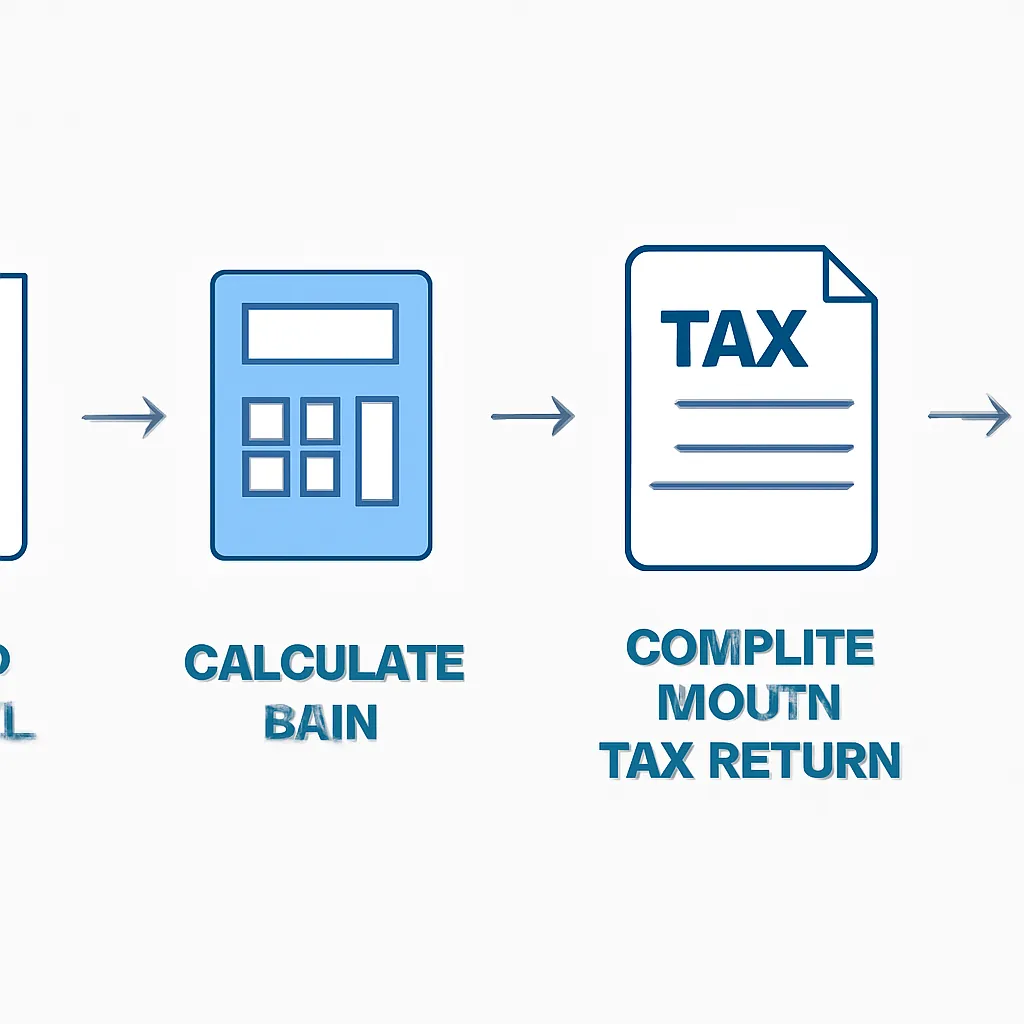
Portfolio-Wide Tax Calculation
One thing that catches many French investors off guard is that the tax is calculated on a portfolio-wide basis, not on each individual transaction in isolation. The French method uses a weighted average cost formula across your entire crypto portfolio at the time of each disposal. This means you cannot simply look at the price you paid for one specific coin and subtract it from what you sold it for. Instead, you apply a fraction representing the total acquisition cost of your whole portfolio relative to its total current value. This approach is unique compared to jurisdictions like the UK or the US, and it rewards investors who keep a precise running record of every acquisition.
Crypto Tax France: What Counts as a Taxable Event
Not every interaction with your digital assets triggers a tax liability. French tax rules distinguish between events that constitute a disposal and those that do not. Selling crypto for fiat currency is the most obvious taxable event. Exchanging one cryptocurrency for another is also taxable, which differs significantly from some other countries where crypto-to-crypto swaps are treated as non-taxable until fiat conversion. Using cryptocurrency to purchase goods or services is equally treated as a disposal and must be reported.
The following table summarises how common crypto activities are treated under current French rules.
Common Crypto Activities Table
| Activity | Taxable Event? | Notes |
|---|---|---|
| Selling crypto for euros | Yes | Gain calculated using weighted average cost method |
| Swapping one crypto for another | Yes | Each swap is treated as a disposal |
| Paying for goods or services with crypto | Yes | Market value at time of payment used to calculate gain |
| Transferring crypto between your own wallets | No | No change of ownership, no taxable event |
| Receiving crypto as a gift | No at receipt | Gift tax rules may apply separately; disposal later is taxable |
| Staking or mining rewards received | Potentially yes | Tax treatment depends on activity level and classification |
The Professional Trader Distinction and Why It Matters
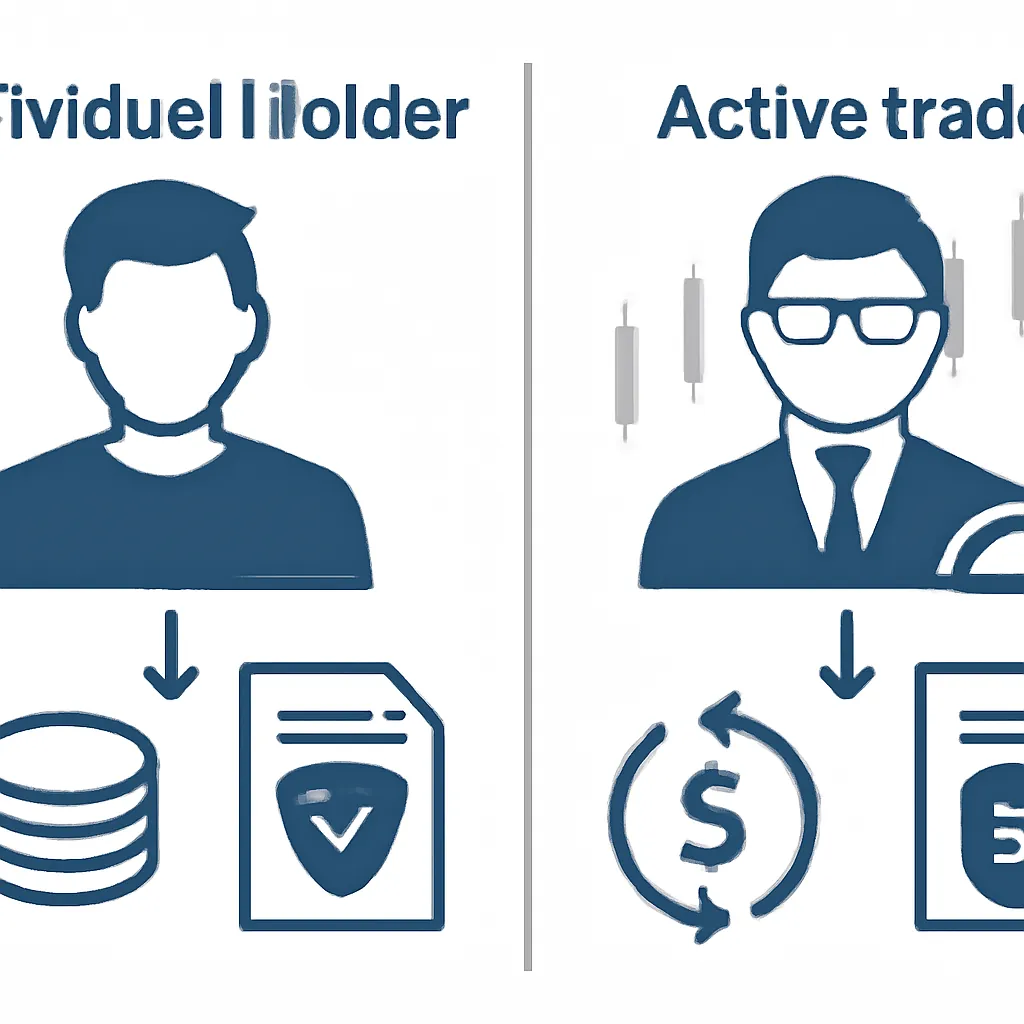
France draws a clear line between occasional investors and those whose crypto activity amounts to a professional trade or business. Occasional investors benefit from the 30% flat tax. Those classified as professional traders, or habitual traders operating in conditions similar to a professional, are taxed under the BNC regime, which stands for Bénéfices Non Commerciaux. Income under the BNC regime is added to overall taxable income and taxed at the progressive marginal rate, which can reach significantly higher levels than the flat 30% rate.
Factors for Professional Classification
The classification depends on factors such as frequency of transactions, the complexity of strategies used, the proportion of income derived from crypto activity, and the use of professional tools or leverage. There is no precise numerical threshold. The tax authority assesses the overall picture. If you are making dozens of trades per day, running algorithmic strategies, or treating crypto as your primary source of income, professional classification is a real risk worth taking seriously before filing season arrives.
Comparison with Other Countries
For comparison, this mirrors the distinction seen in other markets. In the UK, HMRC also distinguishes between investors and traders, applying income tax rather than capital gains tax to those who trade as a business. Similarly, when considering how is crypto taxed in India, the rules apply a flat 30% rate to all virtual digital asset gains regardless of frequency, with no distinction between casual and professional activity, which makes the French nuance particularly important for frequent French traders to understand.
Reporting Obligations and the Annual Tax Return
Every French tax resident who holds digital asset accounts opened, held, used, or closed abroad must declare those accounts annually, regardless of whether any taxable gain was made. This is reported on Formulaire 3916-bis. Failure to declare foreign accounts carries automatic penalties, and the amounts involved can be substantial relative to the balances held.
Capital Gains Reporting on Form 2086
Capital gains from crypto disposals are reported on Formulaire 2086. This form requires a detailed breakdown of each disposal event during the tax year, including the date, the total value of the portfolio at the time of disposal, the fraction disposed of, and the acquisition cost fraction. The complexity of this form is precisely why many French investors turn to a france crypto tax calculator to generate the correct figures automatically rather than attempting the calculations manually.
The table below outlines the key reporting forms relevant to French crypto investors.
Key Reporting Forms Overview
| Form | Purpose | Who Must File |
|---|---|---|
| Formulaire 2086 | Reporting capital gains from digital asset disposals | Anyone who disposed of crypto during the tax year |
| Formulaire 3916-bis | Declaring foreign digital asset accounts | Anyone holding accounts on non-French platforms |
| Formulaire 2042 | Main income tax return, includes summary of gains | All tax residents with income to declare |
Calculating Your Gain: The Weighted Average Cost Method
The French weighted average cost method requires you to track your total portfolio acquisition cost at all times. Each time you make a disposal, you calculate the taxable gain by multiplying the total acquisition cost of your portfolio by the fraction that the disposal represents of your total portfolio value at the time of disposal. The result is your allowable cost for that disposal. You subtract it from your sale proceeds to arrive at the taxable gain.
Practical Complexity of Tracking
This sounds straightforward but becomes genuinely complex once you have made dozens or hundreds of purchases across multiple exchanges and wallets over several years. Every acquisition changes your total portfolio cost basis. Every disposal reduces it. Keeping a live, accurate record is essential. A france crypto tax calculator that connects directly to exchange APIs and wallet addresses can automate this calculation entirely, eliminating both the risk of arithmetic error and the hours of manual spreadsheet work.
No Separate Loss Carry-Forward
One practical implication of this method is that losses within your crypto portfolio reduce your overall cost basis proportionately. Unlike the UK system, where capital losses can be carried forward and offset against future gains, French rules treat the weighted average as the single mechanism for cost recovery. There is no separate loss carry-forward mechanism for individual crypto investors under the flat tax regime. This makes it even more important to record every acquisition accurately from the start.
Filing Deadlines and What Happens If You Miss Them
The French tax year runs from 1 January to 31 December. Annual income tax returns, including crypto gain reporting on Formulaire 2086 and foreign account declarations on Formulaire 3916-bis, are submitted the following spring. The exact deadline varies each year by département and is set by the tax authority for online filers. Paper filers face an earlier deadline. Missing the deadline results in late filing penalties and interest on any unpaid tax. Failing to declare foreign accounts triggers automatic penalties per undeclared account, applied for each year of non-compliance.
Penalties and Detection Risks
The Direction Générale des Finances Publiques has access to data-sharing agreements with financial institutions and has signalled ongoing investment in detection capabilities for unreported crypto activity. The message for French crypto investors is clear: voluntary compliance is both legally required and financially sensible compared to the penalties that follow non-disclosure.
Illustrative Scenario
This scenario is illustrative. It does not describe a real person or client, and the figures are examples only.
To illustrate how this applies in practice, consider the following scenario:
Sophie is a 34-year-old marketing manager based in Lyon. She began buying Ethereum and a handful of smaller tokens across two exchanges, one French and one international, over a three-year period. By the time she decides to sell a portion of her holdings to fund a flat purchase, she has made over sixty individual buy transactions across both platforms. She has also swapped tokens on a DeFi protocol twice, which she had not realised were taxable events.
When Sophie tries to complete Formulaire 2086 manually, she quickly realises she does not have a consistent record of the euro value of her total portfolio at the time of each of those swaps. She uses CryptaTax to connect her exchange accounts and import her wallet transactions. The platform calculates her weighted average cost basis automatically, identifies the two DeFi swaps as taxable disposals, and produces a completed Formulaire 2086-ready summary. Sophie also discovers she needs to file a Formulaire 3916-bis for her international exchange account, which she had overlooked entirely. Filing both forms correctly and on time, she avoids the automatic penalty for the undeclared foreign account.
Frequently Asked Questions
What is the crypto tax rate in France for individual investors?
Individual investors in France pay a flat tax of 30% on capital gains from crypto disposals. This rate combines income tax and social charges. Taxpayers on lower incomes can opt for the progressive income tax scale instead, which may reduce their overall liability.
Do I have to pay tax if I only swap one crypto for another in France?
Yes. Under French rules, exchanging one cryptocurrency for another is treated as a taxable disposal. The gain is calculated at the point of the swap using the weighted average cost method applied to your entire portfolio. This is different from the treatment in some other jurisdictions.
How is crypto taxed in France if I also earn staking rewards?
The tax treatment of staking rewards in France depends on the nature and scale of the activity. Rewards received by occasional investors may be treated differently from those earned through systematic or professional-level staking. You should document the date and market value of each reward received and seek clarification if your staking activity is substantial.
What is Formulaire 2086 and do I need to file it?
Formulaire 2086 is the French tax form used to report capital gains from digital asset disposals. If you sold, swapped, or spent any crypto during the tax year, you must complete this form as part of your annual return. Each disposal must be listed individually with supporting calculation data.
What happens if I forget to declare a foreign crypto exchange account?
Failing to declare a foreign digital asset account on Formulaire 3916-bis carries automatic financial penalties per undeclared account, applied for each year of non-disclosure. The French tax authority has data-sharing arrangements with financial institutions, making detection of unreported foreign accounts increasingly likely.
Can I use a france crypto tax calculator to generate my Formulaire 2086?
Yes. A france crypto tax calculator that integrates with exchange APIs and wallets can automate the weighted average cost calculations required for Formulaire 2086. This reduces the risk of arithmetic errors and ensures every disposal, including crypto-to-crypto swaps, is captured correctly before you file.
How does French crypto tax compare to crypto tax in the UK or India?
All three jurisdictions tax crypto gains, but the mechanics differ. Crypto tax UK uses an individual asset pooling method and allows loss carry-forward. India applies a flat 30% rate on all virtual digital asset gains with no offsetting of losses against other income. France uses a portfolio-wide weighted average cost approach with a 30% flat tax, and unlike India it distinguishes between occasional investors and professional traders.
Is transferring crypto between my own wallets a taxable event in France?
No. Moving crypto between wallets that you own does not constitute a disposal under French rules and does not trigger a taxable event. You should still keep records of these transfers to demonstrate ownership continuity and to maintain an accurate portfolio cost basis.
What records should I keep for French crypto tax purposes?
You should retain records of every acquisition, including the date, amount, and euro value at the time of purchase. Every disposal must be documented with the date, proceeds, and a snapshot of your total portfolio value at that moment. Exchange transaction histories, wallet activity, and DeFi interaction records should all be preserved for at least the standard tax retention period.
Do French crypto tax rules apply to me if I moved to France partway through the year?
If you became a French tax resident partway through the tax year, your reporting obligations generally apply from the date you established tax residency in France. Disposals made before you became resident may be outside French jurisdiction, but this depends on any tax treaty between France and your previous country of residence. Professional advice is recommended if you changed residency during the year.
Source: CryptaTax