
Crypto Capital Gains Tax in Singapore: How to Use a Crypto Tax Calculator
Singapore has a reputation as one of the most crypto-friendly jurisdictions in the world, and for good reason. The country does not impose a capital gains tax, which means that simply selling Bitcoin or Ether at a profit does not automatically trigger a tax bill. But the picture is more nuanced than that headline suggests. If the Inland Revenue Authority of Singapore (IRAS) decides your crypto activity looks like a trading business rather than passive investing, those gains can be reclassified as income and taxed accordingly. Knowing which side of that line you fall on matters enormously. A crypto tax calculator helps you organise every transaction, assign the right treatment, and produce a crypto tax report you can actually rely on when filing your return.
Does Singapore Tax Crypto Gains?
The short answer is: it depends on how you hold and use crypto. Singapore does not have a statutory capital gains tax regime, so profits from selling assets you hold as a long-term investment are generally outside the scope of income tax. IRAS treats crypto tokens as intangible property rather than currency, which means the same principles that apply to other asset disposals apply here too.
When Crypto Gains Become Taxable
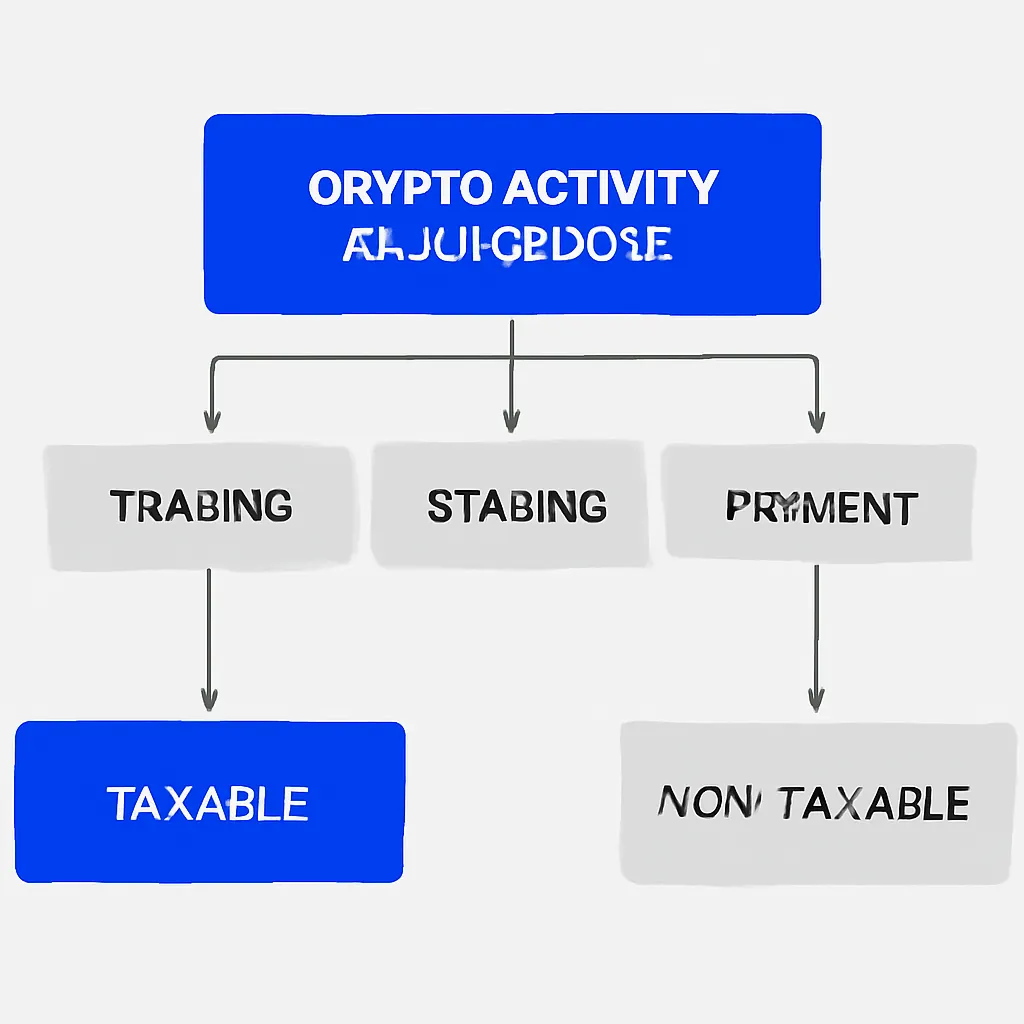
The complication arises when your activity starts to resemble a trade. IRAS applies a facts-and-circumstances test to decide whether gains are capital or revenue in nature. Factors it examines include how frequently you transact, how long you hold assets before selling, whether you have a profit motive, and whether you have relevant professional expertise. A casual investor who bought Bitcoin years ago and sold once is in a very different position from someone running a high-frequency trading strategy across dozens of tokens every week.
The table below summarises the broad distinctions IRAS draws between capital and income treatment for crypto activity.
Capital vs Income Treatment Table
| Activity type | Likely tax treatment | Taxed as income? |
|---|---|---|
| Long-term investment disposal | Capital gain | No (no CGT in Singapore) |
| Frequent trading with profit motive | Revenue/income | Yes, at personal income tax rates |
| Receiving crypto as payment for services | Income | Yes, at market value on receipt |
| Mining rewards | Income (if business activity) | Potentially yes |
| Staking rewards | Income (if regular and material) | Potentially yes |
| Airdrop tokens | Case-by-case | Potentially yes if received in course of trade |
How IRAS Decides Whether Your Gains Are Taxable
IRAS does not use a bright-line rule to separate investors from traders. Instead, it applies what tax practitioners often call the badges of trade, a set of indicators borrowed from common law jurisdictions that help characterise the nature of a transaction. Understanding these can save you from an unexpected tax bill or, just as importantly, from over-reporting income you never actually owed.
Key Indicators of a Trade
Frequency and volume of transactions are among the most significant indicators. Someone executing dozens of trades per week across multiple exchanges is far more likely to be treated as carrying on a trade than someone who rebalances a crypto portfolio once or twice a year. Holding period matters too. Short holds followed by quick sales suggest a trading motive. The method of financing also plays a role: borrowing money to fund crypto purchases can indicate a business-like approach rather than passive investment.
Personal expertise is another factor. If you work in fintech, have a background in trading, or have publicly described yourself as a professional trader, IRAS may give more weight to the argument that your activity is systematic and commercial. None of these factors is conclusive on its own, but together they paint a picture that IRAS will use to form a view. Keeping detailed records of your intent, your strategy, and the timeline of your holdings is therefore valuable long before any compliance review begins.
Crypto Tax Calculator: Why Manual Tracking Fails
Many Singapore crypto holders attempt to track their positions manually using spreadsheets. For someone with a handful of transactions on a single exchange, that approach can work. But it breaks down quickly once you introduce multiple wallets, DeFi protocols, token swaps, staking rewards, and cross-chain transfers. Each of these events may have a different tax treatment, and manually assigning the correct cost basis to each disposal is both time-consuming and error-prone.
Benefits of Crypto Tax Software
A dedicated crypto tax calculator solves this by connecting directly to your exchanges and wallets via API or CSV upload, pulling in every transaction automatically, and applying the relevant cost basis method to each disposal. For Singapore users, that typically means identifying which transactions could be treated as income events and flagging them separately from capital disposals. The software then produces a crypto tax report that categorises your activity clearly, which you or your accountant can use when preparing your income tax return.
The practical benefit is accuracy. Human error in spreadsheet calculations compounds quickly across hundreds of transactions. A single mistake in assigning the wrong cost to a disposal can distort your entire tax position. Automated crypto tax software eliminates most of those risks by processing data consistently and applying rules uniformly across every transaction in your history.
Calculate Crypto Taxes: Cost Basis Methods Explained
When you dispose of a crypto asset, the taxable gain or income figure depends on the difference between what you received and what you originally paid, your cost basis. Singapore does not prescribe a single mandatory cost basis method for individuals, but the method you choose should be applied consistently and documented clearly. The most common approaches are set out below.
Common Cost Basis Methods
| Cost basis method | How it works | Common use case |
|---|---|---|
| First In, First Out (FIFO) | Oldest units are treated as disposed of first | Long-term investors with older holdings |
| Average Cost (ACB) | Total cost of holdings divided by total units | Regular buyers accumulating over time |
| Specific Identification | You identify exactly which units you are disposing of | Advanced users with detailed records |
| Last In, First Out (LIFO) | Most recently acquired units treated as disposed first | Less common; requires careful documentation |
When you calculate crypto taxes across a long holding history, the method you apply can materially change the outcome. A good crypto capital gains calculator will let you switch between methods and model the difference before you commit. That visibility is hard to replicate in a manual spreadsheet, especially if you have made many purchases at different prices over several years.
What Transactions to Include in Your Crypto Tax Report
One of the most common mistakes Singapore filers make is assuming that only exchange-based trades need to be reported. In practice, a much wider range of events may have tax implications, particularly if IRAS views your activity as a trade. You need to account for every disposal of crypto, which includes selling for fiat, swapping one token for another, using crypto to pay for goods or services, and transferring tokens out of your personal wallets into commercial arrangements.
Taxable Events Beyond Trades
Staking rewards, mining income, and airdrops that you receive as part of a business activity also need to be valued at the time of receipt and included in your income figures. Even receiving crypto as a salary or freelance payment creates an income event at the market value on the day you receive it. Crypto tax software is particularly useful here because it timestamps every inbound transaction and assigns a market value automatically, removing the need to look up historical prices manually for each event.
Transfers between your own wallets are not disposal events and should not be treated as taxable. However, they do need to be tracked accurately so that the cost basis of your holdings is carried forward correctly. Misidentifying a self-transfer as a sale is a surprisingly common error in manual records, and it inflates your apparent taxable income unnecessarily.
How to File Crypto Taxes in Singapore
Individual taxpayers in Singapore file their income tax returns through the IRAS myTax Portal. The tax year runs from 1 January to 31 December, and returns for each year are typically due by 18 April of the following year for electronic filing. If any of your crypto activity is taxable as income, you report it as part of your total income for the year.
Reporting Crypto Income Categories
Learning how to file crypto taxes properly means understanding which income categories apply. Crypto received as payment for employment goes under employment income. Crypto earned through freelance or business activity goes under trade income. There is no dedicated crypto schedule in Singapore's personal tax return, which means you need to calculate your figures independently before entering them into the portal. A complete crypto tax report generated by your software gives you exactly what you need: a total income figure by category, broken down by asset and transaction date, with cost basis calculations shown transparently.
Keeping records for at least five years is advisable. IRAS can raise assessments for prior years if it has reason to believe income was under-reported, and without records you have no basis on which to defend your position. Your crypto tax software should allow you to export and archive full transaction histories and calculation workings for this purpose.
Illustrative Scenario
This scenario is illustrative. It does not describe a real person or client, and the figures are examples only.
To illustrate how this applies in practice, consider the following scenario:
Priya is a software engineer based in Singapore who began buying Ethereum in 2021 as a long-term investment. Over the following years she also started earning staking rewards through a liquid staking protocol, receiving occasional airdrops, and swapping some tokens on a decentralised exchange. By the time she sat down to prepare her tax return, she had transactions across three wallets and two centralised exchanges, none of which she had tracked systematically.
Priya used CryptaTax to connect her exchange accounts via API and upload wallet transaction histories as CSV files. The software identified her staking rewards as potential income events and valued each one at the market price on the date of receipt. It separated her long-term investment disposals from her more frequent token swaps and flagged the swaps as events that IRAS might scrutinise more closely. Within an hour, Priya had a full crypto tax report showing her total staking income, her disposal history with cost basis calculations, and a clear summary she could pass to her accountant before the April filing deadline. She avoided both the risk of over-reporting her capital disposals as income and the risk of missing her staking earnings entirely.
Frequently Asked Questions
Does Singapore have a capital gains tax on crypto?
Singapore does not have a capital gains tax, so profits from disposing of crypto held as a long-term investment are generally not taxable. However, if IRAS determines that your activity constitutes a trade, those profits become taxable income. The distinction depends on factors like trading frequency, holding period, and profit motive.
What is a crypto tax calculator and how does it help?
A crypto tax calculator is software that imports your transaction history from exchanges and wallets, applies cost basis rules to each disposal, and produces a structured crypto tax report. It saves time, reduces calculation errors, and ensures that income events like staking rewards and airdrops are captured and valued correctly.
Do I need to report staking rewards in Singapore?
Staking rewards may be taxable as income if IRAS views your crypto activity as a trade or business. Even outside a trading context, regular and material staking income can attract scrutiny. You should record the market value of each reward on the date you receive it and discuss the treatment with a tax adviser if the amounts are significant.
How do I calculate crypto taxes on token swaps?
Swapping one token for another is treated as a disposal of the token you give up. The gain or loss is calculated by comparing the market value of the token received against the cost basis of the token disposed of. A crypto capital gains calculator handles this automatically once your full transaction history is imported.
What cost basis method should I use to calculate crypto taxes in Singapore?
IRAS does not mandate a specific cost basis method for individuals. FIFO and average cost are both widely used and accepted provided you apply your chosen method consistently across all transactions. A crypto tax calculator will typically allow you to select and compare methods before you finalise your figures.
Are crypto-to-crypto trades taxable in Singapore?
If your trading activity is classified as a business or trade by IRAS, then yes, gains from crypto-to-crypto swaps are taxable as income. If you are a passive investor, such swaps are disposals of a capital asset, and because Singapore has no capital gains tax, those gains would not ordinarily be taxable. Keeping records of each swap, including the market values at the time, is essential regardless.
What records do I need to keep for crypto tax purposes?
You should retain full transaction histories from every exchange and wallet you use, including dates, amounts, counterparty details, and market prices at the time of each event. IRAS recommends keeping tax records for at least five years. Crypto tax software can generate and archive these records automatically, which is far more reliable than manual spreadsheets.
How do I file crypto taxes in Singapore?
You report taxable crypto income through the IRAS myTax Portal as part of your annual income tax return. There is no dedicated crypto schedule, so you include crypto income under the appropriate income category such as trade income or employment income. Electronic returns are typically due by 18 April each year. A detailed crypto tax report from your software gives you the figures you need to complete the return accurately.
Is receiving crypto as payment for freelance work taxable?
Yes. If you receive crypto as payment for services, the market value of that crypto on the date you receive it is taxable as self-employment or trade income. You report it the same way you would report any other freelance earnings, and you should record the SGD equivalent at the time of receipt to avoid disputes later.
Can crypto losses offset taxable crypto income in Singapore?
If your crypto activity is treated as a trade, losses from that trade can in principle be offset against other income from the same trade in the same tax year, or carried forward against future trading profits. Capital losses have no offset value in Singapore because capital gains are not taxed. A crypto tax report that separates capital and income transactions makes this distinction clear.
Source: CryptaTax