
Crypto Capital Gains Tax in Malta: What You Owe and How to Calculate It
Malta has long attracted crypto entrepreneurs and blockchain companies, but the tax position for individual holders is less straightforward than the country's pro-crypto reputation might suggest. Whether you trade regularly, hold long-term, or earn crypto through staking and airdrops, you need to know what the Maltese tax authority expects. A reliable crypto tax calculator takes the manual work out of the process, turning transaction history into a clean, reviewable figure before you file. This guide covers how Malta taxes crypto gains, which activities trigger a liability, what records you need to keep, and how to use software to calculate crypto taxes accurately without spending hours on spreadsheets.

How Malta Classifies Cryptocurrency for Tax Purposes
Malta does not have a standalone crypto tax law. Instead, the Maltese tax authority, the Commissioner for Revenue, applies existing income tax and capital gains principles to digital assets. The classification of your crypto activity matters enormously because it determines whether any gain you make is taxed at all, and if so, at what rate.
Capital vs. Trading Income
Crypto held as a capital asset by a private individual is generally not subject to capital gains tax in Malta. This is because Maltese capital gains tax applies only to the transfer of immovable property and certain securities. Cryptocurrencies do not fall neatly into either category under current domestic rules. That said, this apparent exemption does not mean all crypto activity is tax-free. The situation shifts when the activity is considered trading.
If the Commissioner for Revenue determines that your buying and selling of crypto constitutes a trade, the profits are treated as trading income and taxed under the Income Tax Act. The distinction between capital and income is based on factors such as frequency of transactions, intent at the time of purchase, the holding period, and whether the activity resembles a business operation. Casual long-term holders are far less likely to be caught than active day traders.
| Activity Type | Likely Classification | Tax Treatment in Malta |
|---|---|---|
| Long-term holding and occasional sale | Capital asset disposal | Generally outside scope of CGT |
| Frequent trading for profit | Trading income | Taxable as income under Income Tax Act |
| Staking rewards and airdrops | Income | Likely taxable on receipt as income |
| Mining proceeds | Trading or income | Taxable depending on scale and intent |
| Crypto salary or payment for services | Employment or self-employment income | Taxable at income tax rates |
Malta Income Tax Rates and How They Apply to Crypto
When crypto profits are classified as trading income, they are subject to Malta's standard progressive income tax rates. Understanding the rate bands helps you estimate your liability before filing, and a crypto capital gains calculator can map your total gains against these thresholds automatically.
Progressive Tax Rate Bands
Malta uses a progressive tax system with different rate schedules depending on your filing status: single, married, or parent rates apply. For single individuals, income up to a base threshold is taxed at zero, with subsequent bands moving through lower and higher percentage rates up to the top rate. Because the official rate bands are updated periodically by the Commissioner for Revenue, you should always verify the current figures directly with the authority or through your tax adviser before filing.
Non-residents who are taxed in Malta only on Malta-source income will want to consider whether their crypto trading is considered Malta-source. If the trading activity is conducted through a Maltese entity or infrastructure, there is a reasonable argument that it is. Residence status is therefore a key input when you calculate crypto taxes for any given year.
| Filing Status | Rate Structure | Top Rate Applicable |
|---|---|---|
| Single | Progressive bands | 35% |
| Married | Progressive bands (wider lower bands) | 35% |
| Parent | Progressive bands (further relief) | 35% |
What Triggers a Taxable Event in Malta
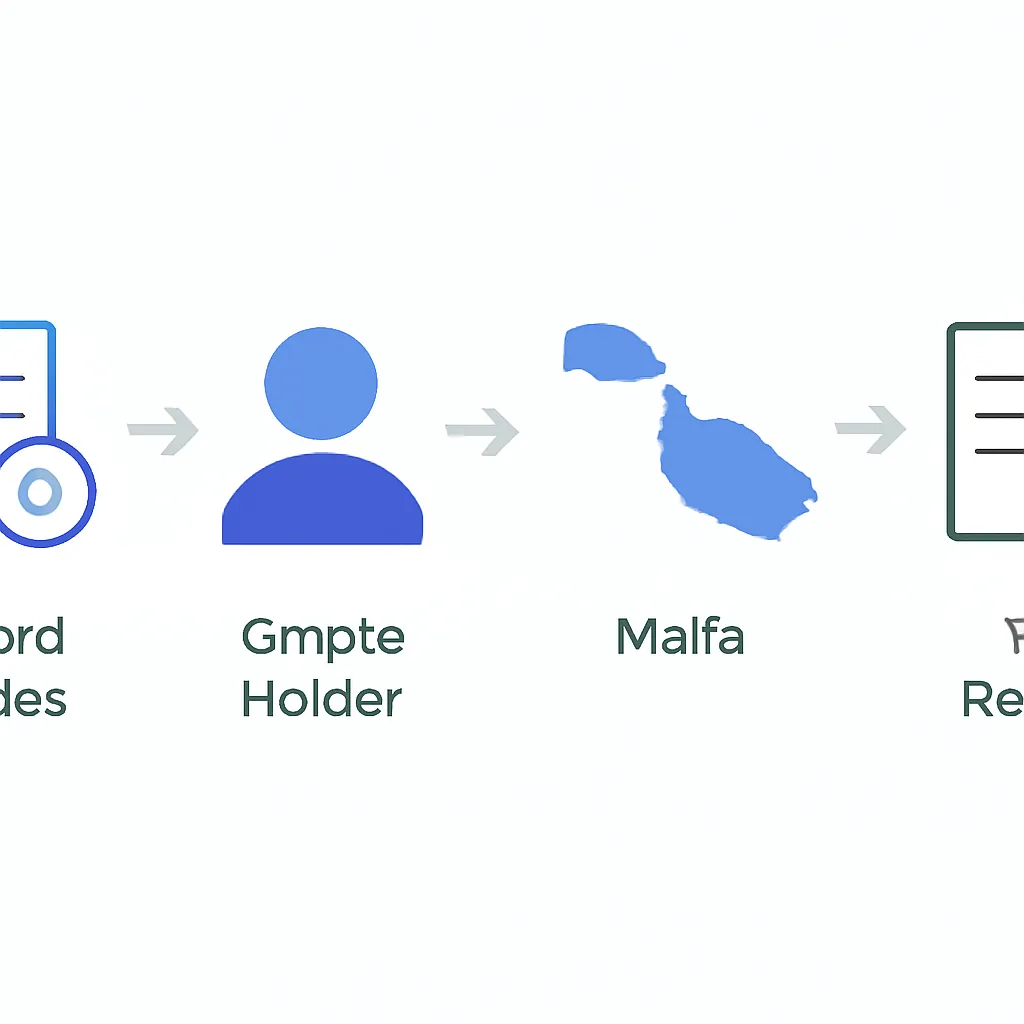
Even in a jurisdiction where casual holders face limited exposure, knowing what counts as a taxable event is essential. Getting this wrong is one of the most common mistakes people make when they try to file crypto taxes without proper records or software.
Common Taxable Events
Selling crypto for euros or another fiat currency is the most obvious trigger. But swapping one cryptocurrency for another is also a disposal under standard tax principles, because you are exchanging one asset for a different one. Using crypto to pay for goods or services works the same way: you are disposing of an asset at its market value at the point of transaction. Each of these events creates a potential gain or loss that must be recorded.
Receiving crypto as payment for work, as a staking reward, or as an airdrop is treated differently. These receipts are more likely to be income events rather than capital events, meaning the value at the date of receipt becomes both taxable income and the cost base for any future disposal. This layered treatment is exactly the kind of complexity that makes manual spreadsheet tracking error-prone and time-consuming. Using a crypto tax calculator that handles multiple event types, including staking, airdrops, and swaps, prevents you from accidentally understating your position.
Record-Keeping Requirements and Common Mistakes
The Commissioner for Revenue expects taxpayers to maintain adequate records to support their tax returns. For crypto holders, this means keeping a full transaction log that includes the date of each transaction, the amount of crypto involved, the market value in euros at the time, the exchange or wallet used, and the nature of the transaction.
Essential Record-Keeping
Many traders underestimate how quickly records become unmanageable. A single active year on a decentralised exchange can generate hundreds or thousands of individual transactions. Reconstructing this history manually from exchange statements months later is not only time-consuming but also prone to error, particularly when exchange data formats differ, wallets are involved, or transactions span multiple platforms.
Common mistakes include: failing to record crypto-to-crypto swaps as disposals, using an incorrect market value at the date of transaction, omitting staking rewards from income calculations, and applying an inconsistent cost basis method across the year. A structured crypto tax report generated by software solves most of these problems because it pulls transaction data directly from exchanges and wallets, applies a consistent calculation methodology, and produces a single output document you can hand to your accountant or attach to your return.
| Record Type | Why It Matters | Where to Source It |
|---|---|---|
| Transaction date and time | Establishes the taxable period | Exchange history, wallet explorer |
| EUR value at transaction date | Determines gain or income amount | Price feed data within tax software |
| Transaction type | Classifies as disposal, income, or transfer | Exchange labels, manual tagging |
| Fees paid | Deductible against gain in some cases | Exchange CSV exports |
| Receiving wallet or exchange | Audit trail for the Commissioner | Wallet address records |
How to Use a Crypto Tax Calculator for Malta
Using a crypto tax calculator removes the bulk of the manual work involved in preparing your crypto tax report. The process works in a few clear stages, and getting familiar with each one means you spend less time on admin and more time reviewing your final figures before submission.
Using a Crypto Tax Calculator
First, you connect your exchanges and wallets. Good crypto tax software accepts CSV uploads and direct API connections from major exchanges. It imports your full transaction history and categorises each event. Second, the software identifies disposals, income events, and internal transfers. Internal transfers between your own wallets are not taxable disposals, so correct categorisation here prevents you from inflating your reported gains.
Third, the calculator applies a cost basis method to each disposal. Different jurisdictions accept different methods: first in first out, average cost, and specific identification are the most common. Malta has not issued specific guidance mandating one method, so choosing a defensible and consistently applied approach is prudent. Fourth, the software generates a crypto tax report summarising your total gains, total income events, and any losses that could offset future gains. This document becomes the basis for your self-assessment return. CryptaTax handles all four stages in a single workflow, supporting multiple exchanges and wallet types so nothing falls through the gaps.
Filing Deadlines and Self-Assessment in Malta
Malta operates a self-assessment system for income tax. Individuals with income beyond the basic exemption threshold are required to submit an income tax return to the Commissioner for Revenue. The standard deadline for individual returns has historically fallen in the middle of the calendar year following the tax year, but you should confirm the exact current deadline with the Commissioner or a local tax adviser, as deadlines can shift.
Filing Deadlines and Penalties
If your crypto trading income is the only additional income you have beyond employment, you may be able to include it as part of a standard return. If the amounts are significant or the position is complex, engaging a Maltese tax adviser who understands digital assets is sensible. Either way, having a completed crypto tax report ready well before the deadline gives you and your adviser time to review the figures, check categorisations, and raise any questions with the software provider before submitting.
Late filing and underpayment carry penalties under Maltese tax law. Voluntary disclosure of previously unreported crypto income, while not formalised through a specific amnesty programme at the time of writing, is generally treated more favourably than income discovered through an audit. If you have historic years where you did not report crypto activity that should have been reported, taking advice early is the better path.
Illustrative Scenario
This scenario is illustrative. It does not describe a real person or client, and the figures are examples only.
To illustrate how this applies in practice, consider the following scenario:
Maria is a freelance web developer based in Valletta. Over the course of a tax year, she received a portion of her project fees in Bitcoin, made several trades between Bitcoin and Ether on a major exchange, and received staking rewards from a proof-of-stake protocol. At year end, she realised she had no clear record of the euro value of her Bitcoin at the dates she received it as payment, and her exchange CSV files were in three different formats.
Maria signed up for CryptaTax, connected her exchange accounts via API, and uploaded her remaining CSVs. The software automatically identified her Bitcoin receipts as income events, her crypto-to-crypto swaps as disposals, and her staking rewards as separate income items. It applied a consistent first-in-first-out cost basis across all disposals and produced a single crypto tax report showing her total trading income, her total staking income, and a breakdown of each disposal. She downloaded the report, reviewed the figures with her accountant, and filed her Maltese income tax return with confidence. The whole process took an afternoon rather than the several days she had expected.
Frequently Asked Questions
Do I have to pay capital gains tax on crypto in Malta?
Malta's capital gains tax generally applies to immovable property and certain securities, and cryptocurrency does not fall clearly within those categories for private individuals. However, if your crypto activity is judged to be a trading business, profits are taxable as income. The key question is whether your activity looks like investment or trade.
What is the best crypto tax calculator for Malta?
A good crypto tax calculator for Malta should support multiple exchanges and wallets, handle staking and airdrop income separately from disposal gains, allow you to apply a consistent cost basis method, and produce a downloadable crypto tax report. CryptaTax covers all of these requirements and supports the transaction types most common among Malta-based holders.
How do I calculate crypto taxes if I traded on multiple exchanges?
You need to consolidate transaction data from every exchange and wallet into a single calculation. Crypto tax software does this by accepting API connections and CSV uploads from different platforms, then applying a unified cost basis methodology across your entire portfolio. Trying to calculate crypto taxes across multiple exchanges manually greatly increases the risk of errors or omissions.
Are crypto-to-crypto swaps taxable in Malta?
Under general tax principles, exchanging one cryptocurrency for another is treated as a disposal of the first asset and an acquisition of the second. If your activity is classified as trading, any gain on the swap is taxable income. This is one of the most commonly overlooked taxable events among active traders.
Do staking rewards count as income in Malta?
Staking rewards are most likely treated as income at the point of receipt, based on the market value of the tokens received. This means they may be taxable in the year you receive them, and the value at receipt becomes your cost base for any future disposal of those tokens. You should record the euro value of each reward at the date it was credited.
How do I file crypto taxes in Malta as a self-employed person?
If you earn income from crypto trading or receive crypto as payment for services, it should be reported on your Maltese income tax self-assessment return. Generate a crypto tax report from your chosen software, review it with a local tax adviser if the amounts are significant, and include the figures in the relevant income section of your return before the annual deadline.
What records do I need to keep for the Maltese tax authority?
You should keep a full transaction log covering the date, amount, euro value at the time, transaction type, and the exchange or wallet involved for every crypto event. The Commissioner for Revenue can request supporting documentation during a review, so records need to be complete and retrievable. Crypto tax software generates and stores this documentation automatically.
Can I offset crypto losses against gains in Malta?
If your crypto activity is treated as a trade, losses from that trade may be available to offset against other trading income, subject to the standard rules under the Income Tax Act. The position for non-trading investors is less clear, given that private capital gains on crypto are generally outside the scope of Maltese CGT. A local tax adviser can assess your specific position.
What happens if I did not report crypto income in previous years?
Unreported taxable income can attract penalties and interest under Maltese tax law. Voluntary disclosure before the Commissioner identifies the issue is generally treated more favourably than income uncovered through an audit. Taking early advice from a Malta-registered tax professional and using a crypto tax calculator to reconstruct prior-year figures is the recommended first step.
Does using a crypto tax calculator mean my return is guaranteed to be correct?
Software produces accurate outputs based on the data you provide. If your transaction history is complete and correctly categorised, a crypto tax calculator will generate reliable figures. The risk lies in incomplete data, such as missing wallet imports or uncategorised transactions. Reviewing the software output before filing, ideally with a tax adviser, is always a sensible step.
Source: CryptaTax