
Crypto Capital Gains Tax in Germany: How to Use a Crypto Tax Calculator
Germany has one of the most distinctive approaches to taxing cryptocurrency among major economies, and understanding it can make a significant difference to what you actually owe. At the heart of the German regime is a simple but powerful rule: hold your crypto for more than twelve months and any gain you make is completely tax-free. Sell inside that window, however, and your profit is treated as private income and taxed at your personal income tax rate. A good crypto tax calculator takes all the complexity out of tracking these periods, matching your trades to the right cost basis, and generating a compliant crypto tax report you can submit with your annual Einkommensteuererklärung. Whether you traded a handful of times or ran hundreds of transactions across multiple exchanges, getting the numbers right matters. The German Finanzamt is increasingly data-aware, and errors in your return, even accidental ones, can attract scrutiny.
How Germany Taxes Cryptocurrency Gains
In Germany, cryptocurrency is treated as a private asset under Section 23 of the Einkommensteuergesetz, the Income Tax Act. This means gains and losses fall under the category of private sales transactions rather than capital investment income. The practical consequence is important: unlike dividends or interest, which are taxed at a flat 25% Abgeltungsteuer, crypto profits are taxed at your personal income tax rate, which can range from zero up to 45% depending on your total taxable income.
The twelve-month holding period is the central feature of the German system. If you buy one bitcoin in January and sell it the following February, the gain is entirely exempt from tax, regardless of size. Sell in November of the same year you bought, and the full gain is taxable. The clock starts from the date of acquisition and runs to the date of disposal. Each transaction has its own holding period, which is why tracking individual lots rather than pooled averages is essential for German taxpayers.
There is also a small annual exemption threshold for private sales transactions. Gains below this threshold in a given calendar year are not taxable. Losses from crypto sales within the twelve-month window can be offset against gains from other private sales transactions in the same year, or carried forward to future years, but they cannot be offset against employment income or other categories of income.
| Scenario | Holding Period | Tax Treatment |
|---|---|---|
| Sold after more than 12 months | Over 12 months | Fully tax-exempt |
| Sold within 12 months, gain below annual threshold | Under 12 months | Tax-exempt up to threshold |
| Sold within 12 months, gain above annual threshold | Under 12 months | Taxed at personal income tax rate |
| Loss within 12 months | Under 12 months | Offsettable against same-category gains |
Why a Crypto Tax Calculator Is Essential for German Filers
Manually calculating your crypto gains across a full tax year is genuinely difficult. Most traders do not buy and sell a single asset once. They accumulate positions over time, trade between different cryptocurrencies, receive staking rewards, and use multiple exchanges. Each of these events may have different tax consequences, and each acquisition lot has its own holding period and cost basis.
A crypto tax calculator automates this entire process. It connects to your exchange accounts and wallets, pulls in your full transaction history, and applies the correct cost basis method for Germany. The standard approach under German tax rules is FIFO, first in, first out, meaning the oldest coins you hold are treated as the first ones sold. This matters enormously when you have bought the same asset multiple times at different prices, because it determines which lots are matched to which sales and therefore whether the twelve-month exemption applies.
Beyond the calculation itself, a crypto tax calculator produces a structured crypto tax report that documents every transaction, the applicable gain or loss, the holding period, and the resulting tax position. This report is what you or your Steuerberater need when completing the Anlage SO section of your tax return, which covers private sales transactions. Without a systematic record, reconstructing this information from raw exchange data is time-consuming and error-prone. Using purpose-built crypto tax software removes that risk and significantly reduces the time you spend on compliance each year.
What Counts as a Taxable Event in Germany
Not every interaction with cryptocurrency triggers a taxable event, but more activities qualify than many people expect. Selling crypto for euros or any other fiat currency is the obvious case. Trading one cryptocurrency directly for another, such as swapping bitcoin for ether, is also treated as a disposal and a new acquisition, which means it can generate a taxable gain if the asset you are selling has increased in value since you bought it and you have held it for less than twelve months.
Using cryptocurrency to buy goods or services is treated the same way: the moment you spend crypto, you are disposing of it at its market value at the time of the transaction. If that value is higher than what you paid, the difference is a gain. Staking rewards and lending income are typically treated as miscellaneous income in the year they are received, with any subsequent disposal of those coins starting a fresh holding period clock from the date of receipt.
Transfers between your own wallets are not taxable events, provided you can demonstrate that both wallets belong to you. Gifting cryptocurrency to another person is generally not taxable below certain gift tax thresholds, but the recipient inherits the original acquisition date, which can have significant implications for the twelve-month rule.
| Activity | Taxable Event? | Category |
|---|---|---|
| Selling crypto for EUR | Yes | Private sale (Section 23 EStG) |
| Crypto-to-crypto swap | Yes | Private sale (Section 23 EStG) |
| Spending crypto on goods or services | Yes | Private sale (Section 23 EStG) |
| Receiving staking rewards | Yes, at receipt | Miscellaneous income (Section 22 EStG) |
| Transferring between own wallets | No | Not a disposal |
| Buying crypto with EUR | No | Acquisition only |
How to Calculate Crypto Taxes in Germany Step by Step
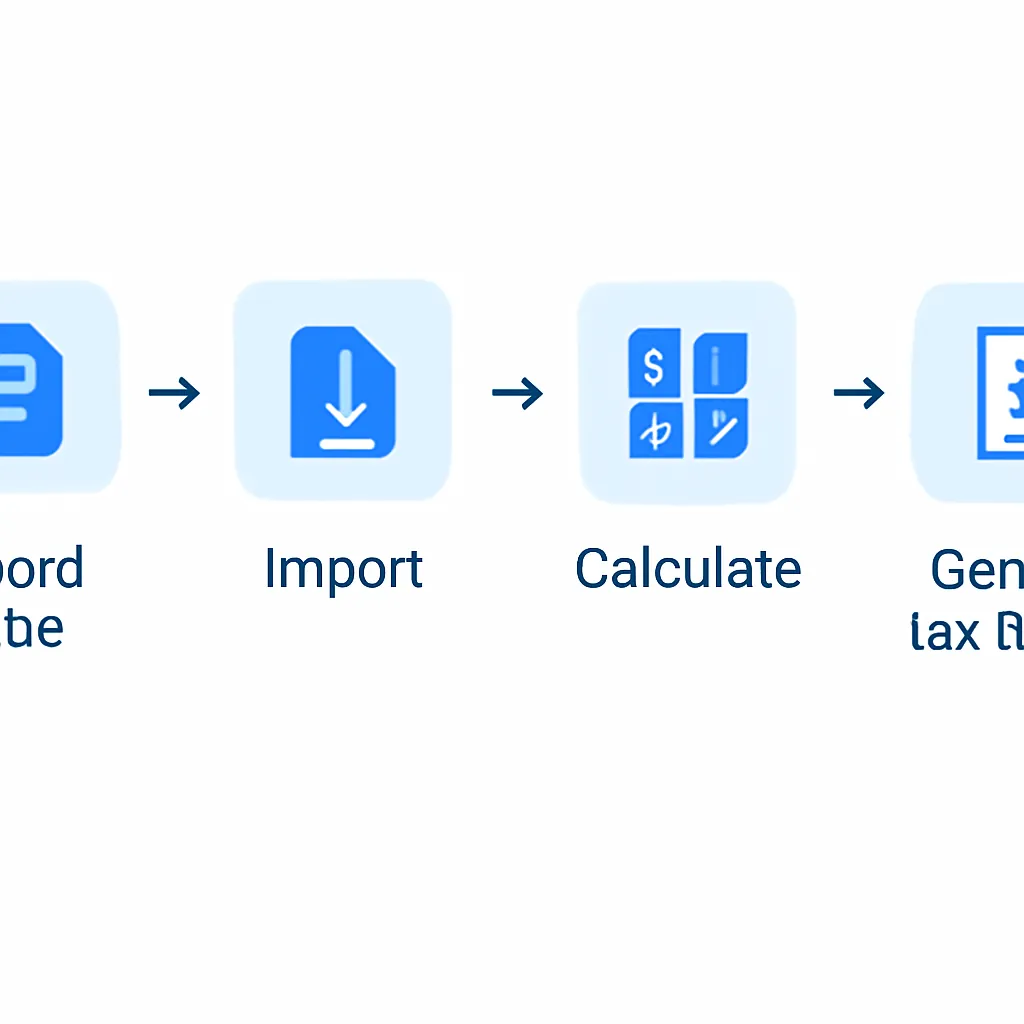
The process of working out what you owe starts with gathering a complete transaction history for the relevant calendar year. This means exporting records from every exchange you used, every wallet you held assets in, and any DeFi protocols or staking platforms where you received rewards. Gaps in your records are a common source of errors, particularly when wallets are involved, since on-chain transactions do not automatically appear in a centralised account statement.
Once you have your full transaction history, the next step is to apply FIFO matching to identify which specific lots are being disposed of in each sale or swap. From there, you calculate the gain or loss on each transaction by subtracting the acquisition cost from the disposal proceeds. Transaction fees paid at acquisition can typically be added to your cost basis, and fees paid at disposal can reduce your proceeds, both of which reduce your taxable gain.
After calculating individual transaction gains and losses, you aggregate them across the year, exclude any disposals that qualify for the twelve-month exemption, and check whether your net taxable gain exceeds the annual threshold. The resulting figure goes into your Anlage SO. Using crypto tax software to handle this process means the FIFO matching and holding period calculations are done automatically, with a full audit trail attached to every figure in your final report.
Key Steps to Calculate Crypto Taxes in Germany
Start by collecting complete records from all exchanges and wallets. Then classify each transaction as acquisition, disposal, or income event. Apply FIFO cost basis matching to each disposal. Calculate the gain or loss and check the holding period for each lot. Aggregate your short-term gains, apply the annual threshold, and transfer the net taxable figure to Anlage SO. A crypto capital gains calculator handles all of these steps programmatically and flags any data gaps before you file.
Filing Your Crypto Tax Report in Germany
The German tax year runs from January to December, and the filing deadline for individuals is typically the end of July of the following year, though this can be extended if you use a tax adviser. Your crypto activity is reported on the Anlage SO attachment to your main income tax return. You do not submit your full transaction history to the Finanzamt by default, but you are required to keep detailed records for up to ten years and produce them on request.
A well-structured crypto tax report from dedicated crypto tax software will include a summary of your total gains and losses, a breakdown by asset and by tax category, and a transaction-level log that ties every figure back to a specific trade or event. This level of documentation is exactly what a tax office would want to see if they queried your return, and it gives you and any adviser you work with a clear and defensible position. Knowing how to file crypto taxes correctly from the outset avoids the need to reconstruct records under pressure later.
Illustrative Scenario
This scenario is illustrative. It does not describe a real person or client, and the figures are examples only.
To illustrate how this applies in practice, consider the following scenario: Lena is a freelance graphic designer based in Munich. Over the course of one calendar year she bought ether on three separate occasions, swapped a portion of her ether holding for a smaller altcoin in August, and sold her remaining ether in March of the following year. She also received staking rewards from a DeFi protocol throughout the year.
Lena is unsure which of her transactions are taxable and which fall under the twelve-month exemption. Her August swap triggers a partial disposal of ether she bought earlier that same year, so the gain on that portion is taxable as a private sale. Her March sale of the remaining ether, however, was held for more than twelve months, so that gain is completely exempt. Her staking rewards count as miscellaneous income in the year they were received, with a new acquisition date for any future disposal.
Rather than trying to work this out manually across dozens of transactions, Lena connects her exchange accounts and wallet to CryptaTax. The software automatically applies FIFO matching, identifies which lots exceed the twelve-month threshold, calculates her net taxable gain, and produces a formatted crypto tax report ready for her Steuerberater to review before submission.

Frequently Asked Questions
What is the twelve-month holding period rule in Germany?
In Germany, cryptocurrency held for more than twelve months before disposal is completely exempt from capital gains tax. The twelve-month clock starts from the date you acquired each specific lot and ends on the date you sell, swap, or otherwise dispose of it. Each transaction lot is tracked individually, which is why using a crypto tax calculator to manage FIFO matching is so important.
Do I need to pay tax on crypto-to-crypto swaps in Germany?
Yes. Swapping one cryptocurrency for another is treated as a disposal of the asset you are giving up and an acquisition of the asset you are receiving. If the crypto you are disposing of has increased in value since you bought it and you have held it for less than twelve months, any gain is taxable at your personal income tax rate.
What cost basis method does Germany use for crypto?
Germany applies the FIFO method, meaning the first coins you acquired are treated as the first ones you sell. This directly affects whether your disposals fall inside or outside the twelve-month holding period, so accurate lot-level tracking is essential. A crypto capital gains calculator applies FIFO automatically across your full transaction history.
Are staking rewards taxable in Germany?
Staking rewards are generally treated as miscellaneous income under Section 22 of the German Income Tax Act and are taxable in the year you receive them, based on their market value at the time of receipt. When you later sell those rewarded coins, a new holding period applies from the date you received them, and any gain on disposal is assessed separately.
What is the annual tax-free threshold for crypto gains in Germany?
Germany provides a small annual exemption for private sales transactions. Gains that fall below this threshold in a given calendar year are not subject to income tax. This threshold applies to all private sales transactions collectively, not just cryptocurrency, so other assets in the same category count toward the limit as well.
Can I offset crypto losses against gains in Germany?
Yes, but only within the same category. Losses from short-term crypto disposals can be offset against gains from other private sales transactions in the same tax year, or carried forward to offset gains in future years. You cannot use crypto losses to reduce employment income, rental income, or other categories of taxable income.
What records do I need to keep for the German Finanzamt?
You are required to keep detailed records of all your cryptocurrency transactions for up to ten years. This includes acquisition dates and prices, disposal dates and proceeds, fees paid, and wallet or exchange details. While you do not routinely submit this documentation with your tax return, the Finanzamt can request it at any time, making a structured crypto tax report from reliable crypto tax software a vital safeguard.
How do I file crypto taxes in Germany?
You report cryptocurrency gains and income on the Anlage SO section of your German income tax return, which covers private sales transactions and miscellaneous income. The annual filing deadline for individuals is generally the end of July following the relevant tax year, though extensions apply when a professional adviser submits on your behalf. Using crypto tax software to prepare your figures before filing reduces errors and ensures your figures are backed by a full transaction-level audit trail.
Does spending crypto on purchases trigger a taxable event in Germany?
Yes. Using cryptocurrency to pay for goods or services is treated as a disposal at the market value of the crypto at the time of the transaction. If the value has increased since you acquired it and you have held it for less than twelve months, the difference between your acquisition cost and the disposal value is a taxable gain.
What crypto tax software works for German tax rules?
Effective crypto tax software for Germany needs to support FIFO cost basis matching, track individual lot holding periods, handle staking and DeFi income, and produce a structured crypto tax report formatted for the Anlage SO. CryptaTax is built to handle these requirements, connecting directly to your exchanges and wallets to automate the full calculation and reporting process.
Source: CryptaTax