
Crypto Tax Calculator: Everything You Need to Know About Capital Gains
If you have bought, sold, swapped, or spent cryptocurrency at any point during the tax year, you almost certainly have a tax obligation to think about. Crypto capital gains tax catches a huge number of people off guard, partly because the rules differ from country to country, and partly because the sheer volume of transactions makes manual calculations impractical. A crypto tax calculator changes that. It takes your raw transaction history, applies the relevant cost-basis rules for your jurisdiction, and produces figures you can actually use when you file. This guide walks through what capital gains tax means for crypto holders, what triggers a taxable event, how gains and losses are measured, and why using dedicated crypto tax software is now the most reliable way to stay on the right side of your tax authority.

What Is Crypto Capital Gains Tax?
Capital gains tax, often abbreviated to CGT, is charged on the profit you make when you dispose of an asset that has increased in value. In most jurisdictions, cryptocurrency is treated as a capital asset, which means the same broad principle applies: you bought it at one price, you disposed of it at a higher price, and the difference is a taxable gain. The loss equivalent works in your favour; if you sell for less than you paid, you have a capital loss that can often be offset against gains elsewhere.
What Is a Disposal?
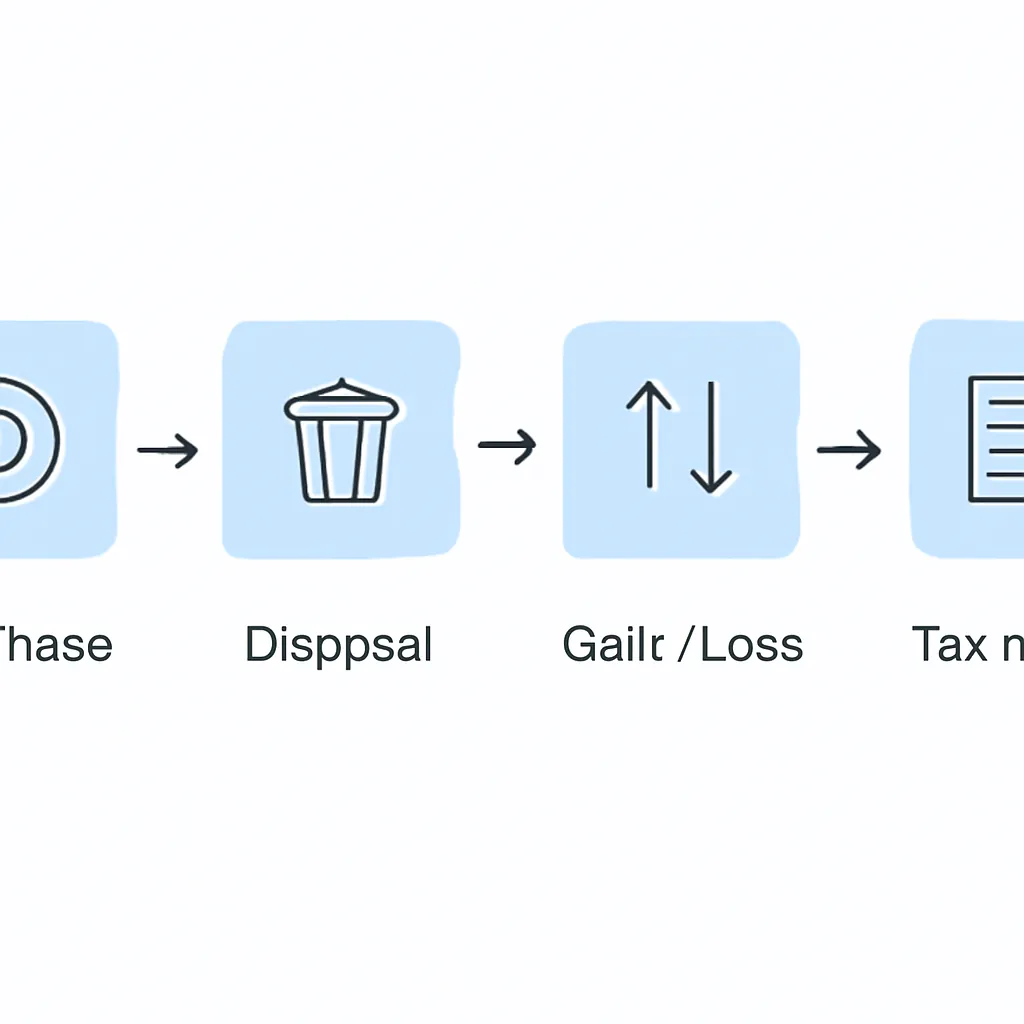
The definition of a disposal is wider than most people expect. Selling crypto for fiat currency is the obvious example, but exchanging one cryptocurrency for another is also a disposal in countries including the UK, the US, and Australia. Spending crypto to buy goods or services counts too. Even moving crypto into a liquidity pool or receiving new tokens through a protocol can create a taxable moment depending on where you live. The breadth of what qualifies means that active traders and DeFi users can accumulate hundreds or even thousands of taxable events in a single year without realising it.
How Gains Are Taxed
The rate at which gains are taxed varies significantly. Some jurisdictions apply a flat rate, others apply your marginal income tax rate, and a few distinguish between short-term and long-term holdings. Understanding the rate that applies to you is the first step before you calculate crypto taxes in any meaningful way.
What Triggers a Taxable Event?
Not every interaction with your crypto wallet creates a tax liability, but more of them do than most holders assume. The table below summarises the most common transaction types and how they are typically treated across major jurisdictions. Exact rules vary, so always verify the position in your specific country.
Common Taxable Events
| Transaction Type | Typically Taxable? | Tax Category |
|---|---|---|
| Selling crypto for fiat | Yes | Capital gain or loss |
| Swapping one crypto for another | Yes (most jurisdictions) | Capital gain or loss |
| Spending crypto on goods or services | Yes | Capital gain or loss |
| Receiving staking rewards | Often yes | Income tax (at receipt) |
| Receiving airdropped tokens | Varies by jurisdiction | Income or capital depending on rules |
| Transferring between your own wallets | No (generally) | Not a disposal |
| Buying crypto with fiat | No | Not a disposal |
| Gifting crypto to a spouse or civil partner | Often exempt | Jurisdiction-specific rules apply |
How to Calculate Crypto Taxes: Cost Basis Methods
The gain on any disposal is calculated as the proceeds minus the cost basis. The proceeds are straightforward: the market value of what you received at the point of disposal. The cost basis is where complexity enters the picture, because tax authorities specify different rules for which units of a cryptocurrency you are deemed to have sold when you hold multiple lots purchased at different prices.
Common Cost-Basis Methods
The most common cost-basis methods used around the world include the following approaches. First-In First-Out, known as FIFO, assumes you sell the oldest units first. This is the default method in several jurisdictions and tends to produce larger gains in a rising market because the oldest coins typically have the lowest purchase price. Last-In First-Out, or LIFO, assumes you sell the most recently acquired units first, though this is not permitted in every country. Average Cost Basis pools all your purchases and divides the total cost by the number of units held, giving a single average price for all disposals. The UK uses a specific pooling mechanism called the Section 104 pool combined with same-day and thirty-day matching rules, which produces results that differ materially from a simple FIFO calculation.
Choosing the Wrong Method
Choosing the wrong method, or applying a method your tax authority does not permit, is one of the most common errors in self-prepared crypto tax reports. A good crypto capital gains calculator applies the correct method automatically based on your jurisdiction, removing the guesswork entirely.
Why Manual Calculation Almost Always Goes Wrong
Spreadsheets feel like a reasonable solution until the transaction count climbs. A trader who makes one or two moves a week will have more than one hundred transactions by year end. Add multiple exchanges, a hardware wallet, a DeFi protocol or two, and possibly some staking activity, and a single tax year can generate thousands of rows of data. Each row needs to be matched, priced at the correct market rate on the correct date, assigned to the right cost-basis pool, and then checked for wash-sale implications in jurisdictions that apply them.
Problems With Exchange Data
The problem compounds when exchange data is incomplete or inconsistent. Different platforms export transaction histories in different formats. Some omit transfer fees. Others record internal conversions in ways that make it hard to identify the true acquisition cost. Missing data does not disappear from your tax liability; it just creates gaps that increase the risk of an error or an understatement that your tax authority could later identify through third-party data reporting.
How Software Fixes These Issues
Crypto tax software addresses all of this by connecting directly to exchanges and wallets via API or CSV import, normalising the data into a single ledger, and running the calculations against the rules of your jurisdiction. The output is a crypto tax report ready to be used alongside your annual return, with the supporting workings preserved in case of a query.
How a Crypto Tax Calculator Works in Practice
The mechanics of a modern crypto tax calculator follow a consistent pattern, even though products differ in their interface and integrations. You begin by connecting your exchanges and wallets, either through a direct API link or by uploading the export files the platform provides. The software ingests all transactions: trades, transfers, staking rewards, airdrops, and any other activity recorded on the platforms you use.
Transaction Classification and Pricing
Once the data is loaded, the calculator classifies each transaction according to its type and applies the cost-basis rules relevant to your chosen jurisdiction. It prices every transaction using historical market data, matching each disposal to the correct acquisition lot. The result is a gain-and-loss summary broken down by asset and by tax year, accompanied by an income summary covering staking rewards or other earnings that are taxable as income rather than capital gains.
The Final Crypto Tax Report
The final output, the crypto tax report, contains the figures you need to complete your self-assessment return, Form 8949 in the US, or whichever form your local authority requires. Keeping that report, together with the underlying transaction data, is important for record-keeping purposes since most tax authorities can go back several years if they open an enquiry.
| Country | Default Cost-Basis Method | CGT Rate (Indicative) | Key Filing Form |
|---|---|---|---|
| United Kingdom | Section 104 pool with matching rules | Varies by income band | Self Assessment (SA100 / supplementary pages) |
| United States | FIFO (default), specific identification permitted | Short-term at income rate, long-term reduced rate | Form 8949 and Schedule D |
| Australia | FIFO or specific identification | Marginal rate, 50% discount for assets held over 12 months | Tax return capital gains schedule |
| Germany | FIFO | Tax-free if held over one year | Anlage SO |
| Canada | Adjusted Cost Base (ACB) | 50% of gain included in income | Schedule 3 |
Reducing Your Liability Legitimately
There are several strategies available to crypto holders that are entirely within the rules and can reduce the amount of CGT owed. None of them involve hiding activity or failing to report; they are simply the application of reliefs and allowances that the tax system provides.
Using Your Annual Allowance
Using your annual CGT allowance is the most straightforward. Many jurisdictions provide a tax-free threshold below which gains are not charged. Realising gains up to that threshold each year, rather than deferring everything to a single large disposal, can make a meaningful difference over time. Loss harvesting is a related technique: selling assets that are currently at a loss to crystallise losses that can be offset against gains in the same year or carried forward. The rules on what qualifies and how far losses can be carried vary by jurisdiction, so checking the specific rules for your country is essential.
Holding Periods and Exemptions
Holding periods matter too. In the US, assets held for more than twelve months attract a lower long-term capital gains rate. In Germany, a holding period of more than one year makes the gain entirely exempt from tax. Understanding these thresholds before you decide when to sell can have a significant impact on the final bill. A crypto capital gains calculator that models different disposal scenarios gives you the visibility to make these decisions with accurate numbers rather than estimates.
Illustrative Scenario
This scenario is illustrative. It does not describe a real person or client, and the figures are examples only.
To illustrate how this applies in practice, consider the following scenario:
Priya is a freelance designer based in the UK who began investing in cryptocurrency a few years ago. Over time she accumulated positions across three exchanges, received some staking rewards, and made several token swaps when she moved between assets. When the tax year ended she sat down to calculate crypto taxes using a spreadsheet and quickly realised the matching rules for the UK Section 104 pool made it almost impossible to produce reliable figures manually, particularly because some of her transfers between exchanges had muddied the acquisition dates.
Priya connected all three exchange accounts to CryptaTax using the API import function. The software pulled in her full transaction history, applied the Section 104 pool calculation with same-day and thirty-day matching, and separated her staking rewards into an income category. Within a short time she had a complete crypto tax report showing her net gain for the year, her income from staking, and the supporting workings behind each figure. She filed her Self Assessment return with confidence, knowing the numbers were calculated against the correct UK rules and that she had documentation ready if HMRC ever raised a question.
Frequently Asked Questions
What does a crypto tax calculator actually do?
A crypto tax calculator imports your transaction history from exchanges and wallets, prices each transaction at the correct historical market rate, applies the cost-basis rules for your jurisdiction, and produces a summary of your capital gains and income for the tax year. The output can be used directly when you file your return. It removes the need for manual spreadsheet work and reduces the risk of calculation errors.
Is swapping one cryptocurrency for another a taxable event?
In most major jurisdictions, including the UK, US, and Australia, swapping one cryptocurrency for another counts as a disposal of the first asset and triggers a capital gains calculation. The gain or loss is measured as the market value of the asset you received minus the cost basis of the asset you gave up. Some countries treat crypto-to-crypto swaps differently, so always check the rules in your country.
How do I calculate crypto taxes if I have used multiple exchanges?
You need to consolidate all of your transaction data into a single ledger before you can calculate your gains accurately. Most crypto tax software lets you connect multiple exchanges and wallets simultaneously, either through direct API connections or by uploading export files. The software then merges the data and applies cost-basis matching across all sources, which is something a manual spreadsheet approach struggles to do reliably.
Can I use losses on crypto to reduce my tax bill?
Yes, in most jurisdictions capital losses on crypto disposals can be offset against capital gains in the same tax year. If your losses exceed your gains, the surplus can often be carried forward to future years. The specific rules on loss relief, including any restrictions on what qualifies, depend on your country. Your crypto tax report will show both your gains and your losses, making it straightforward to see the net position.
What is the difference between short-term and long-term crypto capital gains?
In the US, assets held for twelve months or less before disposal are subject to short-term capital gains tax, which is charged at your ordinary income rate. Assets held for more than twelve months attract a lower long-term rate. Other countries use different holding-period rules: Germany exempts gains on crypto held for over a year entirely, while the UK and Australia use their own frameworks. Knowing the holding period rules in your country can influence when you choose to sell.
Do I need to report crypto if I only made a loss?
In most jurisdictions you are still required to report crypto disposals even when the net result is a loss, because losses need to be formally claimed to be carried forward or offset against other gains. Failing to report losses means you cannot benefit from them in future years. Your crypto tax report will capture all disposals, including loss-making ones, so your submission is complete.
How do I file crypto taxes alongside my regular income tax return?
In the UK you report crypto gains through your Self Assessment return. In the US you complete Form 8949 and attach it to your Schedule D. Australia requires a capital gains schedule as part of the annual tax return. In each case you take the summary figures from your crypto tax report and enter them into the relevant sections of your return. The underlying transaction records should be retained in case your tax authority requests supporting evidence.
Is staking income treated as capital gains or income?
Most tax authorities treat staking rewards as income at the point of receipt, valued at the market price on the date you received them. If you later sell those tokens, any further gain or loss relative to that receipt price is then treated as a capital gain or loss. This means staking activity can create both an income tax event and a later capital gains event. Crypto tax software separates these categories automatically in your report.
How far back can a tax authority audit my crypto transactions?
The standard enquiry window varies by country but is typically four to six years for ordinary cases, and longer where there is evidence of deliberate non-disclosure. Because crypto exchanges are increasingly required to report user data to tax authorities under frameworks such as the OECD's CARF and the EU's DAC8, keeping full transaction records from the start of your crypto activity is the safest approach. Crypto tax software retains the supporting data alongside your reports.
What makes crypto tax software more reliable than a spreadsheet?
Spreadsheets require you to manually price every transaction, apply jurisdiction-specific matching rules correctly, and handle transfers between wallets without double-counting. A single error in the cost-basis logic can cascade through hundreds of rows. Crypto tax software automates the pricing, matching, and rule application, flags missing data, and produces an auditable output. For anyone with more than a handful of transactions per year, the accuracy benefit alone justifies using dedicated software over a manual approach.
Source: CryptaTax